

This article is an on-site version of our The State of Britain newsletter. Premium subscribers can sign up here to get the newsletter delivered every week. Standard subscribers can upgrade to Premium here, or explore all FT newsletters
Crack open the champagne, the bankers have been spared. Britain’s biggest banks had spent the summer fretting that Rachel Reeves would raid the sector in the form of a tax rise to help fill a hole in the public finances at the Budget.
But the FT reported on Wednesday that after much ear-bending from UK lenders, the chancellor has relented, and is unlikely to increase levies on UK banks, which have seen bumper profits in recent months.
Despite having cooled on the idea, you can see why Reeves was flirting with it. The chancellor is in a bind. While Britain’s public finances are in a parlous state, in part because of downgrades to the productivity statistics, Labour is also hemmed in by pledges it made to the electorate last year to not raise income tax, national insurance or VAT. This week the chancellor opened the door to tax increases when she delivers the Budget, saying “those with the broadest shoulders should pay the most”.
Let the good times roll
At the same time, Britain’s biggest banks appear to be in rude health. By raising interest rates after the pandemic the Bank of England brought to an end the rough decade most lenders endured after the financial crisis. Structural hedging, a tactic used by banks to smooth out the effects of interest rates, has also meant that even while rates fall, the good times keep on rolling for Britain’s banks.
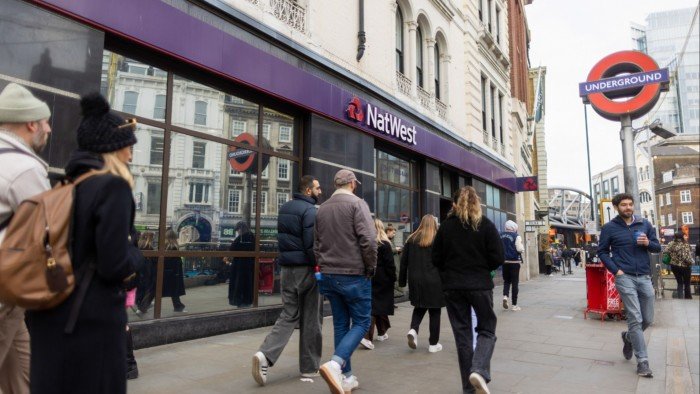
Last month, NatWest announced its best profit figures since before the financial crisis. Barclays raised its forecasts and handed out £500mn in buybacks. Lloyds’ underlying performance was stronger than expected. Bumper profitability has allowed the share prices of Britain’s biggest lenders to soar to their highest levels since 2008.
In this breach, some ministers saw an opportunity to share in these spoils, and briefly had won over parts of Reeves’ inner circle. In August UK banks saw a large sell off after the FT reported that ministers were considering a bank raid to repair the public finances. The advocacy group Positive Money estimates that a bank “windfall tax” on these profits could raise £14bn, or nearly half the chancellor’s “black hole”, the amount needed to fulfil her fiscal commitments.
One banker acknowledged that the sector’s return to decent profitability, along with lack of public sympathy, makes the sector an easy target. But banks were not going to go without a fight. People familiar with the matter said that banks have been pleading their case to the chancellor over the summer in an effort to see off a raid, an effort that appears to have borne fruit.
The central point that banks spent the summer hammering home to Reeves, and which the chancellor acknowledges, is that they already pay more to the exchequer than other sectors — in part as penance for their role in the financial crisis.
After the crisis banks were forced to pay a balance sheet levy of up to 0.21 per cent to help recoup the cost of bailouts, which has since been cut to 0.1 per cent. Large lenders also pay a surcharge on top of the standard corporation tax rate. The levy took an extra 8 per cent of profits when it was introduced in 2016, but this was cut back to 3 per cent in 2022.
This means that banks are already taxed higher than other large companies with fatter margins. Banks also say this is out of step with other countries — in July Charlie Nunn, the CEO of Lloyds said banks endured “the highest tax regime on the financial services sector of any major economy”.
One board member at a major UK lender also said that there are no bank superprofits to be taxed. “The suggestion that there are windfall profits at play is absurd,” they said.
Bankers make the point that while they have started seeing rosier profits recently, the 15 years after the financial crisis were a tough time for banks. After the crisis, the UK overhauled its regulatory regime and asked banks to hold more capital on their books and to erect things like the ringfence, which cleaves off the retail and investment banking operations of lenders. This heaped costs on to lenders and raised the costs of capital. Finally, with the rise in interest rates, banks are starting to return to decent profitability, but megaprofits these ain’t.
Yesterday’s news came as a welcome surprise — shares in Lloyds, NatWest and other lenders rallied.
What’s more is that many bankers were privately preparing to cough up, quietly acknowledging that the chancellor is facing several tough choices. Most were bracing for Reeves to raise the profit surcharge back to 8 per cent, a move that could rake in £4bn over four years for the Treasury, according to the Trades Union Congress. Lifting the surcharge would have raised £1bn a year and potentially more, since it will go up if profits rise. Other advocates have been more radical — the IPPR left-wing think-tank advocates taxing the interest payments banks earn on their reserve deposits at the Bank of England.
Out of the two, privately bankers would prefer to swallow the former. Throwing a bone to the chancellor in the form of a bulked up levy would be far less disruptive than taxing reserves at the BoE, which Andrew Bailey himself has said could disrupt monetary policy. Banks should also be able to see off the worst of the rises by passing costs on to consumers.
While many can now breathe a sigh of relief that a Budget bank raid has come to pass, many remain vigilant. One banker privately acknowledged that while many like to “bash bankers” that in times of economic strife, ministers often come calling to top up the Treasury’s coffers.
Britain in numbers
Return on tangible equity. It hardly rolls off the tongue, but Rote (pronounced ‘ro-tea’) as it is known among bankers, is one of the key indicators for measuring profitability. In essence, Rote tells you how efficiently a bank is using its shareholders’ equity to make money.
In the near zero-interest rate years that prevailed until after the pandemic, banks were piddling around with meagre Rotes in the single digits. Not only were rates low, but increased regulatory burden meant that banks were spending a lot of money bulking up their operations, which ate into profitability.
Since 2021-ish though, Rote has taken off. Just look at NatWest’s return on tangible equity figures since 2020. Then, the bank’s full-year results recorded a negative 1.3 per cent Rote score. However since then NatWest, like each of its peers, has seen its return on tangible equity soar. While executives at the bank would like to tell you this is them delivering the hard yards on corporate strategy, they have been helped by the rise in interest rates.
Looking at these figures who could blame the chancellor for wanting to take a chunk for the public purse?
The State of Britain is edited by Gordon Smith. Premium subscribers can sign up here to have it delivered straight to their inbox every Thursday afternoon. Or you can take out a Premium subscription here. Read earlier editions of the newsletter here.
Recommended newsletters for you
Inside Politics — What you need to know in UK politics. Sign up here
Europe Express — Your essential guide to what matters in Europe today. Sign up here
