

A British university complied with a demand from Beijing to halt research about human rights abuses in China, leading to a major project being dropped, the Guardian can reveal.
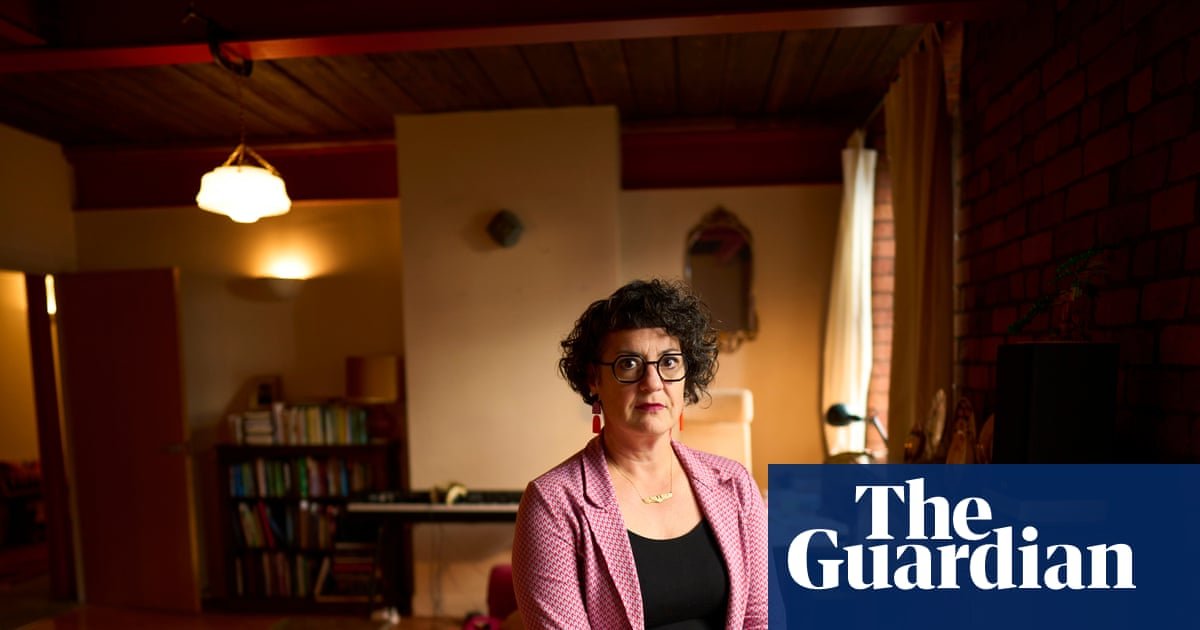
In February, Sheffield Hallam University, home to the Helena Kennedy Centre for International Justice (HKC), a leading research institution focused on human rights, ordered one of its best-known professors, Laura Murphy, to cease research on supply chains and forced labour in China.
Murphy’s work focuses on Uyghurs, a persecuted Muslim minority in China, being co-opted into forced labour programmes. Her research, and that of colleagues at the HKC, has been cited widely by western governments and the UN, and has helped to shape policies designed to root out goods made by forced labour from international supply chains. The Chinese government rejects accusations of forced labour, and says that Uyghur work programmes are for poverty alleviation.
In February, Murphy was told that her work on China, described previously by the university as “groundbreaking”, had to stop. The website for the Forced Labour Lab, Murphy’s small team of researchers at the HKC, was taken down – although several of the reports remain available in other, less visible parts of the university archive.
In October, the university said it was lifting the ban on Murphy’s work on China and forced labour, and apologised.
But the eight-month stoppage – and the abandonment of previous research – reveals the chilling effect that pressure from the Chinese authorities can have on UK universities.
“My first response was confusion,” Murphy said. The university told her that a combination of administrative issues meant they could no longer support her work. But further inquiries suggested the university was “explicitly trading my academic freedom for access to the Chinese student market,” Murphy said, which was “really shocking”. The university denies that the decision was based on commercial interests.
The instruction for Murphy to halt her research came six months after the university decided to abandon a planned report on the risk of Uyghur forced labour in the critical minerals supply chain, and return the funding associated with that research to the original grantor, Global Rights Compliance (GRC), a non-profit law foundation based in The Hague. GRC eventually published the research in June this year.
“It is a problem that Sheffield Hallam is no longer publishing this research,” said Lara Strangways, the head of business and human rights at Global Rights Compliance. “There were obviously going to then be questions raised about why we ended up publishing it.”
In October, after threats of legal action from Murphy for violating her academic freedom, Sheffield Hallam lifted restrictions. But Murphy said she remained “cautious”.
“I’m unclear at this point whether the university is prepared to be as supportive as it used to be,” she said.
The decision to halt Murphy’s research appeared to come from a number of factors. Officially, the university gave two reasons: concern about the safety of staff in China, and the fact that, after being sued by a Chinese company named in one of the HKC’s reports, the university’s insurance provider said it would no longer cover work produced by the HKC for defamation risk. That lawsuit is ongoing.
Sheffield Hallam University. Photograph: Alan Curtis/Alamy
The UK’s newly updated higher education law places a higher burden on universities to protect free speech. Emails seen by the Guardian suggest that commercial factors were a consideration in placing limits on Murphy’s work.
For years, the university has faced a backlash in China, and falling student numbers. In the summer of 2022, China’s foreign ministry spokesperson Zhao Lijian called the HKC – whose namesake, Lady Kennedy, has herself been hit with sanctions by Beijing because of her criticisms of China’s human rights record – a “vanguard for anti-China forces”. Around the same time, Sheffield Hallam’s websites were blocked in China. “This undoubtedly had a negative impact on recruitment in 23/24,” a university employee wrote in July 2024.
The person also wrote: “Attempting to retain the business in China and publication of the [HKC] research are now untenable bedfellows.”
Sheffield Hallam said internal emails did not represent university policy and noted that the university did not have significant commercial interests in China. In the 2024-25 academic year, Sheffield Hallam had 73 students from China, accounting for 1.7% of the international student population.
James Murray, a partner at Doyle Clayton law firm and a specialist in academic freedom issues, said a university banning research because of a perceived legal risk was “a highly pernicious practice which is a serious threat to academic freedom”.
On the issue of concerns about staff safety, Murray said: “To jump straight to a ban on the research seems excessive.”
A spokesperson for Sheffield Hallam said the decision to halt Murphy’s work was “based on our understanding of a complex set of circumstances at the time, including being unable to secure the necessary professional indemnity insurance.
“Following a review, we have since approved Prof Murphy’s latest research and are committed to supporting her to undertake and disseminate this important work.
“We have apologised to Prof Murphy and wish to make clear our commitment to supporting her research and to securing and promoting freedom of speech and academic freedom within the law.”
As early as 2022, Murphy’s work was identified as a risk. In an email about the foreign ministry’s attacks, Sir Chris Husbands, then the university’s vice-chancellor, wrote of taking “perverse satisfaction in being singled out” by the Chinese government, despite “some evidence that this may be impacting on our Chinese direct recruitment”.
Another concern came from the fact that in April 2024, Sheffield Hallam’s Beijing office was visited by three state security officers. An employee was questioned for two hours regarding the HKC. According to an internal summary of the meeting seen by the Guardian, “the tone was threatening and [the] message to cease the research activity was made clear”.
The April interrogation set off a chain of events that would lead to the university ultimately complying with the Chinese authorities’ request. “There was this general sense that they were … intimidated into not publishing,” said Strangways.
Emails seen by the Guardian show staff grappling with how to manage the relationship with China. In September 2024, the university informed Chinese state security that it would not be publishing a final phase of research on forced labour in China. “Immediately, relations improved,” an administrator wrote.
A spokesperson for the Office for Students, the regulator for the higher education sector, declined to comment on a specific institution, but said: “Suppression of research because of the disapproval of a foreign (or domestic) government is unacceptable in practically any circumstances.”
Claire Powell, a solicitor at Leigh Day, which represents Murphy, said: “This is an extremely serious and troubling case that raises wider concerns about the academic freedom of staff and students at universities across the UK.”
While these discussions were taking place, Murphy was on leave, working for the US government to implement legislation that blocks the import of goods from Xinjiang because of concerns about forced labour. While preparing to return to the university at the start of this year, she was told she would not be able to continue with research on China. The person who delivered the news was Prof Sital Dhillon, the director of the HKC.
In 2021, Dhillon had written to Murphy: “We are all exceptionally proud of this body of work, which rightly shines light on the blatant abuse of Uyghur [rights] in China.”
A UK government spokesperson said: “Any attempt by a foreign state to intimidate, harass or harm individuals in the UK will not be tolerated, and the government has made this clear to Beijing after learning of this case.
“The government has robust measures in place to prevent this activity, including updated powers and offences through the National Security Act.”
Additional research by Lillian Yang
Quick Guide
Contact us about this story
Show
The best public interest journalism relies on first-hand accounts from people in the know.
If you have something to share on this subject, you can contact us confidentially using the following methods.
Secure Messaging in the Guardian app
The Guardian app has a tool to send tips about stories. Messages are end to end encrypted and concealed within the routine activity that every Guardian mobile app performs. This prevents an observer from knowing that you are communicating with us at all, let alone what is being said.
If you don’t already have the Guardian app, download it (iOS/Android) and go to the menu. Select ‘Secure Messaging’.
SecureDrop, instant messengers, email, telephone and post
If you can safely use the Tor network without being observed or monitored, you can send messages and documents to the Guardian via our SecureDrop platform.
Finally, our guide at theguardian.com/tips lists several ways to contact us securely, and discusses the pros and cons of each.
Illustration: Guardian Design / Rich Cousins
Thank you for your feedback.
