
Close Menu

    Subscribe to Updates

    Get the latest creative news from FooBar about art, design and business.

    What's Hot

    ‘They showed no mercy’: mapping the Rohingya villages being erased by rebel forces | Global development

    Prisoners freed early in England and Wales risk living on the streets, say probation officers | Prisons and probation

    Unfair method of splitting pensions can add to the pain of divorce | Divorce

    Facebook X (Twitter) Instagram
    Facebook X (Twitter) YouTube LinkedIn
    Naija Global News |
    Thursday, October 1
    • Business
    • Health
    • Politics
    • Science
    • Sports
    • Education
    • Social Issues
    • Technology
    • More
      • Crime & Justice
      • Environment
      • Entertainment
    Naija Global News |
    You are at:Home»Science»Hot summer and damp autumn cause UK boom in destructive honey fungus | Fungi
    Science

    Hot summer and damp autumn cause UK boom in destructive honey fungus | Fungi

    onlyplanz_80y6mtBy onlyplanz_80y6mtNovember 1, 2025003 Mins Read
    Share Facebook Twitter Pinterest LinkedIn Tumblr Email
    Hot summer and damp autumn cause UK boom in destructive honey fungus | Fungi
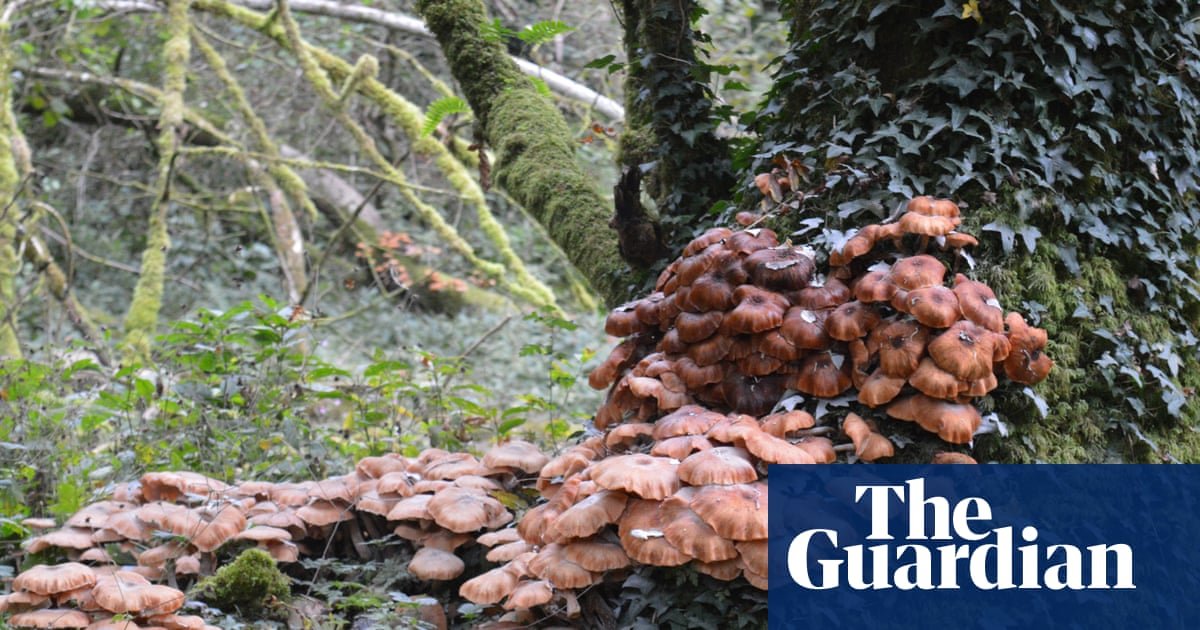
    Honey fungus in Bushey Norwood woodland in Bath. Photograph: Joni Wildman
    Share
    Facebook Twitter LinkedIn Pinterest Email

    A golden mushroom that grows in clusters and can attack and kill trees has increased by 200% in the UK in a year because of the hot summer and damp autumn.

    Recorded sightings of honey fungus are up by almost 200% compared with the same period last year, according to iNaturalist.

    Armillaria, or honey fungus, is not a single species but a group of closely related ones. “As their name suggests, they are a honey-brown colour, often with greenish tinges when young,” said David Gibbs, a field mycologist. “Large clumps often develop a frosty appearance and become dusted by their white spores.”

    The clusters that appear in gardens and woodlands are temporary fruiting bodies of the main part of the fungus, the mycelium.

    Dr Daniel Henk, a mycologist at the University of Bath, said the mycelium was underground or in the wood “doing the hard work of finding nutrients, fending off competitors, growing, and staying around long term”.

    Honey fungus can also form root-like black ropes called rhizomorphs. “They form these physically tough conduits for transport and mass movement within a mycelial network- they’re like super-highways,” Henk said. This makes them highly effective at invading tree roots and bark.

    Honey fungus is notorious among gardeners and is the UK’s most reported plant disease, the Royal Horticultural Society (RHS) said.

    “We started getting emails with photographs of honey fungus mushrooms for us to identify much earlier this year than we usually do,” said a RHS plant pathologist, Dr Jassy Drakulic. She said the damage was caused by Armillaria mellea, which “kills off the water-conducting tissue in roots, preventing plants from taking up water so they die back above ground”.

    Drakulic said that although healthy plants could be affected, they had ways of walling off infection, so it was “far more likely to cause problems to plants that are already stressed”. The hot, dry summer of 2025 could have provided that stress.

    The UK’s hottest summer on record may have caused trees to be vulnerable to colonisation of honey fungus mycelium. “We usually see higher numbers of honey fungus root rot cases following drought years,” said Drakulic.

    This was followed by a warm, damp autumn, ideal for mushroom fruiting. The mushrooms’ role is to release spores and spread to new areas.

    “Early indications from ongoing RHS research suggest that spores from the mushrooms of Armillaria mellea are more important in spreading the fungus than previously thought,” said Drakulic, in addition to the underground spread by rhizomorphs or root-to-root contact.

    Should people be concerned? In gardens, honey fungus can devastate trees and shrubs, but a bumper year of honey fungus may reflect broader ecological changes.

    “Over the last two decades, climate is altering the fruiting patterns of fungi,” said Henk, adding that mushrooms “are a key part of habitats for invertebrates and food for larger animals, too”.

    The “concern is about the drought itself”, Drakulic said, “with the volume of mushrooms being a sign of the stress trees are under from climate change and from poor management practices that fail to recycle dead wood back into the soil”.

    “Research on the biology, ecology and sustainable management of Armillaria species is needed to discover how we can curb their potential for harm now and in future climates,” Drakulic said.

    autumn Boom damp destructive Fungi fungus Honey hot Summer
    Share. Facebook Twitter Pinterest LinkedIn Tumblr Email
    Previous ArticleRachel Reeves considers 20% tax on assets of people deciding to leave UK | Tax and spending
    Next Article Everyone says they are worried about hate crimes. But Australia’s laws to combat them are all over the place | Hate crime
    onlyplanz_80y6mt
    • Website

    Related Posts

    NHS reports busiest ever summer as heatwaves drive up hospital admissions | NHS

    September 10, 2026

    Drinking very hot drinks could triple risk of oesophageal cancer, study finds | Cancer

    September 9, 2026

    Organised crime driving illicit cigarette factory boom ‘in almost every EU state’ | European Union

    September 9, 2026
    Add A Comment
    Leave A Reply Cancel Reply

    Top Posts

    The science influencers going viral on TikTok to fight misinformation

    February 17, 20263 Views

    MPs vote against legalising assisted dying in England and Wales | Assisted dying

    September 11, 20262 Views

    The backlash to revelations of sexual torture of Palestinian prisoners aims to raise the cost of speaking out | Yuli Novak

    May 14, 20262 Views
    Stay In Touch
    • Facebook
    • YouTube
    • TikTok
    • WhatsApp
    • Twitter
    • Instagram
    Latest Reviews

    At Chile’s Vera Rubin Observatory, Earth’s Largest Camera Surveys the Sky

    By onlyplanz_80y6mtJune 19, 2025

    SpaceX Starship Explodes Before Test Fire

    By onlyplanz_80y6mtJune 19, 2025

    How the L.A. Port got hit by Trump’s Tariffs

    By onlyplanz_80y6mtJune 19, 2025

    Subscribe to Updates

    Get the latest tech news from FooBar about tech, design and biz.

    Most Popular

    The science influencers going viral on TikTok to fight misinformation

    February 17, 20263 Views

    MPs vote against legalising assisted dying in England and Wales | Assisted dying

    September 11, 20262 Views

    The backlash to revelations of sexual torture of Palestinian prisoners aims to raise the cost of speaking out | Yuli Novak

    May 14, 20262 Views
    Our Picks

    ‘They showed no mercy’: mapping the Rohingya villages being erased by rebel forces | Global development

    Prisoners freed early in England and Wales risk living on the streets, say probation officers | Prisons and probation

    Unfair method of splitting pensions can add to the pain of divorce | Divorce

    Recent Posts
    • ‘They showed no mercy’: mapping the Rohingya villages being erased by rebel forces | Global development
    • Prisoners freed early in England and Wales risk living on the streets, say probation officers | Prisons and probation
    • Unfair method of splitting pensions can add to the pain of divorce | Divorce
    • Trump administration diverts human rights funds to push far-right agenda abroad | US foreign policy
    • Esther Rantzen, TV presenter and Childline founder, dies aged 86 | Esther Rantzen
    © 2026 naijaglobalnews. Designed by Pro.
    • About Us
    • Disclaimer
    • Get In Touch
    • Privacy Policy
    • Terms and Conditions

    Type above and press Enter to search. Press Esc to cancel.