

October 29, 2025
3 min read
This Overlooked Bird Flu Strain Might Be the Next Pandemic Risk
Experiments suggests H9N2 has adapted to human cells, but cases of person-to-person transmission haven’t been reported yet
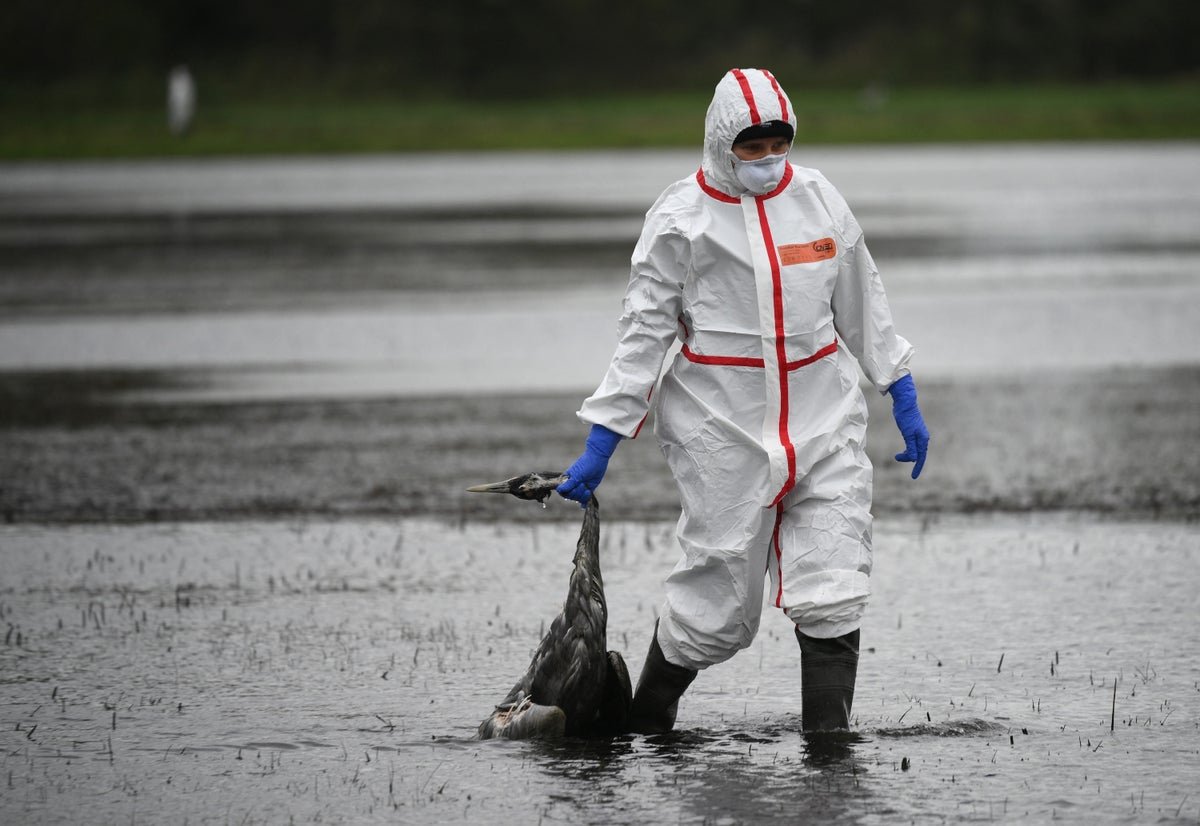
Ralf Hirschberger/AFP/Getty
A bird flu virus that has often been ignored because it mostly causes minor disease in birds has the potential to cause a human pandemic, says a team that has tracked how the H9N2 virus has become better adapted to infect people. The researchers say more surveillance of the virus is needed.
In the past few years, surveillance has been focused on the avian influenza virus H5N1, which has spread across most continents and can cause severe disease and death in people. Since 2020, H5N1 has killed about 21 people. In North America, the virus is also spreading among dairy cows.
Less attention is being paid to H9N2, says Kelvin To, a clinical microbiologist at the University of Hong Kong, despite the virus being the second most common strain of bird flu that infects people. H9N2 has caused 173 infections in people since 1998, mostly in China, says To, who presented his team’s research at the Pandemic Research Alliance International Symposium in Melbourne, Australia, on 27 October.
On supporting science journalism
If you’re enjoying this article, consider supporting our award-winning journalism by subscribing. By purchasing a subscription you are helping to ensure the future of impactful stories about the discoveries and ideas shaping our world today.
H9N2 might be more prevalent than we realize, says Michelle Wille, who studies bird flu at the Peter Doherty Institute for Infection and Immunity in Melbourne. Infections are probably being missed because they do not result in severe infection or hospitalization in people, or because people are more commonly tested for the H5N1 instead, she adds.
Genetic changes
Scientists are yet to find evidence of person-to-person transmission of H9N2, which would be needed for it to lead to a pandemic. But To and his team have found that H9N2 underwent genetic changes that began around 2015 that have made the virus more infectious. In cell-based experiments, a version of the H9N2 virus collected in 2024 infected more human cells than did a historical sample collected in 1999. The modern version also showed improved binding to various receptors on human cells. This means the virus has adapted to spread among people, reported To and his colleagues in Emerging Microbes & Infections earlier this month.
The virus would have to undergo several more changes before it could cause sustained transmission between people, says Wille. The virus has to change to preferentially bind to human receptors instead of receptors found in bird cells and has to adapt how well it grows at temperatures and pH levels of humans, which are different from birds.
Increased surveillance and communication about the risks of avian influenza is needed, says Wille. Part of the issue is that countries are not required to report infections caused by strains that are considered to be of low pathogenicity, such as H9N2.
To says greater virus surveillance among mammals in close contact with wild birds or poultry would help scientists understand whether the virus has been adapted to mammals other than humans.
He is concerned that when animals are infected with multiple viruses, genetic material gets mixed and matched when the viruses replicate inside the cell and could create new viruses that can infect humans. Scientists are concerned that this reassortment could also happen in people, too. To says other research has found genetic material from H9N2 among the viruses that have caused previous bird flu outbreaks in people.
This article is reproduced with permission and was first published on October 27, 2025.
It’s Time to Stand Up for Science
If you enjoyed this article, I’d like to ask for your support. Scientific American has served as an advocate for science and industry for 180 years, and right now may be the most critical moment in that two-century history.
I’ve been a Scientific American subscriber since I was 12 years old, and it helped shape the way I look at the world. SciAm always educates and delights me, and inspires a sense of awe for our vast, beautiful universe. I hope it does that for you, too.
If you subscribe to Scientific American, you help ensure that our coverage is centered on meaningful research and discovery; that we have the resources to report on the decisions that threaten labs across the U.S.; and that we support both budding and working scientists at a time when the value of science itself too often goes unrecognized.
In return, you get essential news, captivating podcasts, brilliant infographics, can’t-miss newsletters, must-watch videos, challenging games, and the science world’s best writing and reporting. You can even gift someone a subscription.
There has never been a more important time for us to stand up and show why science matters. I hope you’ll support us in that mission.
