

This is an edition of The Atlantic Daily, a newsletter that guides you through the biggest stories of the day, helps you discover new ideas, and recommends the best in culture. Sign up for it here.
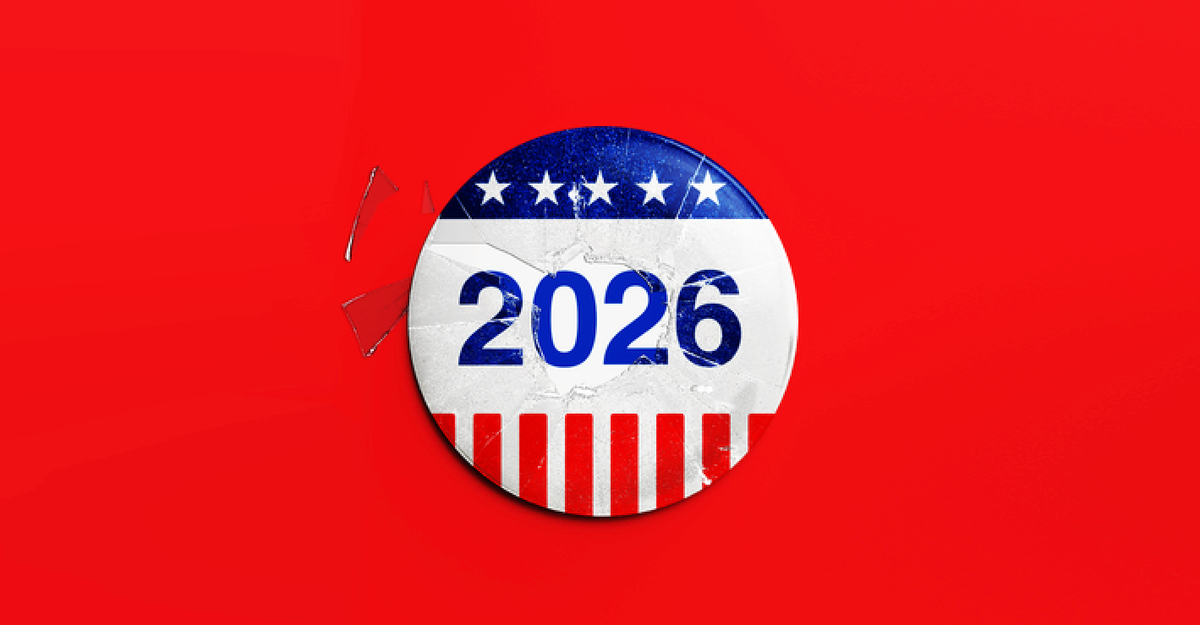
Every two years, politicians declare the most important election of our lifetimes, and becoming inured to that is easy. But as I reported on how the 2026 election could be in danger for my recent story, I started to wonder if maybe the assertion was true this time.
President Donald Trump has spent the first nine months of his term bulldozing limits on his power, abetted by a supine Congress. What might be left of checks and balances after four years of unified Republican control in Washington is unclear. Trump sees winning a majority in the midterms as crucial to his agenda, and he is also worried about them, as demonstrated by his cajoling and badgering of GOP-led states to gerrymander House districts to aid Republican candidates.
The good news is that experts I interviewed all told me there will be elections in 2026. The bad news is that Trump and his allies have many tools at their disposal to try to steal them. Modern authoritarians seldom cancel elections, because they prefer the veneer of democratic choice that voting provides, and because they can tilt the playing field toward themselves. “No one likes an election better than Vladimir Putin,” the Democratic election lawyer Marc Elias told me.
My article on those threats, and how they might succeed or fail, was published today, along with an essay by the former federal judge J. Michael Luttig on Trump’s ambitions to stay in office past his second term. Those stories are also on the cover of the December issue of The Atlantic. In my report, I try to lay out all of the ways that subversion might happen—and some of the ways it already has.
Attempts to rig an election don’t happen in just the run-up to Election Day. If you’re going to subvert an election, first you take early actions to disadvantage your opponents, including changing the rules and laws under which elections are held. When voting starts, you work to suppress the votes of people who might support your rivals. If you’ve lost once the election is over, then you claim fraud and try to get votes for your opponents thrown out. We don’t have to imagine what this looks like, because it’s already happened in North Carolina.
The Old North State has been a testing ground and an early-warning system for election shenanigans over the past dozen years. The first step to rigging North Carolina’s elections was writing favorable rules. In the 2010 elections, Republicans swept the state legislature for the first time in generations and set out to make sure they’d keep it. They drew districts that helped GOP candidates so effectively that although Democrats won a majority of the votes for both the state House and Senate in 2024, Republicans took roughly 60 percent of the seats in both chambers. That also gives the GOP control over maps for North Carolina’s seats in the U.S. House. Before the 2024 election, the state adopted new maps that gave Republicans a 10-to-4 advantage in House races. Last week, following Trump’s urging, the state legislature drew new districts openly designed to make that 11 to 3.
State Republicans have also moved to take partisan control of some of the bodies that oversee elections. Legislators changed state court elections from nonpartisan to partisan in a successful bid to increase GOP presence on the bench. This year, the North Carolina legislature stripped control of the State Board of Elections from the governor, a Democrat, and gave it to the state auditor, a Republican. The board’s new GOP majority fired its executive director, a longtime elections professional, and hired a GOP lawyer to replace her, as well as a former state party official to oversee “election integrity.”
With the groundwork laid, the next step was suppressing votes. In 2013, right after the Supreme Court threw out part of the Voting Rights Act, the North Carolina state legislature moved forward with a major overhaul of state voting laws, which included newly requiring voters to show photo ID and eliminating same-day voter registration, some early voting, and other provisions. A federal judge struck that law down, saying it targeted “African Americans with almost surgical precision,” but some of its key provisions have since been passed once again. (One big issue that came up in my reporting but hasn’t occurred in North Carolina is how Trump could try to use federal law enforcement or the military to interfere with elections, using the Insurrection Act or other emergency powers, despite laws specifically designed to prevent that.)
More opportunities for interference came after the votes were cast. In the 2016 race for governor, the incumbent Republican claimed fraud in several predominantly Democratic counties, without offering proof, and demanded a recount. He ultimately lost the election, but these tactics foreshadowed Trump’s attempts at holding on to power after the 2020 election. North Carolina was also a key test for the “independent state legislature” theory that Trump tried to use in 2020, but the Supreme Court knocked it down in 2023.
Worse was to come. In a 2024 race for state supreme court, which was narrowly won by the Democratic incumbent, the Republican challenger attempted to change the rules of the election after the fact in order to throw out thousands of votes (once again, mostly in Democratic jurisdictions)—even while acknowledging that the voters had followed the rules. GOP-dominated state courts seemed open to the possibility, and it was only after a federal court shut the effort down that the election was certified.
This quick trip through recent North Carolina history shows a few important dynamics for thinking about 2026 and beyond. First, a government that seeks to meddle with elections has many different paths by which it can work. Second, election meddlers learn from their mistakes. Anyone who watched the bumbling work of Rudy Giuliani, Sidney Powell, and Jenna Ellis after the 2020 election should not expect such amateurism from Trump’s allies next time. And third, preserving democracy isn’t a one-off: Its defenders have to be ready to stand up in every election. Saving the system in 2026 will offer America a chance to fight for it again in 2028.
Read my cover story in full here.
Here are four new stories from The Atlantic:
Today’s News
- Hurricane Melissa intensified into a Category 5 storm, and its winds reached 185 mph—surpassing Hurricane Katrina’s peak strength. Forecasters warn that the winds, flooding, and storm surge it brings to Jamaica will be “catastrophic,” making it one of the most powerful storms ever recorded in the Atlantic.
- The House Oversight Committee released a report accusing former President Joe Biden’s aides of concealing his cognitive condition and alleging that he was too impaired while in office to make key decisions. A letter from the committee’s chair, James E. Comer, to Attorney General Pam Bondi indicates that House Republicans hope the report can serve as the basis for a future Justice Department prosecution.
- The U.S. military struck four suspected drug-trafficking boats in the eastern Pacific, killing 14 people, Defense Secretary Pete Hegseth said, bringing the total killed to nearly 60 in more than a dozen strikes since early September.
Dispatches
Explore all of our newsletters here.
Evening Read
Illustration by Pete Gamlen
The Innovation That’s Killing Restaurant Culture
By Ellen Cushing
For as long as fast-food and pizza joints have existed, certain restaurants have been defined by, and designed for, takeout and delivery. But delivery has now come for what industry analysts call “full-service restaurants”—that is, the types of places where a server guides you through your meal from start to finish, or at least used to. These days, 30 percent of those restaurants’ orders are consumed somewhere else, according to the National Restaurant Association. The fanciest, most famous restaurants are still doing mostly table service, but just about every other establishment has been conscripted into the army that ferries hot food out of professional kitchens and into American mouths 24 hours a day, 365 days a year. Meanwhile, the longtime industry analyst Joseph Pawlak told me, “you could shoot a cannon” through many dining rooms on a Tuesday night.
Read the full article.
More From The Atlantic
Culture Break
Illustration by Thom Colligan
Explore. Will Leitch recommends seven books that will change how you watch sports.
Read. In his new book, Morbidly Curious, Coltan Scrivner writes about how horror does more than just scare us for fun—it trains us for life.
Play our daily crossword.
Rafaela Jinich contributed to this newsletter.
When you buy a book using a link in this newsletter, we receive a commission. Thank you for supporting The Atlantic.
