
Close Menu

    Subscribe to Updates

    Get the latest creative news from FooBar about art, design and business.

    What's Hot

    ‘Uber for nurses’: gig-work apps lobby to deregulate healthcare, report finds | US healthcare

    Bill banning people born after 2008 from buying tobacco clears UK parliament | Smoking

    Prolific unregulated sperm donor loses UK legal fight to be named as child’s father | Sperm donation

    Facebook X (Twitter) Instagram
    Facebook X (Twitter) YouTube LinkedIn
    Naija Global News |
    Tuesday, April 21
    • Business
    • Health
    • Politics
    • Science
    • Sports
    • Education
    • Social Issues
    • Technology
    • More
      • Crime & Justice
      • Environment
      • Entertainment
    Naija Global News |
    You are at:Home»Science»Ultra-HD televisions not noticeably better for typical viewer, scientists say | Television
    Science

    Ultra-HD televisions not noticeably better for typical viewer, scientists say | Television

    onlyplanz_80y6mtBy onlyplanz_80y6mtOctober 27, 2025003 Mins Read
    Share Facebook Twitter Pinterest LinkedIn Tumblr Email
    Ultra-HD televisions not noticeably better for typical viewer, scientists say | Television
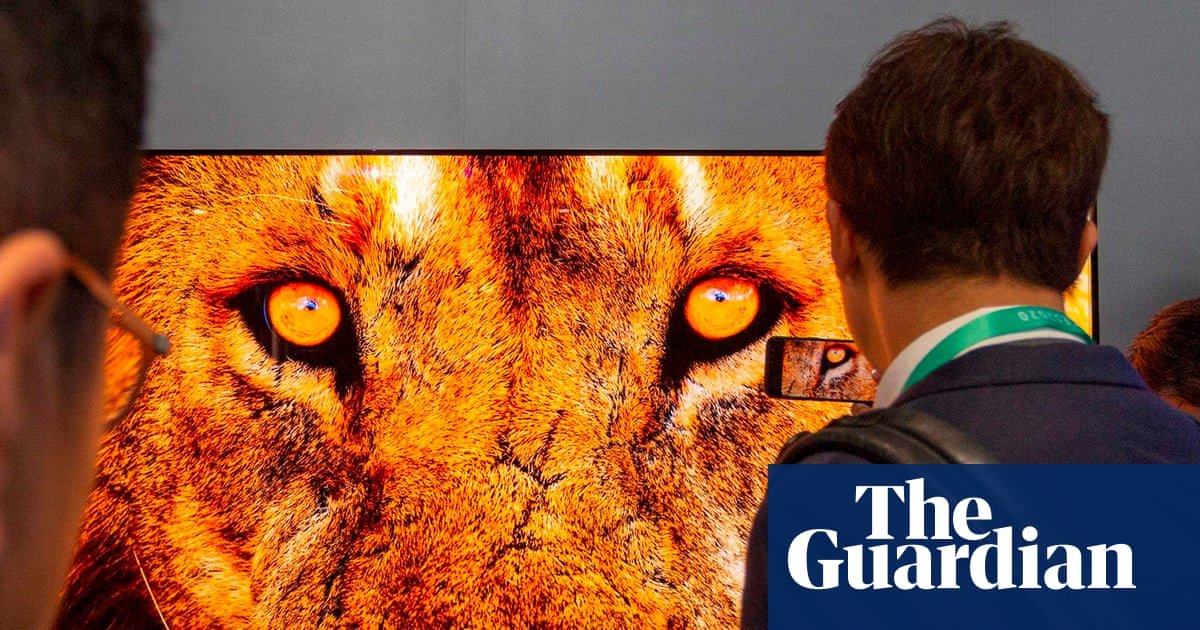
    The research team have created a free online calculator that allows users to explore whether a higher-resolution screen would make a difference to what they see. Photograph: David McNew/AFP/Getty Images
    Share
    Facebook Twitter LinkedIn Pinterest Email

    Many modern living rooms are now dominated by a huge television, but researchers say there might be little point in plumping for an ultra-high-definition model.

    Scientists at the University of Cambridge and Meta, the company that owns Facebook, have found that for an average-sized living room a 4K or 8K screen offers no noticeable benefit over a similarly sized 2K screen of the sort often used in computer monitors and laptops. In other words, there is no tangible difference when it comes to how sharp an image appears to our eyes.

    “At a certain viewing distance, it doesn’t matter how many pixels you add. It’s just, I suppose, wasteful because your eye can’t really detect it,” said Dr Maliha Ashraf, the first author of the study from the University of Cambridge.

    Ashraf and colleagues, writing in the journal Nature Communications, report how they set about determining the resolution limit of the human eye, noting that while 20/20 vision implies the eye can distinguish 60 pixels per degree (PPD), most people with normal or corrected vision can see better than that.

    “If you design or judge display resolution based only on 20/20 vision, you’ll underestimate what people can really see,” Ashraf said. “That’s why we directly measured how many pixels people can actually distinguish.”

    The team used a 27in, 4K monitor mounted on a mobile cage that enabled it to be moved towards or away from the viewer. At each distance, 18 participants with normal vision, or vision corrected to be normal, were shown two types of image in a random order. One type of image had one-pixel-wide vertical lines in black and white, red and green or yellow and violet, while the other was just a plain grey block. Participants were then asked to indicate which of the two images contained the lines.

    “When the lines become too fine or the screen resolution too high, the pattern looks no different from a plain grey image,” Ashraf said. “We measured the point where people could just barely tell them apart. That’s what we call the resolution limit.”

    The researchers found the human eye can resolve more detail than commonly thought, revealing the average was 94 PPD for greyscale images viewed straight on, while for red and green patterns it was 89 PPD. For yellow and violet patterns it was lower, at 53 PPD.

    In another experiment, 12 of the participants were presented with white text on a black background and vice versa, again at various distances, and were asked to indicate when the text looked as sharp as a sharp reference version.

    “The resolution at which people stopped noticing differences in text matched what we saw with the line patterns,” Ashraf said.

    The researchers have released a chart that shows different screen sizes and viewing distances, along with the nearest standard resolution that reaches or slightly exceeds the visual limit for most people.

    “In other words, if your setup falls into one of those squares, you wouldn’t gain any visible benefit from going higher,” Ashraf said.

    The team have also created a free online calculator that allows users to enter their viewing distance along with the size and resolution of their screen, with the results indicating whether the setup is above or below the resolution limit of the human eye. As a result, users can explore whether a higher-resolution screen with more pixels would make a difference to what they see.

    “If someone already has a 4K, 44-inch TV and watches it from about 2.5 metres away, that’s already more detail than the eye can see,” Ashraf said. “Upgrading to an 8K version of the same size wouldn’t look any sharper.”

    noticeably Scientists Television televisions typical UltraHD viewer
    Share. Facebook Twitter Pinterest LinkedIn Tumblr Email
    Previous ArticleEY partner pay rises 9% to £787,000
    Next Article ‘We want people to get lost!’ Princeton’s new museum survives scandal to deliver a mazey art ambush | Architecture
    onlyplanz_80y6mt
    • Website

    Related Posts

    Scientists develop AI tool to spot heart failure risk five years before it strikes | Heart disease

    April 9, 2026

    Genetics may help explain why results from weight-loss jabs vary, say scientists | Weight-loss drugs

    April 8, 2026

    Sex at arm’s length? Male octopuses use specialised arm to mate, scientists find | Marine life

    April 2, 2026
    Add A Comment
    Leave A Reply Cancel Reply

    Top Posts

    Watch Lady Gaga’s Perform ‘Vanish Into You’ on ‘Colbert’

    September 9, 20251 Views

    Advertisers flock to Fox seeking an ‘audience of one’ — Donald Trump

    July 13, 20251 Views

    A Setback for Maine’s Free Community College Program

    June 19, 20251 Views
    Stay In Touch
    • Facebook
    • YouTube
    • TikTok
    • WhatsApp
    • Twitter
    • Instagram
    Latest Reviews

    At Chile’s Vera Rubin Observatory, Earth’s Largest Camera Surveys the Sky

    By onlyplanz_80y6mtJune 19, 2025

    SpaceX Starship Explodes Before Test Fire

    By onlyplanz_80y6mtJune 19, 2025

    How the L.A. Port got hit by Trump’s Tariffs

    By onlyplanz_80y6mtJune 19, 2025

    Subscribe to Updates

    Get the latest tech news from FooBar about tech, design and biz.

    Most Popular

    Watch Lady Gaga’s Perform ‘Vanish Into You’ on ‘Colbert’

    September 9, 20251 Views

    Advertisers flock to Fox seeking an ‘audience of one’ — Donald Trump

    July 13, 20251 Views

    A Setback for Maine’s Free Community College Program

    June 19, 20251 Views
    Our Picks

    ‘Uber for nurses’: gig-work apps lobby to deregulate healthcare, report finds | US healthcare

    Bill banning people born after 2008 from buying tobacco clears UK parliament | Smoking

    Prolific unregulated sperm donor loses UK legal fight to be named as child’s father | Sperm donation

    Recent Posts
    • ‘Uber for nurses’: gig-work apps lobby to deregulate healthcare, report finds | US healthcare
    • Bill banning people born after 2008 from buying tobacco clears UK parliament | Smoking
    • Prolific unregulated sperm donor loses UK legal fight to be named as child’s father | Sperm donation
    • Trump’s Fed chair pick says he’ll maintain independence – but won’t say president lost 2020 election | Federal Reserve
    • Virginia Redistricting Referendum 2026: Live Election Results
    © 2026 naijaglobalnews. Designed by Pro.
    • About Us
    • Disclaimer
    • Get In Touch
    • Privacy Policy
    • Terms and Conditions

    Type above and press Enter to search. Press Esc to cancel.