

Things are falling apart in the final volume of The Book of Dust, the second of Philip Pullman’s magisterial trilogies set in a world that appears, here more than ever, as a charged and slanted version of our own. Institutions are failing, or reassembling themselves along new and disquieting lines. An unseen force “is destroying the air and the seasons”; at the same time, “money’s going bad, and no one knows why”. Power is flowing away from governments, and pooling in the offices of theocrats, the coffers of conglomerates, the hands of mobs. “Something is at work, very quietly, very subtly”, says merchant Mustafa Bey, keeping a watchful eye on the Silk Roads from his seat in an Aleppo cafe. “Things we thought were firm and solid are weakening and giving way.”
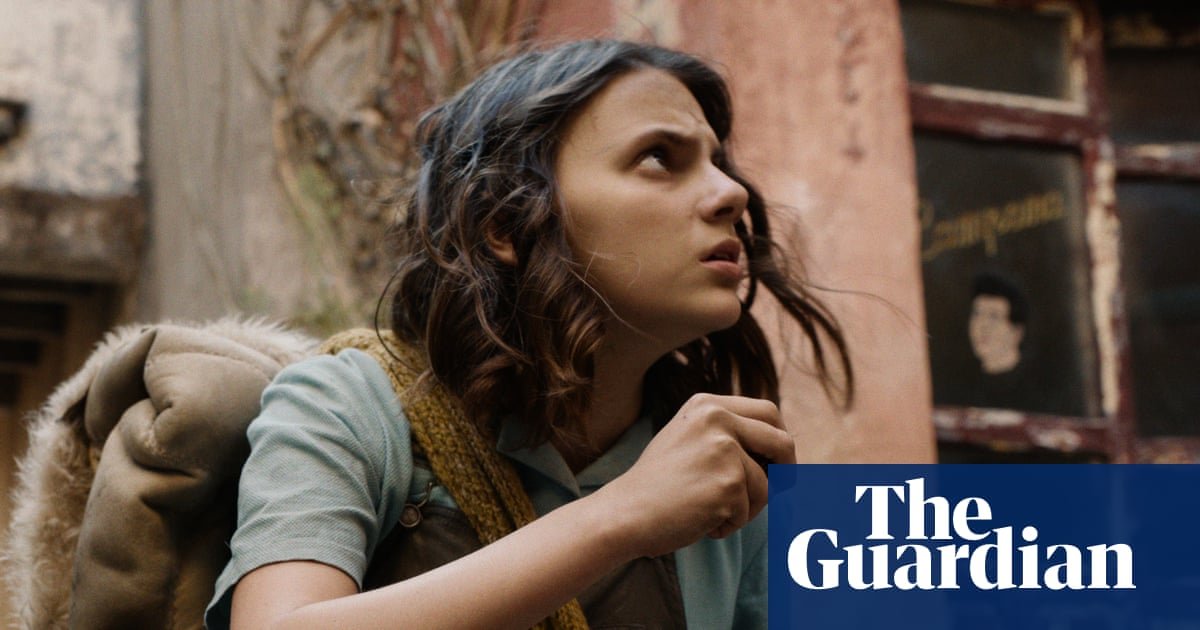
Just what that something might be, and how to counteract it, is the question that animates The Rose Field, which picks up where The Secret Commonwealth left off. This is, by all accounts, Pullman’s concluding foray into the intricately constructed, infinitely beguiling realm he first unveiled 30 years ago, with the publication of Northern Lights. It’s a realm whose geography maps on to that of this world, but whose history tacks and jibes with ours; where the humans look and think and act like us, but are accompanied by daemons, souls in animal form; where the skies are filled with witches and gryphons, but beneath those skies, buses are caught and tea is drunk, and middle-aged academics carry Harrods shopping bags. Lyra, whom we first met as a 12-year-old in the His Dark Materials trilogy, and then saw again as a baby in La Belle Sauvage, the prequel with which Pullman began The Book of Dust, is now a young woman: still recognisably the spiky and tenacious heroine of the earlier books, but older, sadder, more cautious, less certain. This circumscription is amplified by her separation from her daemon, Pantalaimon – but it was also, ironically, the trigger which caused him to abandon her in the first place.
Pan’s decision to go off in search of that childlike part of Lyra which she seems to have lost (an aspect which he epitomises as her “imagination”), and her quest to reunite with him, were the incitements of The Secret Commonwealth, which saw Lyra undertake a picaresque journey across Europe and into the Caucasus, meeting with marvel and danger on the way. But from the outset, deeper currents were in motion, and darker forces at work. The Magisterium – the church’s governing authority, and Pullman’s deliciously chilling embodiment of austere, bureaucratic evil – is under new leadership, and flexing its muscles. Marcel Delamare – Lyra’s uncle, who blames her for his sister’s death – has manoeuvred himself into the role of president of the Magisterium’s High Council, and is intent on using his newfound power to extend the church’s dominium. Malcolm Polstead, who carried baby Lyra to safety along a flooded Thames as an 11-year-old in La Belle Sauvage, is now an Oxford don with a sideline in intelligence work: he is dispatched to Geneva to find out more about Delamare’s intentions. And behind all of this is the mystery surrounding the rare and valuable rose oil which seems somehow to be the source of a social and economic crisis rippling out from Central Asia. The oil is seen by some as a tradeable commodity, by others as a scientific or spiritual miracle, and by others still – the fanatical “men from the mountains” – as a source of evil; an affront that must be obliterated. The question of where it comes from, what it stands for, and whether it should be destroyed or protected is coming rapidly to the fore.
As in His Dark Materials, Lyra’s actions, and her destiny, are revealed to be inextricably entwined with the fate of the world
In The Secret Commonwealth, these storylines ran broadly in parallel. In The Rose Field, they converge. As in His Dark Materials, Lyra’s actions and her destiny are revealed to be inextricably entwined with the fate of the world. Her personal quest to reunite with her daemon and recover her imagination becomes the key battleground in a wider war with an authoritarian regime which, as such regimes always have, is seeking to quell independence of thought, creativity and art: all the internal, rebellious ways in which people can be free.
The novel begins with the discovery of a series of curious fissures in the fabric of the Earth’s atmosphere: windows that seem to give on to other worlds. One such window appears to be the source of the highly contested rose oil. The Magisterium, with Delamare at its head, designates these windows as a challenge to the church’s orthodoxy and sets out to eradicate them. As Lyra begins to turn away from rigid rationalism and back to intuition, however, her conviction that these sites must be protected – that what they stand for and what they offer is somehow essential – grows. “Dust, or rose oil, or the imagination, or the Rose Field, or whatever we call it,” she says, “we need it.” The stage for a Blakean tussle between innocence and experience is set.
At 640 pages, The Rose Field gives itself the time it needs to bring Pullman’s trilogy to a fitting conclusion, but there are points when it seems to wend its way rather too circuitously to a close. Minor characters are on occasion introduced without definite purpose, and there are moments where apparent advances in the narrative turn out to be cul-de-sacs. But the story’s internal motor is strong enough to carry us over these digressions. Lyra’s journey into adulthood feels both painful and plausible and, once again, Pullman uses her relationship with her daemon to reify and explore her internal struggles in a manner that is unique to his imaginative universe. Malcolm is an unexpectedly successful replacement for Will, Lyra’s foil in the first trilogy: he is a rich, full character in his own right, and his feelings for Lyra, and hers for him, offer a complex, adult counterpoint to the relationship between Will and Lyra in His Dark Materials. Pullman’s uncanny ability to conjure place, meanwhile, is once again in full evidence: the snows of Svalbard and Oxford’s clutter of rooftops are exchanged for the Silk Roads’ sweeping deserts and soaring mountains. And when we reach it, the novel’s final showdown is a fantastically nail‑biting ride.
Endings, though, are always difficult, and for Pullman, the challenge is compounded by the fact that His Dark Materials delivered one of the most emotionally and intellectually satisfying conclusions in modern literature. In The Book of Dust, by contrast, there is a sense of threads left unknotted; ends only lightly tucked away. But this feels, in the final analysis, like an intentional choice on Pullman’s part: the ultimate reflection of the fact that The Book of Dust is a story for grownups, not children, and storybook endings are another casualty of the putting away of childish things. “There are no endings,” said Hilary Mantel on the final page of Bring Up the Bodies; “they are all beginnings.” Pullman draws his great matter to a close, but he’s clear that his characters, and their stories, will continue without him – that the end of his book marks the start of their next chapter. “We need the things we can’t explain, can’t prove, or else we die of suffocation,” says Lyra, towards the end of the novel. With The Book of Dust, Pullman has given us room to breathe.
skip past newsletter promotion
Discover new books and learn more about your favourite authors with our expert reviews, interviews and news stories. Literary delights delivered direct to you
Privacy Notice: Newsletters may contain information about charities, online ads, and content funded by outside parties. If you do not have an account, we will create a guest account for you on theguardian.com to send you this newsletter. You can complete full registration at any time. For more information about how we use your data see our Privacy Policy. We use Google reCaptcha to protect our website and the Google Privacy Policy and Terms of Service apply.
after newsletter promotion
The Rose Field: The Book of Dust Volume 3 by Philip Pullman is published by David Fickling/Penguin (£25). To support the Guardian order your copy at guardianbookshop.com. Delivery charges may apply.
