

The first person I saw when I walked into the Pentagon for the final time was Jimmy. I don’t even know his last name, but I know his story. Before he started work at the labyrinthine headquarters of America’s armed forces, he was a medic in the Marine Corps. For the past 21 years, he has been a building police officer and an unofficial, affable greeter. Jimmy only told me about his military career in 2021, the morning after 13 troops were killed in a suicide bombing at the entrance of the Kabul airport amid the chaotic U.S. withdrawal from Afghanistan. Everyone talked about the 11 Marines killed that day, but Jimmy remembered the one Navy corpsman among them, a medic who, like him, had been assigned to travel with the unit, just in case.
For nearly two decades, Jimmy stood guard beside two large mosaics showing the faces of the nearly 3,000 people killed in the September 11, 2001, attacks. The displays came down during the pandemic, a symbol of a nation that had moved on from the War on Terror and was beginning to focus on new threats. Last month, President Donald Trump told troops that the country’s adversary was “the enemy within.”
Nearly all of the Pentagon press corps is leaving the building this week, barred from working there under restrictions imposed by the Trump administration. My fellow journalists and I will continue to do our jobs, reporting on the U.S. military in every way we know how. But something is lost when the leadership of the Department of Defense chooses to close itself off to scrutiny in the way it has. On the most basic level, the public loses access to information it has a right to know, along with the right to ask questions of those entrusted with spending nearly $1 trillion from taxes and managing 3 million employees. But something intangible is lost too, including the privilege of meeting people like Jimmy, whose names may never appear in print but who are essential to how we understand the U.S. military. Before I had even crossed the vestibule to enter the building this morning, I was thinking about the stories I would no longer hear, the people I would never meet.
In the afternoon, officials confiscated the Pentagon press badges of hundreds of journalists, including mine. Dozens of news organizations had reached the same conclusion: The Pentagon’s new, 21-page press restrictions prevented us from doing basic news gathering, compromised our First Amendment rights, and disregarded the public’s right to know. News organizations, including this one, decided that we would rather cover the military without building access than do it under the Pentagon’s terms.
“We fundamentally oppose the restrictions that the Trump administration is imposing on journalists who are reporting on matters of defense and national security,” Jeffrey Goldberg, the editor in chief of The Atlantic, said in a statement on Monday announcing that we would not agree to the new terms. “The requirements violate our First Amendment rights, and the rights of Americans who seek to know how taxpayer-funded military resources and personnel are being deployed.”
Defense Secretary Pete Hegseth, in justifying what he has described as “common sense” changes, has misrepresented what journalists and Pentagon officials have done since the building opened in 1943. He has insisted that all he is doing is asking the press to wear badges, to not roam the building unfettered, and to make sure those with access to classified information do their jobs correctly. The truth is that we have always worn badges and we never had unfettered access in the building. And although serious news organizations have always taken into account national-security considerations when deciding what to publish, they do so while also considering the importance of information being made public.
As far as anyone knows, no security breach by any Pentagon journalists brought about the new restrictions. Indeed, the biggest violation of national-security norms since Hegseth entered the building 10 months ago was by Hegseth himself, when he moved sensitive plans about upcoming air strikes on Yemen from a secure government system to a non-governmental app, Signal, and shared them with this magazine’s editor in chief.
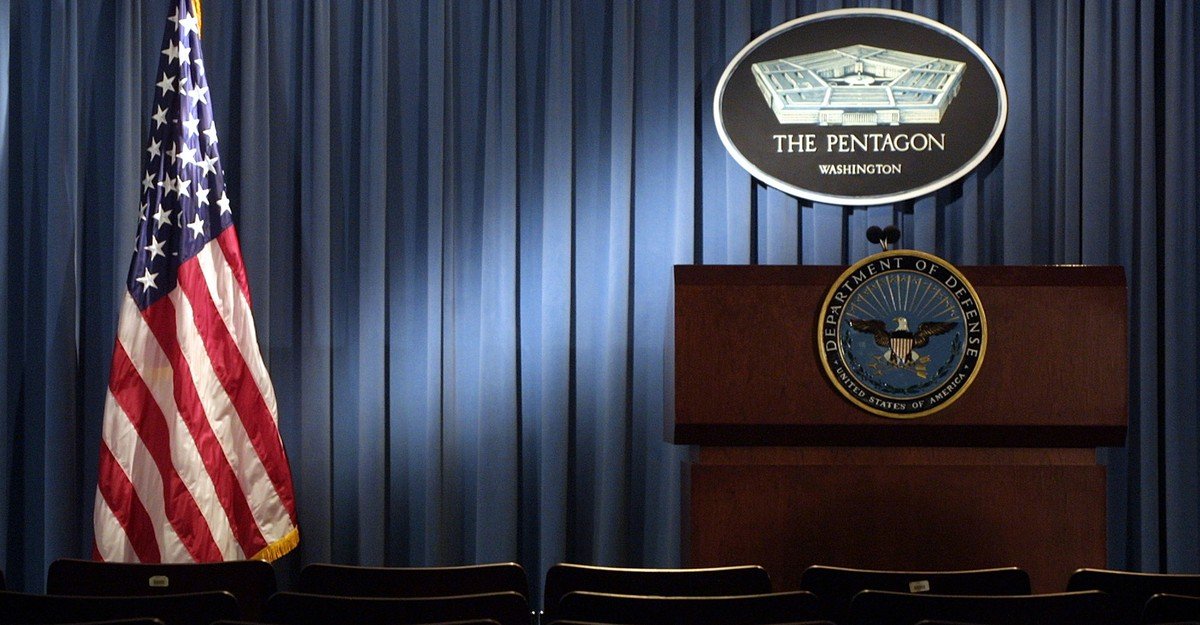
Hegseth’s disdain for critical coverage of any kind has been evident since he took office. Within weeks, he evicted several news organizations from their workspaces. Then he barred journalists from using the press-briefing room. In May, he restricted the press to a handful of the Pentagon’s 17.5 miles of hallways. In all, there have been only two Hegseth press briefings and two others on camera by his top spokesperson. Instead, Hegseth and his press team have relied on social media, posting a steady stream of attacks on reporters and their stories, and even on retired military leaders. After several news organizations posted explanations of why they would not agree to the new rules, Hegseth retweeted their messages with the waving-hand emoji. Bringing back the “warrior ethos,” as Hegseth has repeatedly vowed to do, apparently includes keyboard warriors.
As journalists walked out of the building, taking our collective centuries of experience on the beat with us, we passed dozens of locked doors leading to secure rooms that we have never entered. Inside those rooms sat career military officers and civilians, some of whom believe that the oath to protect secrets and the responsibility to engage with the American public through the press are two values that can coexist.
In recent days, mid-level troops have been reaching out to me, unsolicited, and promising that they would keep providing journalists with information, not to snub their civilian leaders but to uphold the values embedded in the Constitution. Retired spokespeople have written to me to say that they, too, have felt like they are losing something with the media’s departure.
As I said goodbye to the cleaning crews, the Pentagon police, the troops, and the longtime civilian staffers, what I heard was, in effect, a collective sigh. I repeatedly heard stories of people asking themselves, How long can I stay here? Some said they were tired of watching colleagues be pushed out, fearful of when they themselves would be asked to sign new rules that they felt went against their oath to defend the Constitution or their personal ethics. “I am tired of new rules,” one civilian told me. “They clearly don’t want us,” an Army colonel said.
The worries I heard have been, for many, growing for some time. When Hegseth summoned the military’s top generals and commanders to Quantico, Virginia, last month, some told their staffs that they feared they would be asked to take a loyalty oath and were considering how they might respond. (There was no oath, but the defense secretary did announce plans to drive out anyone who can’t meet physical-fitness standards. Hegseth later issued a memo ordering troops to watch or read his speech.)
By the time of the speech, the press corps was already preparing to have to walk out, having reviewed a draft of the new restrictions. From now on, there will be few, if any, independent journalists in the building to question top defense officials or to banter with the troops. The restrictions will likely reach military installations across the country and overseas as well. We won’t be seeing service members on the front lines, out at sea, or aboard cargo planes—unless it’s through imagery approved by the Defense Department. Some of my colleagues have put their lives on the line in defense of the public’s right to information.
Reporting in this new environment will not be easy. Even before today, the Pentagon severely restricted the flow of information to the American public. As the sound of packing tape sliding across moving boxes reverberated in our bullpen yesterday, reporters noticed a social-media post by Trump announcing that the U.S. had struck a boat near Venezuela, killing six alleged narco traffickers. As we had after the four previous strikes, we asked Pentagon officials what kind of ordnance the U.S. military used, the legal basis for the strike, and the identities of those who were killed. The Pentagon declined to answer. Similarly, officials have given scant information about the deployment of National Guard troops on American soil—in Portland, Oregon; Chicago; Washington, D.C.; Memphis; and Los Angeles—with more likely to follow.
As we packed up our belongings this week-–thick reports, battered helmets, expired Girl Scout cookies—department officials walked through the media area to assess what would soon be their space. The six closet-size booths assigned to television networks were largely bare, emptied of video equipment. Those spaces allowed the public to hear the phrase “Live from the Pentagon” through the Vietnam and Gulf Wars, on 9/11, and, more recently, after U.S. strikes on Iran. Because it usually takes years for reporters to feel truly comfortable in their knowledge of the Pentagon, many stay on for decades. In the print bullpen, home to a few notorious pack rats, we scrounged through papers that dated back to the previous century as well as more recent evidence that the military had once been far friendlier to the press. That included a 2007 Air Force Public Affairs directory, which listed contact information at every base. It was 86 pages. Meanwhile, we couldn’t even say goodbye to the Air Force press desk today, because their offices are located in an area Hegseth had already deemed off-limits.
One way to reach our offices was to walk through a corridor dedicated to the military’s commitment to engaging with the press. At the end is a large sign outlining the department’s Principles of Information, signed less than two months after the 9/11 attacks.
“It is the policy of the Department of Defense to make available timely and accurate information so that the public, the Congress, and the news media may assess and understand the facts about national security and defense strategy” the George W. Bush–era document states. “A free flow of general and military information shall be made available, without censorship or propaganda, to the men and women of the Armed Forces and their dependents.”
The day before our departure, one reporter placed signs throughout our soon-to-be-vacated spaces that read Journalism is not a crime. As soon as members of Hegseth’s staff saw the signs, they tore them down.
