

October 14, 2025
4 min read
Contributors to Scientific American’s November 2025 Issue
Writers, artists, photographers and researchers share the stories behind the stories
Lori Youmshajekian
Supplements That Fight Inflammation
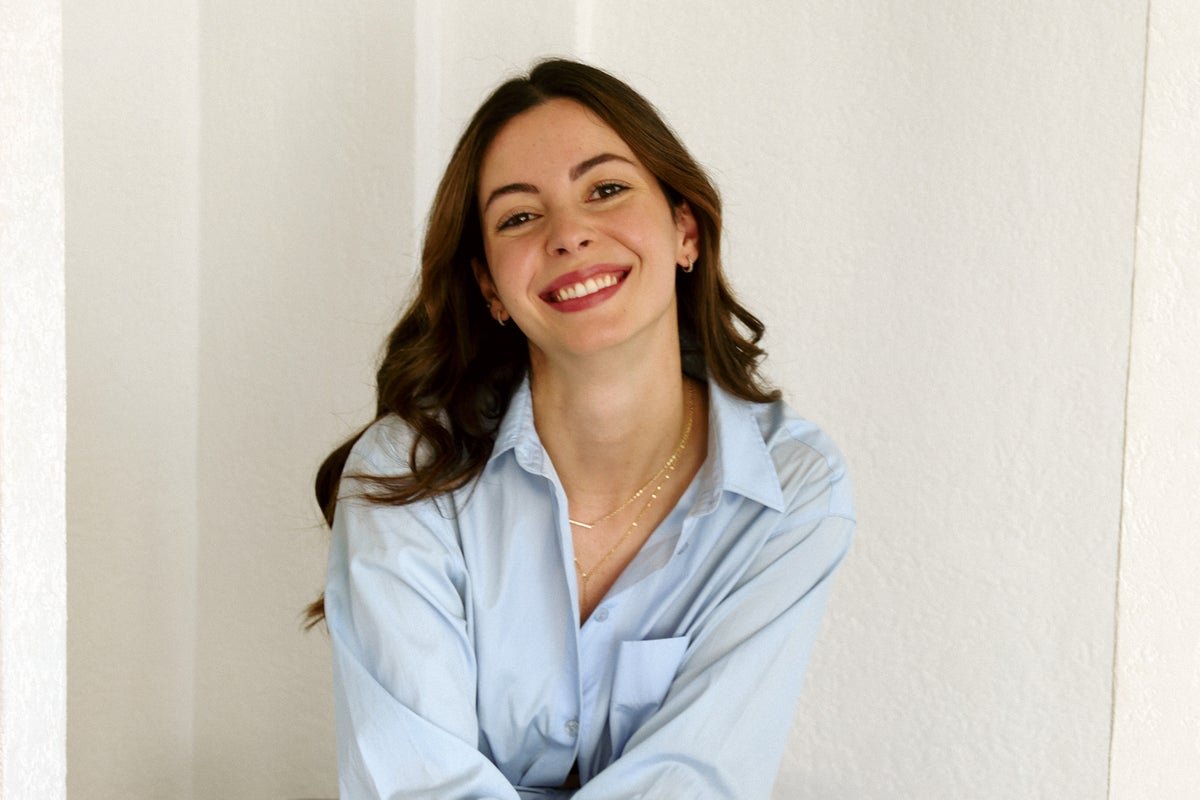
“So many of my story ideas come from a friend asking me, ‘Did you see this thing on TikTok?’” says Lori Youmshajekian (above), who wrote this month’s feature about dietary supplements and inflammation. “I love investigating and debunking things that are trending on social media.” As a former Scientific American intern, Youmshajekian has an affinity for reporting stories on consumer health that pique her personal curiosity: “I think you ask better questions when you’re in the shoes of your reader because you want the same questions answered. You want to get to the bottom of things.”
Youmshajekian grew up in Australia and majored in finance but “felt my mind going numb looking at spreadsheets all day.” She got a university communications job and found that she loved interviewing academics about their research. Her first journalism gig was a two-year project about sexual assault that ended up changing a law in Australia. After that, she was hooked.
On supporting science journalism
If you’re enjoying this article, consider supporting our award-winning journalism by subscribing. By purchasing a subscription you are helping to ensure the future of impactful stories about the discoveries and ideas shaping our world today.
Youmshajekian headed to graduate school in New York City, and after a series of jobs and internships, she now works as a freelance science journalist based in Armenia, “which is my ethnic background,” she says. She leads workshops on science writing for other journalists and is considering teaching as well. “I report quite a bit on local health issues,” she says. “It doesn’t have the impact of writing for an American publication, but it does have an impact.”
Bianca Brandner
Graphic Science
For Bianca Brandner, becoming a graphic designer felt inevitable, “like there was no other option,” she says. Whether she’s working for editorial or commercial clients, Brandner likes the challenge of diving into a completely new field and “extracting its essence. I see it as a process of translation from a theoretical side to the visual, more perceptive side.”
For this month’s Graphic Science column, written by associate editor Allison Parshall, Brandner redesigned a classic graphic from our archive: a 1973 chart about the efficiency of various forms of locomotion. To highlight clustered data points, she used texture and color to bring in warmth and tactility. “Infographics should be simple and straightforward, but they don’t have to be clinical,” she says.
Brandner is part of DTAN Studio in Berlin (its name stands for “Don’t Try Anything New”). To make digital animations, she and her colleagues start with physical materials. “We do paper cutting and do each frame by hand,” she says. “The imperfections are what add character—they create personality in the design.” Brandner is also interested in typography and has spent the past few years creating her own font. “It’s structured but also freeing because there’s no client behind it, so I can follow my vision 100 percent,” she says. “Of course, the downside is that no one is pushing me to get it done. I’ve revisited the same letter three or four times.”
Dan Vergano
Meteorite Heist
In 2012 Dan Vergano, then a senior science reporter at USA TODAY, saw an article about a Nazi-acquired Buddhist god sculpted out of meteoritic iron. The story was getting lots of play. The finding had come from Meteoritics & Planetary Science, and Vergano felt his competitive instincts flare. “I kicked myself because I should have been reading that journal,” he says. “I thought, I ain’t gonna miss the next good article that comes out of there.” Last summer Vergano spotted a potential “Indiana Jones story” in Meteoritics & Planetary Science, which led him to write this month’s feature about how one of the largest meteorites ever found went missing from Somalia.
Now a senior editor at Scientific American, Vergano studied aeronautical engineering and worked in communications for the U.S. Department of Defense before becoming a journalist. “I realized it would be more fun to write Freedom of Information Act requests rather than suppressing them,” he says.
Vergano had previously reported about artifacts looted during the Iraq War, and while working on this story, he was “shocked that the field of meteoritics hasn’t grappled with the provenance of meteorites the way the fields of antiquities and paleontology have.”
Deena So‘Oteh
Life’s Big Bangs
When Deena So‘Oteh first read a draft of Asher Elbein’s article on the origins of complex multicellular life, the cover story she would be creating illustrations for, “I wanted to know, on a molecular level, how these microorganisms had been visualized previously,” she says.
So‘Oteh started from a literal place, imagining what a scientist digging through rocks would be seeing, and then researched the “intricate, symmetrical drawings” of Austrian artist Alfred Hagel, an early 20th-century modernist and impressionist. When she first sits down to sketch, “I allow my hands to develop ideas without necessarily identifying them as such early on.” For the magazine cover, she wanted to show the “duality of something being both seen and unseen” and how those concepts are interpreted in light of each other.
So‘Oteh has a background in fine arts but gravitated toward work that “communicates,” she says. The bulk of her work involves illustrating book covers and editorial concepts, which allows for “a process of constant learning and visualizing abstract concepts.” She loves the reading and the research, but when it comes to making an image, her response is visceral: “I ask myself, What do I want readers to feel?”
It’s Time to Stand Up for Science
If you enjoyed this article, I’d like to ask for your support. Scientific American has served as an advocate for science and industry for 180 years, and right now may be the most critical moment in that two-century history.
I’ve been a Scientific American subscriber since I was 12 years old, and it helped shape the way I look at the world. SciAm always educates and delights me, and inspires a sense of awe for our vast, beautiful universe. I hope it does that for you, too.
If you subscribe to Scientific American, you help ensure that our coverage is centered on meaningful research and discovery; that we have the resources to report on the decisions that threaten labs across the U.S.; and that we support both budding and working scientists at a time when the value of science itself too often goes unrecognized.
In return, you get essential news, captivating podcasts, brilliant infographics, can’t-miss newsletters, must-watch videos, challenging games, and the science world’s best writing and reporting. You can even gift someone a subscription.
There has never been a more important time for us to stand up and show why science matters. I hope you’ll support us in that mission.
