
Close Menu

    Subscribe to Updates

    Get the latest creative news from FooBar about art, design and business.

    What's Hot

    DeVry Embeds AI Literacy in All Courses

    China is betting on ‘optical’ computer chips – will they power AI?

    Labour chooses Angeliki Stogia for Gorton and Denton byelection | Labour

    Facebook X (Twitter) Instagram
    Facebook X (Twitter) YouTube LinkedIn
    Naija Global News |
    Saturday, January 31
    • Business
    • Health
    • Politics
    • Science
    • Sports
    • Education
    • Social Issues
    • Technology
    • More
      • Crime & Justice
      • Environment
      • Entertainment
    Naija Global News |
    You are at:Home»Science»Should genetically modified wildlife be banned? Scientists weigh the risks
    Science

    Should genetically modified wildlife be banned? Scientists weigh the risks

    onlyplanz_80y6mtBy onlyplanz_80y6mtOctober 11, 2025003 Mins Read
    Share Facebook Twitter Pinterest LinkedIn Tumblr Email
    Should genetically modified wildlife be banned? Scientists weigh the risks

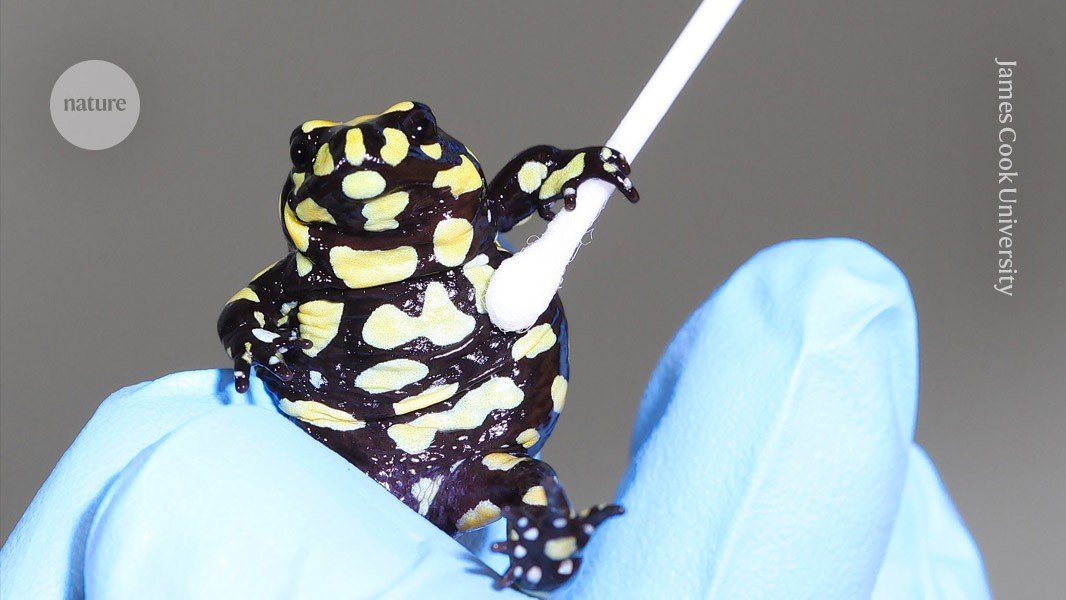
    A corroboree frog is tested for chytrid fungus. Introducing genetic changes to these frogs could help to make them more resistant to infections.Credit: James Cook University

    Share
    Facebook Twitter LinkedIn Pinterest Email

    A corroboree frog is tested for chytrid fungus. Introducing genetic changes to these frogs could help to make them more resistant to infections.Credit: James Cook University

    The global conservation community is debating whether to ban the release of genetically modified organisms into the wild. Dozens of non-governmental organizations have called for a moratorium on field applications of synthetic biology — a technology being studied as a tool to fight diseases, control pests and help endangered species — saying that the approach has unpredictable consequences. But some researchers argue that an outright ban is too restrictive, and could have negative consequences for human health and biodiversity.

    How genetically modified mosquitoes could eradicate malaria

    A proposal for a ban will face a vote next week at a congress of the International Union for Conservation of Nature (IUCN) in Abu Dhabi. The IUCN brings together governments and civil society organizations to guide global conservation policy. Although decisions made by its members are not legally binding, they do influence legislation in many countries, says biologist Piero Genovesi, head of the Wildlife Service at the Italian Institute for Environmental Protection and Research in Rome.

    If members vote in favour of the proposed ban, it “could have stronger impacts in areas like Europe or Australia, where there are many lines of research focused on developing new tools based on synthetic biology for improving the efficacy of conservation action”, Genovesi says. He is among more than 240 scientists who have so far signed an open letter asking IUCN members to reject the moratorium.

    Ongoing debate

    This is not the first time conservationists have debated whether the genetic engineering of wild species should be allowed. A moratorium on gene drives, a way of introducing engineered genes so that they spread rapidly through a population, was proposed at the United Nations Convention on Biological Diversity meeting in 2016, and again in 2018 — but was ultimately rejected.

    Those in favour of the latest proposal argue that the effects of genetic biotechnologies on nature — and on insects in particular — are hard to predict and could be irreversible. “These new technologies risk adding to the pressures already threatening pollinators,” said Joann Sy, scientific adviser at POLLINIS, a non-profit organization based in Paris that is focused on the conservation of bees and other pollinators, in a statement released by the organization. More than 80 researchers have signed an open letter in support of the moratorium, which says that the deployment of genetically modified organisms is “advancing faster than safety and risk assessment can keep pace” and that “no release should occur unless and until it can be demonstrated that there are no direct or indirect risks to pollinators, biodiversity or ecosystems”.

    Genetically modified apple reaches US stores, but will consumers bite?

    Banned Genetically modified risks Scientists Weigh wildlife
    Share. Facebook Twitter Pinterest LinkedIn Tumblr Email
    Previous Article‘Another Nakba’: UN expert says Gaza recovery will take generations | Israel-Palestine conflict News
    Next Article “New Collaborations Needed” as U.S. Cuts Global Health Funds
    onlyplanz_80y6mt
    • Website

    Related Posts

    China is betting on ‘optical’ computer chips – will they power AI?

    January 31, 2026

    Mass grave in Jordan sheds new light on world’s earliest recorded pandemic | Infectious diseases

    January 31, 2026

    Largest galaxy survey yet confirms that the Universe is not clumpy enough

    January 31, 2026
    Add A Comment
    Leave A Reply Cancel Reply

    Top Posts

    Watch Lady Gaga’s Perform ‘Vanish Into You’ on ‘Colbert’

    September 9, 20251 Views

    Advertisers flock to Fox seeking an ‘audience of one’ — Donald Trump

    July 13, 20251 Views

    A Setback for Maine’s Free Community College Program

    June 19, 20251 Views
    Stay In Touch
    • Facebook
    • YouTube
    • TikTok
    • WhatsApp
    • Twitter
    • Instagram
    Latest Reviews

    At Chile’s Vera Rubin Observatory, Earth’s Largest Camera Surveys the Sky

    By onlyplanz_80y6mtJune 19, 2025

    SpaceX Starship Explodes Before Test Fire

    By onlyplanz_80y6mtJune 19, 2025

    How the L.A. Port got hit by Trump’s Tariffs

    By onlyplanz_80y6mtJune 19, 2025

    Subscribe to Updates

    Get the latest tech news from FooBar about tech, design and biz.

    Most Popular

    Watch Lady Gaga’s Perform ‘Vanish Into You’ on ‘Colbert’

    September 9, 20251 Views

    Advertisers flock to Fox seeking an ‘audience of one’ — Donald Trump

    July 13, 20251 Views

    A Setback for Maine’s Free Community College Program

    June 19, 20251 Views
    Our Picks

    DeVry Embeds AI Literacy in All Courses

    China is betting on ‘optical’ computer chips – will they power AI?

    Labour chooses Angeliki Stogia for Gorton and Denton byelection | Labour

    Recent Posts
    • DeVry Embeds AI Literacy in All Courses
    • China is betting on ‘optical’ computer chips – will they power AI?
    • Labour chooses Angeliki Stogia for Gorton and Denton byelection | Labour
    • Eton head apologises after former teacher jailed for sexual assault of pupil | Private schools
    • Drone strikes in Ethiopia’s Tigray kill one amid fears of renewed conflict | Conflict News
    © 2026 naijaglobalnews. Designed by Pro.
    • About Us
    • Disclaimer
    • Get In Touch
    • Privacy Policy
    • Terms and Conditions

    Type above and press Enter to search. Press Esc to cancel.