

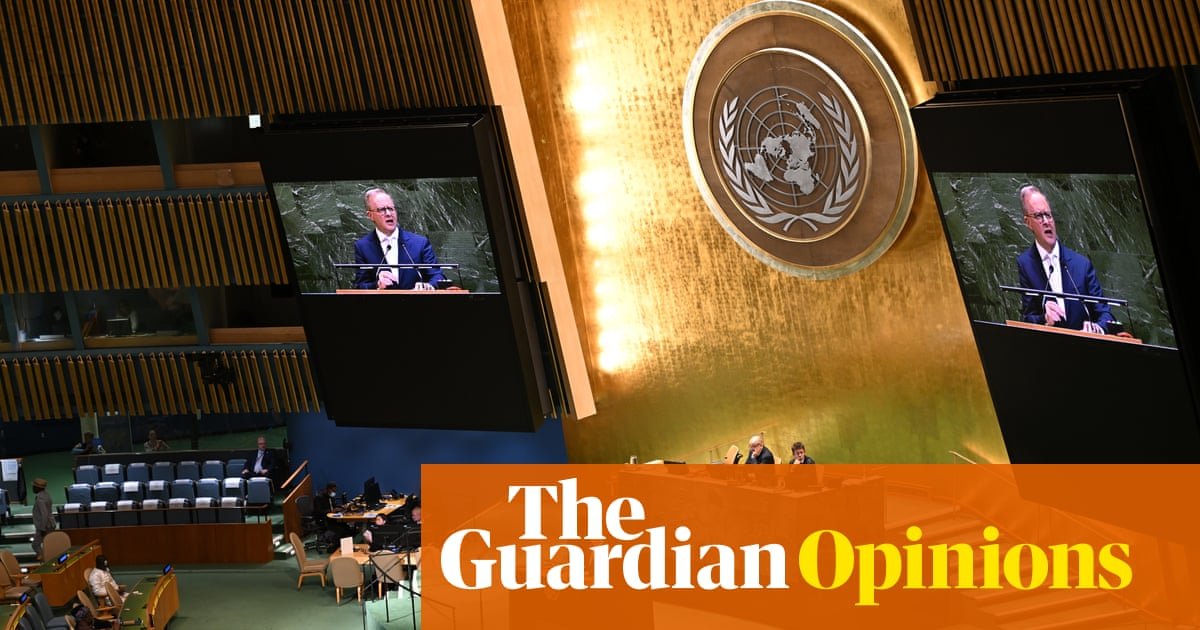
In its 80th year, the UN headquarters in New York heard speeches that made headlines. One leader thundered threats of war. Another complained about an escalator. Meanwhile, outside the polished floors and gilded halls, children were starving in Palestine. Bombs fell. Borders closed. Budget cuts placed the very architecture of human rights under siege.
This was meant to be a landmark gathering, a celebration of 80 years of multilateralism. Instead, it felt like a reckoning. Can the UN still serve the people it was built to protect, or has its promise begun to crack under the weight of politics?
I am 22. I am not a politician. I am not a diplomat. I arrive without motorcade, without flags, without fanfare. But I carry something infinitely heavier: the voices of young people crying out for basic recognition – the ones who should be standing in these chambers, yet perhaps never will.
For the past year, I have travelled across this country, leading one of Australia’s largest ever face-to-face youth consultations. From the Tiwi Islands to Tasmania, from city classrooms to remote detention centres, from town camps to refugee programs, I have listened to thousands of young people. And now I carry those voices with me into the heart of the UN, which is currently still in general assembly proceedings, negotiations and debates.
‘The struggles of young people are borderless’ … Satara Uthayakumaran at the United Nations. Photograph: Satara Uthayakumaran
And as I traveled Australia’s 7.7m square kilometres, time and again, I was asked: “What is the purpose of the UN?”
This is the same question US president Donald Trump posed to the general assembly this year – but while his interrogation came from a hostile place, the question I heard came from the cries of children drowning in poverty. From families forced to choose between a child’s medicine and their own survival. From those terrorised by law enforcement. From young people trapped in modern slavery, sold into forced marriages, robbed of any hope for a future. From those who live every day with the silent weight of exclusion, of neglect, of invisibility.
These children live at the sharpest edge of society, where survival is not a given. Ten-year-olds locked in detention longer than they’ve ever known a home. Children ripped from family, from culture, from everything that should keep them safe. Young people go hungry, scrape by in poverty, watch their dreams wither under debt and neglect – all while the world looks away.
So I started collecting letters. Thousands of them – to the prime minister, to Australia and to the world. From prisons, classrooms, foster homes, communities on Country, across every corner of the nation.
From a youth detention centre, a 16-year-old boy wrote of being beaten, starved and denied his mother, begging for housing and a future beyond the walls. From Alice Springs, a 14-year-old boy wrote that crime is not a choice but survival for kids whose homes aren’t safe. And from Christmas Island, a 16-year-old girl described the trauma of boats being turned around and refugee families brutally locked away.
These are the voices that should shake the walls of the United Nations; not handshakes for the media, not empty speeches.
I write this as an Australian – but this is really about all of us.
From the youth in Alice Springs who commit crimes just to survive to the children in Gaza who beg for bread and safety. From refugee families trapped on Christmas Island to the voices of displaced children across Lebanon and Jordan’s camps. From the hopelessness of a child in an Australian detention centre to the kids forced into armies in Sudan or trafficked across borders in south-east Asia.
The struggles of young people are borderless.
Walking the corridors of the UN, surrounded by history and power, I feel the weight of both worlds: the spectacle of photo-ops, and the unforgiving reality of lives breaking outside these walls.
I believe the UN still has a vital role, but only if it truly hears the cries of the forgotten: refugees who never made it home, survivors of modern slavery rebuilding their lives, people with disabilities left without care, Indigenous families robbed of land and language, Pacific Islands and small nations drowning in the rising tide of climate disaster, those behind bars and the voiceless. Who does the UN serve, if not them? If not us?
Satara Uthayakumaran is Australia’s youth representative to the United Nations for 2025
