

Rachel Feltman: For Scientific American’s Science Quickly, I’m Rachel Feltman.
You might know Chris Hadfield as the International Space Station commander who famously sang David Bowie’s “Space Oddity” while orbiting Earth. But in recent years he’s added fiction writer to his list of jobs, publishing thrillers based on the real history of the space race.
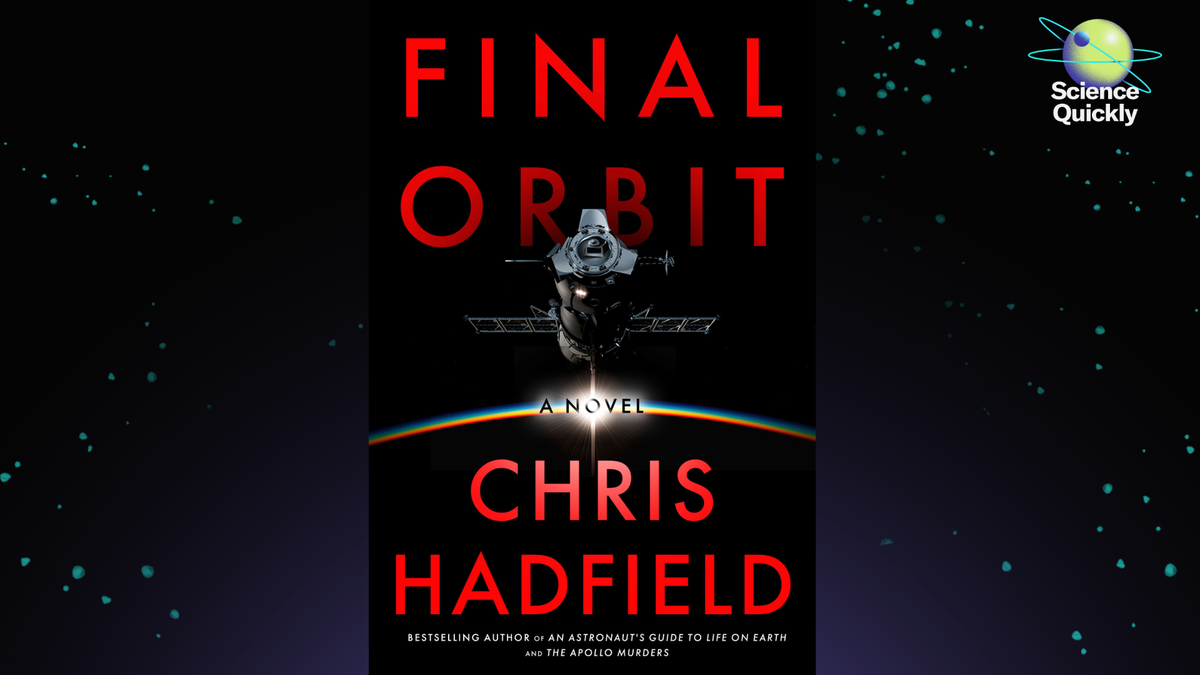
His latest book, Final Orbit, is set in 1975 and features historical figures navigating geopolitical tensions that may sound surprisingly familiar to anyone following current events.
On supporting science journalism
If you’re enjoying this article, consider supporting our award-winning journalism by subscribing. By purchasing a subscription you are helping to ensure the future of impactful stories about the discoveries and ideas shaping our world today.
Here to talk about how his experience as an astronaut informs his fiction writing is Colonel Chris Hadfield, former commander of the International Space Station.
What happens when a real-life astronaut turns to fiction? In this episode, Chris Hadfield shares how decades of spaceflight and global diplomacy inspired his latest novel, Final Orbit, a cold war thriller packed with historical intrigue and technical precision.
Thanks so much for coming on to chat with us today.
Chris Hadfield: My pleasure.
Hadfield: Yeah, I served as an astronaut for 21 years and flew in space three times, commanded a spaceship, did some space walks, but all good things must come to an end, and I retired from 35 years of government service.
Since then I’ve written six books. I help lead several space companies and other tech companies. I run a big international technology incubator called the Creative Destruction Lab—I run a, a big section of that. Working with King Charles [III] on space sustainability, a project called the Sustainable Markets Initiative. I tour with a band, and we played a concert that sold out in a day, so that, that was a lot of fun. And, and I have two granddaughters. But no, life is busy and full and rich, thank you.
Feltman: That’s awesome. And you actually are just releasing—I believe it’s your third work of fiction, which might surprise some listeners. It’s been a busy few years, so they might’ve missed that you were writing fiction at all. Could you tell us a little bit about how you got interested in, in that and what the process has been like for you?
Hadfield: I’ve always loved writing; it was my favorite subject in school. But I knew if I got a arts degree, they wouldn’t let me command a spaceship [laughs], so I, I studied engineering in school. But I’ve always, you know, really admired writing and enjoyed the escapism of good fiction. My first three books were nonfiction, but I wanted to challenge myself to see if I could write good fiction, fiction that people would wanna read. And, and they’ve just done so superbly well—it’s the Apollo Murders series. It’s in, I don’t know, 15 languages or something and optioned for TV and movies.
And I’m, as you say, I’m just releasing the third book in the Apollo Murders series; it’s called Final Orbit. And it’s alternative-history thriller fiction set in the summer of 1975 during the cold war and the end of the Apollo era with Apollo-Soyuz and a derelict space station called Skylab, and all sorts of untoward things happen in Final Orbit. It’s getting just killer reviews. I’m really pleased with how the book came out.
Feltman: As you said, these are works of fiction and, and they’re thrillers, but obviously, there is a lot of fact woven into the story. Could we start by talking about just how your history as an astronaut has informed your fiction writing?
Hadfield: I decided to be an astronaut when I was nine years old. I, I didn’t hope to be an astronaut; I decided to start turning myself into an astronaut at nine. So there’s been an—almost an entire lifetime of research for writing a book ’cause, ’cause I’d just been fascinated by it. And, and then I served 21 years as an astronaut, and you, you don’t just fly in space as a professional astronaut. I was NASA’s chief of operations in Russia and chief of space station operations. I worked in mission control as the lead capcom for 25 shuttle flights in a row.
I’ve been so incredibly lucky to have this depth of real-world space experience, and, and so when I—now, when I’m writing fiction, I do a, a huge amount of research to make sure I get all the facts right, but I also have the lucky resource of my own memories and impressions and knowledge to draw on to make these books not just an interesting plot but something that absolutely could have happened, with every little detail correct. And I think that makes for a more compelling story.
Feltman: And could you tell us about some of the real historical events and figures that readers can keep an eye out for in this book?
Hadfield: Yeah, in my thriller or fiction books, almost all the characters are real people. I mean, President [Richard] Nixon; Henry Kissinger; Al Shepard; Bob Crippen; Mao Zedong; a guy named Qian Xuesen, who was the, the father of Chinese spaceflight the United States foolishly deported during the McCarthy era. And it’s really fun weaving through history in the ’70s because characters come up like George Bush Sr., who, at the time of 1975, when, when Final Orbit is set, he was sort of the, the top American in China—they didn’t have an embassy because of conflict then but, but the, the American mission to China.
So it’s delightful really digging into what actually happened and the real characters, including the crews that were flying in space right then, the cosmonauts and astronauts, and then finding ways just through slightly alternative possibilities of what might have happened to
really create a suspenseful and credible plot. In the back of the book, Rachel, I, I put a section just for the reader so they can see what was real and what wasn’t real …
Feltman: Mm.
Hadfield: And I think, when you flick to the back and look at it, you’ll be surprised just how much of that book—not only the people, but what actually happened—is, is word for word or, or minute by minute what really went on.
Feltman: Very cool. So you’ve done two things that many people say they would like to do and are very hard to accomplish, which is going to space and writing and publishing a novel. What—which one do you think is harder [laughs]?
Hadfield: Going to space.
Feltman: Sure, makes sense.
Hadfield: There are a million books a year published; in the entire history of humanity just a, a tiny number of humans have actually flown in space. So—and, and it, it’s a life’s work, and the odds are terrible [laughs]; almost everybody fails the medical as well as all of the other training requirements. So—and, and I, I decided to be an astronaut when I was nine; it was 26 years of work …
Feltman: Mm.
Hadfield: Before I flew in space. So yeah, writing a novel’s a lot of work. It’s—I, I write a book every couple years; it’s a lot of work. But being a professional astronaut, that’s, that’s a, a life’s work.
Feltman: Absolutely. What are you hoping that readers take away from this book, other than, you know, being gripped and entertained, obviously?
Hadfield: I think people will be surprised, in, in reading Final Orbit, just how much of what was going on then is exactly being replayed right now …
There’s this conflict between the Russians, the Soviet Union, and the United States. And China is emerging as a new technical—technological force. That was going on in the early ’70s. China had launched its first rocket. It had its first space capsule. They had selected astronauts. They were training astronauts. They built the relay ships. They, you know, they were way heavily involved, and they were really on their way to becoming one of the major world space powers.
And when you look at the geopolitical forces going on right now, I think it’s really worth reading to see: How did this happen in the past? What was going on? Why was it happening? And when you write fiction, you could really bring it to life; it’s not just some sort of dry history but what were the, the forces and the individual desires? You know, people do things for selfish reasons—why were we doing all those things? And then maybe it will help, as, as the news reels are ripping by today, gain a little in, insight into maybe why some of the things are happening today as well.
Feltman: Thank you so much for coming on to, to chat about the book. Would you remind our listeners and viewers what it’s called so they can go check it out?
Hadfield: My new space thriller is called Final Orbit. It’s alternative-history fiction. It’s getting absolutely killer reviews. I hope you enjoy reading it.
Feltman: That’s all for today’s episode. We’ll be back on Friday. Don’t forget to go vote for Science Quickly to win a Signal Award. You’ve only got a day or so left to do so! You can find the voting link in our show notes.
Science Quickly is produced by me, Rachel Feltman, along with Fonda Mwangi and Jeff DelViscio. This episode was edited by Alex Sugiura and Kylie Murphy. Shayna Posses and Aaron Shattuck fact-check our show. Our theme music was composed by Dominic Smith. Subscribe to Scientific American for more up-to-date and in-depth science news.
For Scientific American, this is Rachel Feltman. See you next time!
