

October 8, 2025
5 min read
The Hand-Wringing Over Antidepressants During Pregnancy Is Harming Women
By casting doubt on antidepressants and other well-studied drugs, our government health agencies are choosing minimal risk to a fetus over the major risk to the person carrying it
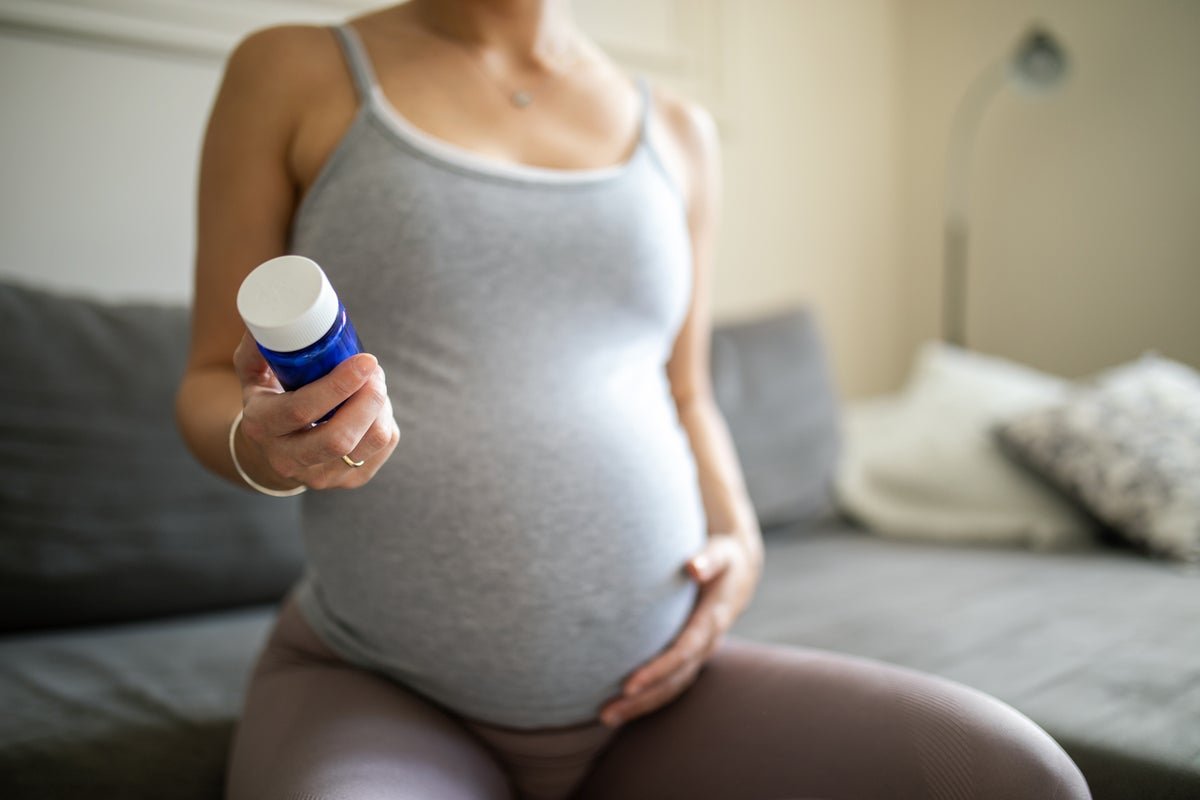
The Food and Drug Administration and the Department of Health and Human Services are playing with women’s health. Over the summer, the Food and Drug Administration convened a panel on whether certain antidepressants were safe to use in pregnancy. The Department of Health and Human Services officials recently announced their belief that Tylenol (acetaminophen) taken during pregnancy could cause autism.
This posturing on antidepressants and the Tylenol pronouncement is causing fear and confusion in pregnant people who may need these medications. It is well documented that maternal mental health is the primary complication associated with childbirth and one of the leading causes of maternal mortality in the United States. The swirl of concern by the federal government sets up the idea that suffering is the only choice—either someone who is pregnant stays sick or in pain longer than necessary, or they carry the guilt of having put their fetus at risk.
I disagree.
On supporting science journalism
If you’re enjoying this article, consider supporting our award-winning journalism by subscribing. By purchasing a subscription you are helping to ensure the future of impactful stories about the discoveries and ideas shaping our world today.
I’ve been a reproductive psychiatrist for 25 years and am now primarily focused on pregnancy and postpartum as co-founder, CEO and medical director of The Motherhood Center in New York City. My job has been to help thousands of women understand their mental health during their reproductive years, consider their treatment options and facilitate their journey toward being the mother they want to be.
In the mid-1990s, no one talked about depression or anxiety during or after pregnancy. I was a resident physician and eager to understand what I was sure was a hidden epidemic, so I knocked on the doors of obstetricians and asked if their patients ever suffered from these conditions. They looked befuddled and told me their patients loved having babies, full stop. I knew this wasn’t universally true.
With encouragement from mentors, I explored the underbelly of new maternity; I was certain that the medical community hadn’t legitimized, let alone understood, the mental health of mothers and mothers-to-be during and after pregnancy. I put together a lecture series on postpartum illnesses and begged the hospital nursing department to let me present it to expectant parents. They refused.
While all this was happening, I was pregnant with my first child. Working 100-hour weeks meant I didn’t have much time to process my own feelings—other than sheer exhaustion. I remember asking our first pediatrician if any of the new moms in the practice were on antidepressants for postpartum depression or anxiety. He said no. Then I asked if he’d ever asked them if they felt depressed or anxious. He paused. Again, he said no. I knew why: nobody was going to volunteer that information because it risked them being deemed a failure for not being an overjoyed parent.
Now here we are, in 2025, with FDA-approved drugs to treat postpartum depression and a checklist that pediatricians go through with new parents to make sure they are adjusting to this massive change in their lives. Yet the FDA panel tried to discredit the past years of research on SSRIs, the most studied category of medications in pregnancy, stoking fear over these drugs. One panelist implied that higher rates of depression and anxiety in women are simply emotional sensitivity. The panelist went so far as to call these measurable changes in one’s emotional state “gifts.”
After decades of successfully treating pregnant women who are depressed, we can’t continue to let them suffer. We no longer whisper about having “postpartum” — it’s a true category of depression. We now have the National Curriculum for Reproductive Psychiatry to train health care providers. We know that pregnancy doesn’t protect people from mental illness or mental health issues. We know that having a baby can be both wonderful and incredibly difficult. And we know that becoming a mom—what the late anthropologist Dana Raphael called matrescence—is a real, seismic life stage. How could producing an entire new being not be?
I think of my own patients, such as Ms. A., 13 weeks pregnant with twins after years of in vitro fertilization (IVF). The joy she’d imagined was absent and replaced by panic: I can’t do this. I don’t want these babies anymore. It was a mistake. She came to my clinic because her partner was scared by how often she’d mentioned ending the pregnancy which she’d fought so hard to have.
I think of Ms. M., with the textbook signs and symptoms of depression: poor sleep, no appetite, brain fog, low energy, detachment. She sat slumped and expressionless as she nursed her seven-month-old on my office couch. She delayed her visit and was afraid that I’d suggest medication—she was breastfeeding and didn’t know if medications would be safe. “I’m not suicidal,” she said. “I just want to escape my life and the relentless demands of this baby.”
I treated both women with SSRIs and both showed significant improvement over time. Had they remained untreated, Ms. A could have ended her pregnancy out of fear and Ms. M could have struggled to connect with her baby, negatively impacting her baby’s attachment style as well. Why take these risks?
SSRIs taken during pregnancy can have some short-lived effects on a newborn—such as jitteriness or mild breathing issues—which usually resolve within days and have no lasting effect. Compare that with the risks of untreated illness for the mother and for the baby after birth: preterm birth, low birth weight, poor self-care, substance use and increased suicide risk, traumatic pregnancy and delivery, difficulty bonding, and the unthinkable: infanticide.
This is indisputable: untreated depression and anxiety during pregnancy are far more dangerous—to both parent and baby—than carefully managed antidepressant treatment. When a pregnant or postpartum woman is struggling—whether because of anxiety, depression, obsessive-compulsive disorder, post-traumatic stress disorder, mania or even psychosis—the question they ask me most is “What’s wrong with me?”
Untreated maternal mental health issues can ripple through a child’s development, influence parenting capacity and—according to growing research—leave biological “footprints” through the epigenome that may persist for generations. How we treat mothers affects their babies but not in the way the FDA panel focused on.
To fight back, stay informed through credible sources such as the American College of Obstetricians and Gynecologists and the American Psychiatric Association. You can fight for access to these medications by submitting comments through the Federal Register when the FDA considers drug warnings. You can advocate for postpartum support and maternal mental health. You can share your story to help destigmatize depression during and after pregnancy.
Much has changed in 25 years, and now women stand to lose some of what we’ve gained in maternal mental health. We can’t go back to the days of experiencing silence and stigma and suffering in the shadows—not for ourselves; not for our children.
This is an opinion and analysis article, and the views expressed by the author or authors are not necessarily those of Scientific American.
