
Close Menu

    Subscribe to Updates

    Get the latest creative news from FooBar about art, design and business.

    What's Hot

    Madeline Horwath on the mistakes of evolution – cartoon

    As US influence wanes, the Chinese trade surplus strangles manufacturing across the globe | US economy

    Valium, health checks and fabric slings: the complex logistics of moving 30 beluga whales | Canada

    Facebook X (Twitter) Instagram
    Facebook X (Twitter) YouTube LinkedIn
    Naija Global News |
    Saturday, January 31
    • Business
    • Health
    • Politics
    • Science
    • Sports
    • Education
    • Social Issues
    • Technology
    • More
      • Crime & Justice
      • Environment
      • Entertainment
    Naija Global News |
    You are at:Home»Science»2025 Chemistry Nobel Goes to Molecular Sponges That Purify Water, Store Energy and Clean Up the Environment
    Science

    2025 Chemistry Nobel Goes to Molecular Sponges That Purify Water, Store Energy and Clean Up the Environment

    onlyplanz_80y6mtBy onlyplanz_80y6mtOctober 8, 2025003 Mins Read
    Share Facebook Twitter Pinterest LinkedIn Tumblr Email
    2025 Chemistry Nobel Goes to Molecular Sponges That Purify Water, Store Energy and Clean Up the Environment


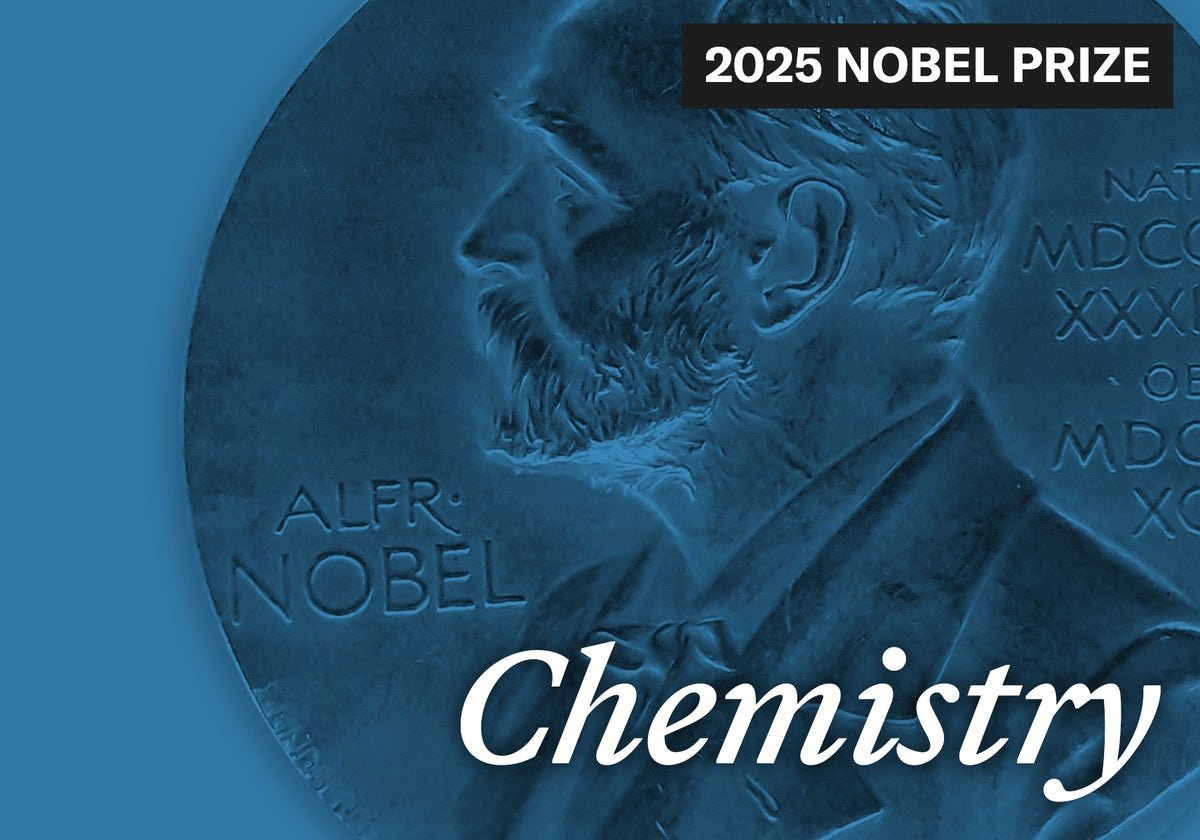
    vanbeets/Getty Images (medal)

    Share
    Facebook Twitter LinkedIn Pinterest Email

    October 7, 2025

    2 min read

    2025 Chemistry Nobel Goes to Molecular Sponges That Purify Water, Store Energy and Clean Up the Environment

    Three scientists, including one from the U.S., share the 2025 Nobel Prize in Chemistry for developing “metal-organic frameworks,” versatile molecular cages that can trap contaminants, store energy and possibly deliver drugs to specific areas of the body

    By Megha Satyanarayana edited by Josh Fischman

    vanbeets/Getty Images (medal)

    The 2025 Nobel Prize in Chemistry has been awarded for a versatile technology that can be used for an astonishing variety of purposes, from environmental remediation to drug delivery and energy storage.

    Susumu Kitagawa, Richard Robson and Omar M. Yaghi shared the award for their development of metal-organic frameworks, chemical cages that have small openings that can capture other small and diverse molecules. MOFs, as they are known, are being explored for their use in wastewater cleanup, PFAS removal, timed or multidrug release systems, and more.

    The cages are made of metal ions held together by organic, or carbon-containing, molecules. The cages can be one-dimensional or multi-dimensional, and they can be formed from a host of metals and organic linkers.

    On supporting science journalism

    If you’re enjoying this article, consider supporting our award-winning journalism by subscribing. By purchasing a subscription you are helping to ensure the future of impactful stories about the discoveries and ideas shaping our world today.

    Richard Robson of the University of Melbourne dreamed up the first MOFs, inspired by the tetrahedral, or pyramidlike, shape that carbon atoms take to form diamonds. He mixed a form of copper with a nitrile, an organic compound with nitrogen bonded to carbon, and watched as it formed a repeating structure with small holes in it.

    Susumu Kitagawa of Kyoto University and Omar M. Yaghi of the University of California, Berkeley, furthered MOF research and applications. Kitagawa created MOFs that were flexible and learned that gases could flow in and out of MOFs. He told the audience at a Nobel press conference in Stockholm on Wednesday that his dream is to use MOFs to separate the components of air for use in making other materials, via reusable energy. Yaghi, widely credited for expanding the development of MOFs, created stable frameworks from many combinations of metal ions and organic linkers.

    The three researchers will divide the Nobel prize money, which comes to 11 million Swedish kronor, or about $1 million.

    It’s Time to Stand Up for Science

    If you enjoyed this article, I’d like to ask for your support. Scientific American has served as an advocate for science and industry for 180 years, and right now may be the most critical moment in that two-century history.

    I’ve been a Scientific American subscriber since I was 12 years old, and it helped shape the way I look at the world. SciAm always educates and delights me, and inspires a sense of awe for our vast, beautiful universe. I hope it does that for you, too.

    If you subscribe to Scientific American, you help ensure that our coverage is centered on meaningful research and discovery; that we have the resources to report on the decisions that threaten labs across the U.S.; and that we support both budding and working scientists at a time when the value of science itself too often goes unrecognized.

    In return, you get essential news, captivating podcasts, brilliant infographics, can’t-miss newsletters, must-watch videos, challenging games, and the science world’s best writing and reporting. You can even gift someone a subscription.

    There has never been a more important time for us to stand up and show why science matters. I hope you’ll support us in that mission.

    Chemistry Clean energy Environment molecular Nobel Purify Sponges store Water
    Share. Facebook Twitter Pinterest LinkedIn Tumblr Email
    Previous ArticleProgress on Africa’s ‘Great Green Wall’ Stalls as Seedlings Die Off
    Next Article Can’t sleep? Turn on, tune in and drop off | Sleep
    onlyplanz_80y6mt
    • Website

    Related Posts

    Madeline Horwath on the mistakes of evolution – cartoon

    January 31, 2026

    China is betting on ‘optical’ computer chips – will they power AI?

    January 31, 2026

    Mass grave in Jordan sheds new light on world’s earliest recorded pandemic | Infectious diseases

    January 31, 2026
    Add A Comment
    Leave A Reply Cancel Reply

    Top Posts

    Watch Lady Gaga’s Perform ‘Vanish Into You’ on ‘Colbert’

    September 9, 20251 Views

    Advertisers flock to Fox seeking an ‘audience of one’ — Donald Trump

    July 13, 20251 Views

    A Setback for Maine’s Free Community College Program

    June 19, 20251 Views
    Stay In Touch
    • Facebook
    • YouTube
    • TikTok
    • WhatsApp
    • Twitter
    • Instagram
    Latest Reviews

    At Chile’s Vera Rubin Observatory, Earth’s Largest Camera Surveys the Sky

    By onlyplanz_80y6mtJune 19, 2025

    SpaceX Starship Explodes Before Test Fire

    By onlyplanz_80y6mtJune 19, 2025

    How the L.A. Port got hit by Trump’s Tariffs

    By onlyplanz_80y6mtJune 19, 2025

    Subscribe to Updates

    Get the latest tech news from FooBar about tech, design and biz.

    Most Popular

    Watch Lady Gaga’s Perform ‘Vanish Into You’ on ‘Colbert’

    September 9, 20251 Views

    Advertisers flock to Fox seeking an ‘audience of one’ — Donald Trump

    July 13, 20251 Views

    A Setback for Maine’s Free Community College Program

    June 19, 20251 Views
    Our Picks

    Madeline Horwath on the mistakes of evolution – cartoon

    As US influence wanes, the Chinese trade surplus strangles manufacturing across the globe | US economy

    Valium, health checks and fabric slings: the complex logistics of moving 30 beluga whales | Canada

    Recent Posts
    • Madeline Horwath on the mistakes of evolution – cartoon
    • As US influence wanes, the Chinese trade surplus strangles manufacturing across the globe | US economy
    • Valium, health checks and fabric slings: the complex logistics of moving 30 beluga whales | Canada
    • DeVry Embeds AI Literacy in All Courses
    • China is betting on ‘optical’ computer chips – will they power AI?
    © 2026 naijaglobalnews. Designed by Pro.
    • About Us
    • Disclaimer
    • Get In Touch
    • Privacy Policy
    • Terms and Conditions

    Type above and press Enter to search. Press Esc to cancel.