
Close Menu

    Subscribe to Updates

    Get the latest creative news from FooBar about art, design and business.

    What's Hot

    How the Voting Rights Act Bolstered Black Representation in the House

    ‘My own contribution’: the Ottawa immigrants learning to retrofit homes and fight the climate crisis | Climate crisis

    Big Tech’s AI payback might be coming into view

    Facebook X (Twitter) Instagram
    Facebook X (Twitter) YouTube LinkedIn
    Naija Global News |
    Thursday, April 30
    • Business
    • Health
    • Politics
    • Science
    • Sports
    • Education
    • Social Issues
    • Technology
    • More
      • Crime & Justice
      • Environment
      • Entertainment
    Naija Global News |
    You are at:Home»Science»These immune cells won Nobel fame — can they solve autoimmune disease?
    Science

    These immune cells won Nobel fame — can they solve autoimmune disease?

    onlyplanz_80y6mtBy onlyplanz_80y6mtOctober 8, 2025003 Mins Read
    Share Facebook Twitter Pinterest LinkedIn Tumblr Email
    These immune cells won Nobel fame — can they solve autoimmune disease?

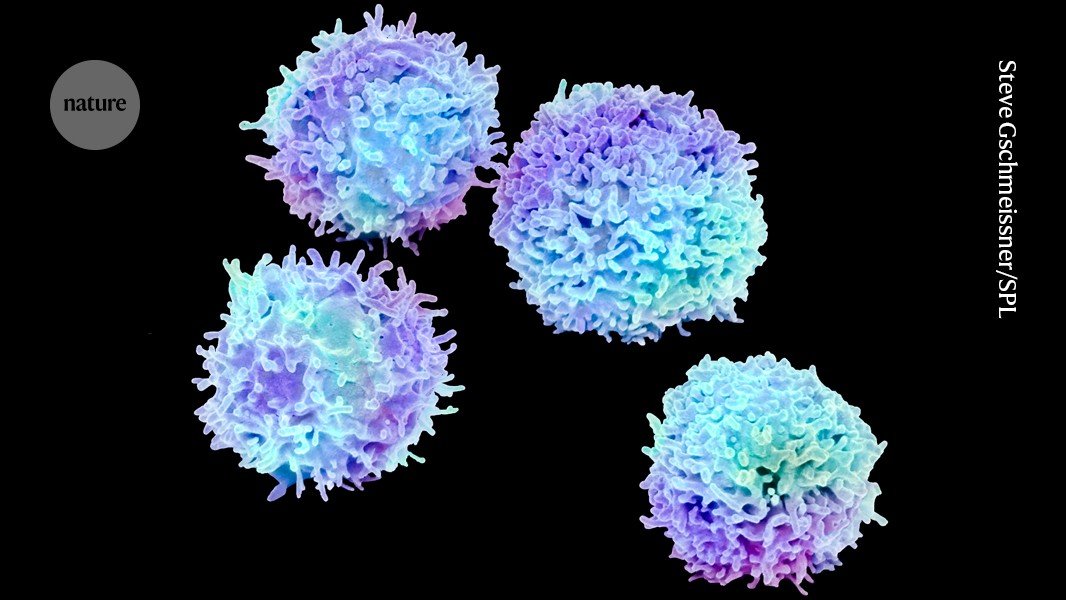
    Some types of T cells (pictured, artificially coloured) kill infected cells, but others help to suppress inflammation. Credit: Steve Gschmeissner/Science Photo Library

    Share
    Facebook Twitter LinkedIn Pinterest Email

    Some types of T cells (pictured, artificially coloured) kill infected cells, but others help to suppress inflammation. Credit: Steve Gschmeissner/Science Photo Library

    The class of immune cells at the centre of Monday’s Nobel prize is showing promise as a treatment for autoimmune diseases, cancer and even organ transplants — but there are still key challenges to overcome before these cells can be used in therapies in the clinic.

    Regulatory T cells, or Treg cells, help to prevent the body from attacking its own tissues. Earlier this week, the Nobel Prize in Physiology or Medicine went to three scientists who discovered Treg cells and helped to show how these cells regulate the immune system: immunologist Shimon Sakaguchi at the University of Osaka in Suita, Japan, Mary Brunkow, a molecular biologist at the Institute for Systems Biology in Seattle, Washington, and scientific adviser Fred Ramsdell, at the firm Sonoma Biotherapeutics in San Francisco, California.

    Cracking the genetic code of autoimmune disease

    Thirty years after Sakaguchi and his colleagues reported the discovery of Treg cells, there are more than 200 clinical trials of the cells under way, for conditions such as type 1 diabetes, motor neuron disease and a host of autoimmune diseases — including multiple sclerosis, lupus and a group of rare skin disorders called pemphigus. The cells are also being tested for their ability to keep the immune system from rejecting transplanted tissues.

    “There’s a lot of excitement about recruiting regulatory T cell activity to treat a range of autoimmune or inflammatory disorders, but also in the context of tissue and cell transplants,” says Daniel Gray, a Treg-cell researcher at the Walter and Eliza Hall Institute of Medical Research in Parkville, Australia.

    But the rarity and fragility of these cells pose difficulties to their widespread application, researchers say.

    Finding the balance

    Autoimmune diseases are characterized by an imbalance of T cells: people with these conditions have more T cells that promote inflammation and kill disease-causing cells than T cells that reduce inflammation, says Joshua Ooi, who studies Treg-cell therapies for lupus at Monash University in Melbourne, Australia. “We can correct the balance by increasing the numbers of regulatory T cells,” he adds, which can help the body to suppress the pro-inflammatory T cells.

    Two methods to increase the number of Treg cells a person has are gaining ground, Ooi says. The first involves isolating a person’s Treg cells, growing more of them in the laboratory and infusing them back into the individual. The other method involves injecting people with drugs that trigger the body to make more Treg cells.

    Medicine Nobel goes to scientists who revealed secrets of immune system ‘regulation’

    Because Treg cells can control an overactive immune system, scientists are investigating them as a therapy to counter the side effects of bone marrow transplants, which involves building a new immune system in people with blood cancers, says Andrea Henden, a clinician–researcher at the QIMR Berghofer Medical Research Institute in Herston, Australia.

    Autoimmune cells disease fame immune Nobel Solve Won
    Share. Facebook Twitter Pinterest LinkedIn Tumblr Email
    Previous ArticleToday’s NYT Connections Hints, Answers for Oct. 8 #850
    Next Article One in three UK workers have called in sick after work drinks, survey finds | Alcohol
    onlyplanz_80y6mt
    • Website

    Related Posts

    Raise tax on alcohol and junk food to cut deaths from liver disease, experts say | Health

    April 29, 2026

    AI + Math Learning. How to Solve a New Problem

    April 17, 2026

    Almost 2bn to be affected by metabolic liver disease by 2050, study suggests | Health

    April 14, 2026
    Add A Comment
    Leave A Reply Cancel Reply

    Top Posts

    Watch Lady Gaga’s Perform ‘Vanish Into You’ on ‘Colbert’

    September 9, 20251 Views

    Advertisers flock to Fox seeking an ‘audience of one’ — Donald Trump

    July 13, 20251 Views

    A Setback for Maine’s Free Community College Program

    June 19, 20251 Views
    Stay In Touch
    • Facebook
    • YouTube
    • TikTok
    • WhatsApp
    • Twitter
    • Instagram
    Latest Reviews

    At Chile’s Vera Rubin Observatory, Earth’s Largest Camera Surveys the Sky

    By onlyplanz_80y6mtJune 19, 2025

    SpaceX Starship Explodes Before Test Fire

    By onlyplanz_80y6mtJune 19, 2025

    How the L.A. Port got hit by Trump’s Tariffs

    By onlyplanz_80y6mtJune 19, 2025

    Subscribe to Updates

    Get the latest tech news from FooBar about tech, design and biz.

    Most Popular

    Watch Lady Gaga’s Perform ‘Vanish Into You’ on ‘Colbert’

    September 9, 20251 Views

    Advertisers flock to Fox seeking an ‘audience of one’ — Donald Trump

    July 13, 20251 Views

    A Setback for Maine’s Free Community College Program

    June 19, 20251 Views
    Our Picks

    How the Voting Rights Act Bolstered Black Representation in the House

    ‘My own contribution’: the Ottawa immigrants learning to retrofit homes and fight the climate crisis | Climate crisis

    Big Tech’s AI payback might be coming into view

    Recent Posts
    • How the Voting Rights Act Bolstered Black Representation in the House
    • ‘My own contribution’: the Ottawa immigrants learning to retrofit homes and fight the climate crisis | Climate crisis
    • Big Tech’s AI payback might be coming into view
    • Jailed Hong Kong pro-democracy activist Jimmy Lai wins free speech award in Germany | Jimmy Lai
    • AI outperforms doctors in Harvard trial of emergency triage diagnoses | AI (artificial intelligence)
    © 2026 naijaglobalnews. Designed by Pro.
    • About Us
    • Disclaimer
    • Get In Touch
    • Privacy Policy
    • Terms and Conditions

    Type above and press Enter to search. Press Esc to cancel.