
Close Menu

    Subscribe to Updates

    Get the latest creative news from FooBar about art, design and business.

    What's Hot

    US workers overwhelmingly support union-backed policies on AI, poll says | US unions

    WHO head tells countries to prepare for more hantavirus cases | Hantavirus

    European ministers to discuss sending rejected asylum seekers to third-country hubs | Council of Europe

    Facebook X (Twitter) Instagram
    Facebook X (Twitter) YouTube LinkedIn
    Naija Global News |
    Tuesday, May 12
    • Business
    • Health
    • Politics
    • Science
    • Sports
    • Education
    • Social Issues
    • Technology
    • More
      • Crime & Justice
      • Environment
      • Entertainment
    Naija Global News |
    You are at:Home»Science»Swapping old immune cells in the brain with fresh ones could treat disease
    Science

    Swapping old immune cells in the brain with fresh ones could treat disease

    onlyplanz_80y6mtBy onlyplanz_80y6mtSeptember 27, 2025004 Mins Read
    Share Facebook Twitter Pinterest LinkedIn Tumblr Email
    Swapping old immune cells in the brain with fresh ones could treat disease

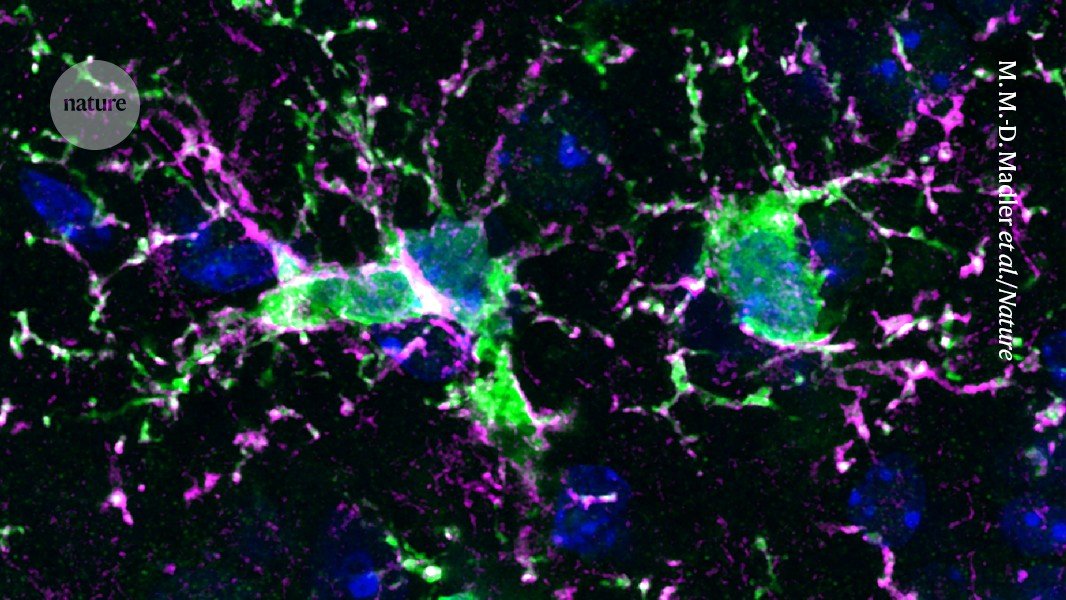
    After a mouse received treatment to eliminate immune cells called microglia, it was injected with human progenitor cells that developed into human immune cells (green, pink and blue) in the animal’s brain.Credit: M. M.-D. Madler et al./Nature

    Share
    Facebook Twitter LinkedIn Pinterest Email

    After a mouse received treatment to eliminate immune cells called microglia, it was injected with human progenitor cells that developed into human immune cells (green, pink and blue) in the animal’s brain.Credit: M. M.-D. Madler et al./Nature

    A fresh supply of the immune cells that keep the brain tidy might one day help to treat a host of conditions, from ultra-rare genetic disorders to more familiar scourges, such as Alzheimer’s disease.

    In the past few months, a spate of new studies have highlighted the potential of a technique called microglia replacement and explored ways to make it safer and more effective. “This approach is very promising,” says Pasqualina Colella, who studies gene and cell therapy at Stanford University School of Medicine in California. “But the caveat is the toxicity of the procedure.”

    New hope for Alzheimer’s: lithium supplement reverses memory loss in mice

    Microglia are immune cells that patrol the brain, gobbling up foreign invaders, damaged cells and harmful substances. They can help to protect neurons — cells that transmit and receive messages to and from other tissues — during seizures and strokes, and they prune unneeded connections between neurons during normal brain development.

    “Microglia do a lot of important things,” says Chris Bennett, a psychiatrist who studies microglia at the Children’s Hospital of Philadelphia in Pennsylvania. “So, it’s not surprising that they are involved in the pathogenesis of many diseases.”

    Those diseases include a suite of rare disorders caused by genetic mutations that directly affect microglia. Malfunctioning microglia have also been implicated in more familiar conditions with complex causes, such as Alzheimer’s disease and Parkinson’s disease, as well as ageing, says Bo Peng, a neuroscientist at Fudan University in Shanghai, China.

    Immune-cell swap

    This has led researchers to investigate a tantalizing possibility: that replacing disease-causing microglia could treat some brain conditions. But swapping out microglia poses special challenges. Physicians typically replace a person’s immune cells by performing a bone-marrow transplant, which provides a fresh supply of stem cells that shelter in the bone marrow and give rise to many immune cells. Microglia, however, reside almost exclusively in the central nervous system, and typically replenish themselves by dividing rather than relying on stem cells in the bone marrow to send in replacements.

    How CRISPR gene editing could help treat Alzheimer’s

    Physicians already use bone-marrow transplants to treat some rare diseases that affect microglia, such as a condition called X-linked adrenoleukodystrophy. The treatment can be effective, says Marco Prinz, a neuropathologist at the University of Freiburg in Germany, but the results are inconsistent and typically replace only a small percentage of the recipient’s natural microglia.

    In July, Peng’s team used bone-marrow transplants to replace abnormal microglia resulting from a fatal brain disease called CAMP (CSF1R-associated microgliopathy). The treatment was a success both in mice and in a small trial of eight people with the rare disorder: none of the eight participants experienced a decline in their motor or cognitive abilities in the two years following the treatment1, whereas members of a control group who did not receive the procedure experienced a deterioration of both.

    One possible reason for the success of the CAMP trial is the nature of the disease itself, says Bennett, because people with CAMP tend to produce relatively few microglia. This could leave space for the transplanted cells to thrive.

    Onerous regimen

    Creating that niche for the new microglia is a pivotal step in microglia replacement — and a source of concern. To make room for transplanted cells, physicians must first wipe out as many of the brain’s resident microglia as possible. This can entail high levels of chemotherapy or radiotherapy, both of which can leave the recipient vulnerable to infection during the procedure and raise their long-term risk of cancer. That means that microglia replacement is, for the moment, too toxic to be used except in severe, rapidly progressing diseases such as CAMP, says Colella.

    Brain cells disease fresh immune swapping Treat
    Share. Facebook Twitter Pinterest LinkedIn Tumblr Email
    Previous ArticleMore railway operators to be returned to public ownership next year, says Labour – UK politics live | Politics
    Next Article Trump Administration Slashes STEM Education Research Grants
    onlyplanz_80y6mt
    • Website

    Related Posts

    Cape Verde bets on tech to reverse postcolonial brain drain | Cape Verde

    May 11, 2026

    Hantavirus misinformation runs rampant as the US is unequipped to respond to infectious disease health scare | Infectious diseases

    May 9, 2026

    I made my husband ill with a few words – nobody is immune to the power of the nocebo effect | Helen Pilcher

    May 8, 2026
    Add A Comment
    Leave A Reply Cancel Reply

    Top Posts

    Watch Lady Gaga’s Perform ‘Vanish Into You’ on ‘Colbert’

    September 9, 20251 Views

    Advertisers flock to Fox seeking an ‘audience of one’ — Donald Trump

    July 13, 20251 Views

    A Setback for Maine’s Free Community College Program

    June 19, 20251 Views
    Stay In Touch
    • Facebook
    • YouTube
    • TikTok
    • WhatsApp
    • Twitter
    • Instagram
    Latest Reviews

    At Chile’s Vera Rubin Observatory, Earth’s Largest Camera Surveys the Sky

    By onlyplanz_80y6mtJune 19, 2025

    SpaceX Starship Explodes Before Test Fire

    By onlyplanz_80y6mtJune 19, 2025

    How the L.A. Port got hit by Trump’s Tariffs

    By onlyplanz_80y6mtJune 19, 2025

    Subscribe to Updates

    Get the latest tech news from FooBar about tech, design and biz.

    Most Popular

    Watch Lady Gaga’s Perform ‘Vanish Into You’ on ‘Colbert’

    September 9, 20251 Views

    Advertisers flock to Fox seeking an ‘audience of one’ — Donald Trump

    July 13, 20251 Views

    A Setback for Maine’s Free Community College Program

    June 19, 20251 Views
    Our Picks

    US workers overwhelmingly support union-backed policies on AI, poll says | US unions

    WHO head tells countries to prepare for more hantavirus cases | Hantavirus

    European ministers to discuss sending rejected asylum seekers to third-country hubs | Council of Europe

    Recent Posts
    • US workers overwhelmingly support union-backed policies on AI, poll says | US unions
    • WHO head tells countries to prepare for more hantavirus cases | Hantavirus
    • European ministers to discuss sending rejected asylum seekers to third-country hubs | Council of Europe
    • What Life Is Like Near Booming Warehouse Hubs Outside Chicago
    • Too many of us were traumatised by sport at school – but it’s never too late to change | Sport
    © 2026 naijaglobalnews. Designed by Pro.
    • About Us
    • Disclaimer
    • Get In Touch
    • Privacy Policy
    • Terms and Conditions

    Type above and press Enter to search. Press Esc to cancel.