
Close Menu

    Subscribe to Updates

    Get the latest creative news from FooBar about art, design and business.

    What's Hot

    King opens world’s longest managed coastal walk – but much of it is still closed off | Walking

    The Effects of High Oil Prices

    ‘A weight’s been lifted’: MP Charlotte Nichols on speaking up about her rape trial | UK criminal justice

    Facebook X (Twitter) Instagram
    Facebook X (Twitter) YouTube LinkedIn
    Naija Global News |
    Thursday, March 19
    • Business
    • Health
    • Politics
    • Science
    • Sports
    • Education
    • Social Issues
    • Technology
    • More
      • Crime & Justice
      • Environment
      • Entertainment
    Naija Global News |
    You are at:Home»Science»Study of 1m-year-old skull points to earlier origins of modern humans | Anthropology
    Science

    Study of 1m-year-old skull points to earlier origins of modern humans | Anthropology

    onlyplanz_80y6mtBy onlyplanz_80y6mtSeptember 26, 2025003 Mins Read
    Share Facebook Twitter Pinterest LinkedIn Tumblr Email
    Study of 1m-year-old skull points to earlier origins of modern humans | Anthropology
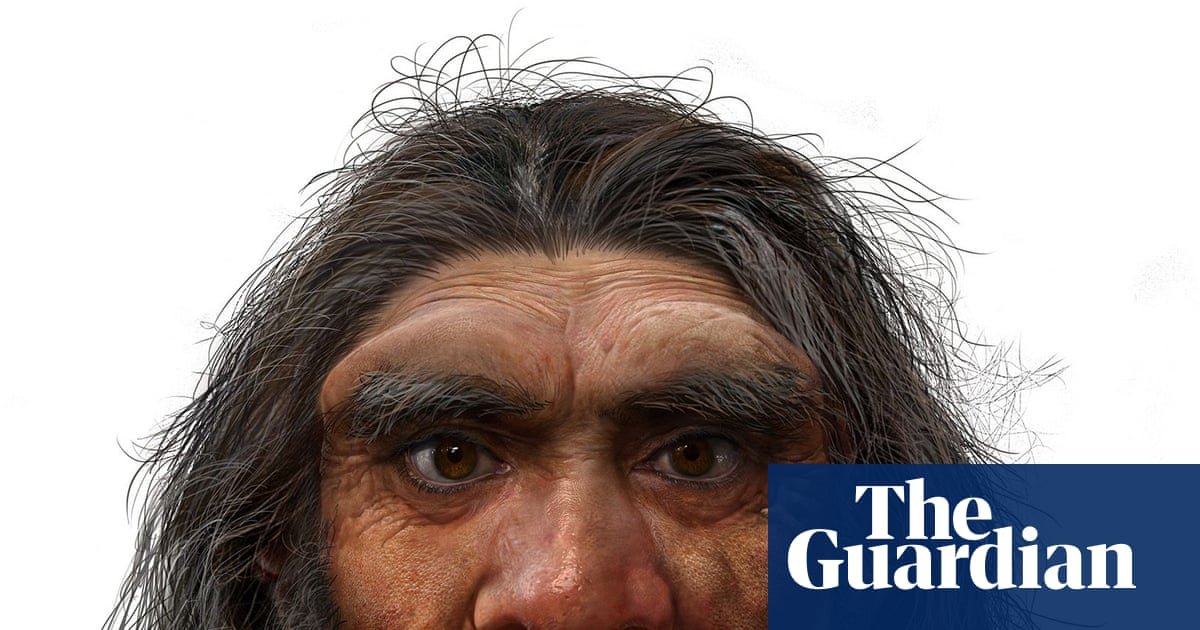
    An artist’s impression of what Homo longi, or dragon man, may have looked like. Photograph: Chuang Zhao/Eurekalert/AFP/Getty Images
    Share
    Facebook Twitter LinkedIn Pinterest Email

    A million-year-old human skull suggests that the origins of modern humans may reach back far deeper in time than previously thought and raises the possibility that Homo sapiens first emerged outside of Africa.

    Leading scientists reached this conclusion after reanalysis of a skull known as Yunxian 2 discovered in China and previously classified as belonging to a member of the primitive human species Homo erectus.

    After applying sophisticated reconstruction techniques to the skull, scientists believe that it may instead belong to a group called Homo longi (dragon man), closely linked to the elusive Denisovans who lived alongside our own ancestors.

    This repositioning would make the fossil the closest on record to the split between modern humans and our closest relatives, the Neanderthals and Denisovans, and would radically revise understanding of the last 1m years of human evolution.

    Prof Chris Stringer, an anthropologist and research leader in human evolution at the Natural History Museum in London, said: “This changes a lot of thinking because it suggests that by 1m years ago our ancestors had already split into distinct groups, pointing to a much earlier and more complex human evolutionary split than previously believed. It more or less doubles the time of origin of Homo sapiens.”

    The skull was first unearthed in Hubei province in 1990, badly crushed and difficult to interpret. Based on its age and some broad-brush traits, it was assigned as Homo erectus, a group that is thought to have contained direct ancestors of modern humans.

    The latest work used advanced CT imaging, high-resolution surface scanning and sophisticated digital techniques to produce a virtual reconstruction of the skull. The skull’s large, squat brain case and jutting lower jaw are reminiscent of Homo erectus. But the overall shape and size of the brain case and teeth appear to place it much closer to Homo longi, a species that scientists have recently argued should incorporate the Denisovans.

    This would push the split between our own ancestors, Neanderthals and Homo longi back by at least 400,000 years and, according to Springer, raises the possibility that our common ancestor – and potentially the first Homo sapiens – lived in western Asia rather than Africa.

    “This fossil is the closest we’ve got to the ancestor of all those groups,” Stringer said.

    A computational analysis of a wider selection of fossils suggests that in the last 800,000 years, large-brained humans evolved along just five major branches: Asian erectus, heidelbergensis, sapiens, Neanderthals and Homo longi (including the Denisovans).

    “We feel that this study is a landmark step towards resolving the ‘muddle in the middle’ [the confusing array of human fossils from between 1m and 300,000 years ago] that has preoccupied palaeoanthropologists for decades,” Stringer said.

    The findings run counter to some recent analyses based on genetic comparisons of living humans and ancient DNA, meaning the conclusions are likely to be contentious.

    Dr Frido Welker, an associate professor in human evolution at the University of Copenhagen, who was not involved in the research, said: “It’s exciting to have a digital reconstruction of this important cranium available. If confirmed by additional fossils and genetic evidence, the divergence dating would be surprising indeed. Alternatively, molecular data from the specimen itself could provide insights confirming or disproving the authors’ morphological hypothesis.”

    The findings are published in the journal Science.

    1myearold Anthropology earlier humans Modern Origins points Skull study
    Share. Facebook Twitter Pinterest LinkedIn Tumblr Email
    Previous ArticleFarage endangering women by failing to condemn paracetamol claims, says Bridget Phillipson | Labour party deputy leadership
    Next Article Year 8 state school pupils in England could face mandatory reading tests | Schools
    onlyplanz_80y6mt
    • Website

    Related Posts

    Humans in the Loop and Education Don’t Really Mix

    March 19, 2026

    Instagram worse for mental health than WhatsApp, global study finds | Social media

    March 19, 2026

    Playing with dolls can help children develop imagination and social skills – UK study | Children

    March 18, 2026
    Add A Comment
    Leave A Reply Cancel Reply

    Top Posts

    Watch Lady Gaga’s Perform ‘Vanish Into You’ on ‘Colbert’

    September 9, 20251 Views

    Advertisers flock to Fox seeking an ‘audience of one’ — Donald Trump

    July 13, 20251 Views

    A Setback for Maine’s Free Community College Program

    June 19, 20251 Views
    Stay In Touch
    • Facebook
    • YouTube
    • TikTok
    • WhatsApp
    • Twitter
    • Instagram
    Latest Reviews

    At Chile’s Vera Rubin Observatory, Earth’s Largest Camera Surveys the Sky

    By onlyplanz_80y6mtJune 19, 2025

    SpaceX Starship Explodes Before Test Fire

    By onlyplanz_80y6mtJune 19, 2025

    How the L.A. Port got hit by Trump’s Tariffs

    By onlyplanz_80y6mtJune 19, 2025

    Subscribe to Updates

    Get the latest tech news from FooBar about tech, design and biz.

    Most Popular

    Watch Lady Gaga’s Perform ‘Vanish Into You’ on ‘Colbert’

    September 9, 20251 Views

    Advertisers flock to Fox seeking an ‘audience of one’ — Donald Trump

    July 13, 20251 Views

    A Setback for Maine’s Free Community College Program

    June 19, 20251 Views
    Our Picks

    King opens world’s longest managed coastal walk – but much of it is still closed off | Walking

    The Effects of High Oil Prices

    ‘A weight’s been lifted’: MP Charlotte Nichols on speaking up about her rape trial | UK criminal justice

    Recent Posts
    • King opens world’s longest managed coastal walk – but much of it is still closed off | Walking
    • The Effects of High Oil Prices
    • ‘A weight’s been lifted’: MP Charlotte Nichols on speaking up about her rape trial | UK criminal justice
    • Historically Black Land-Grants Celebrate USDA Agreement
    • Europe’s biggest airlines say fuel price spike caused by Iran war will drive up fares | Airline industry
    © 2026 naijaglobalnews. Designed by Pro.
    • About Us
    • Disclaimer
    • Get In Touch
    • Privacy Policy
    • Terms and Conditions

    Type above and press Enter to search. Press Esc to cancel.