

September 16, 2025
4 min read
Contributors to Scientific American’s October 2025 Issue
Writers, artists, photographers and researchers share the stories behind the stories
Chris Gunn
The Lives of Dead Trees
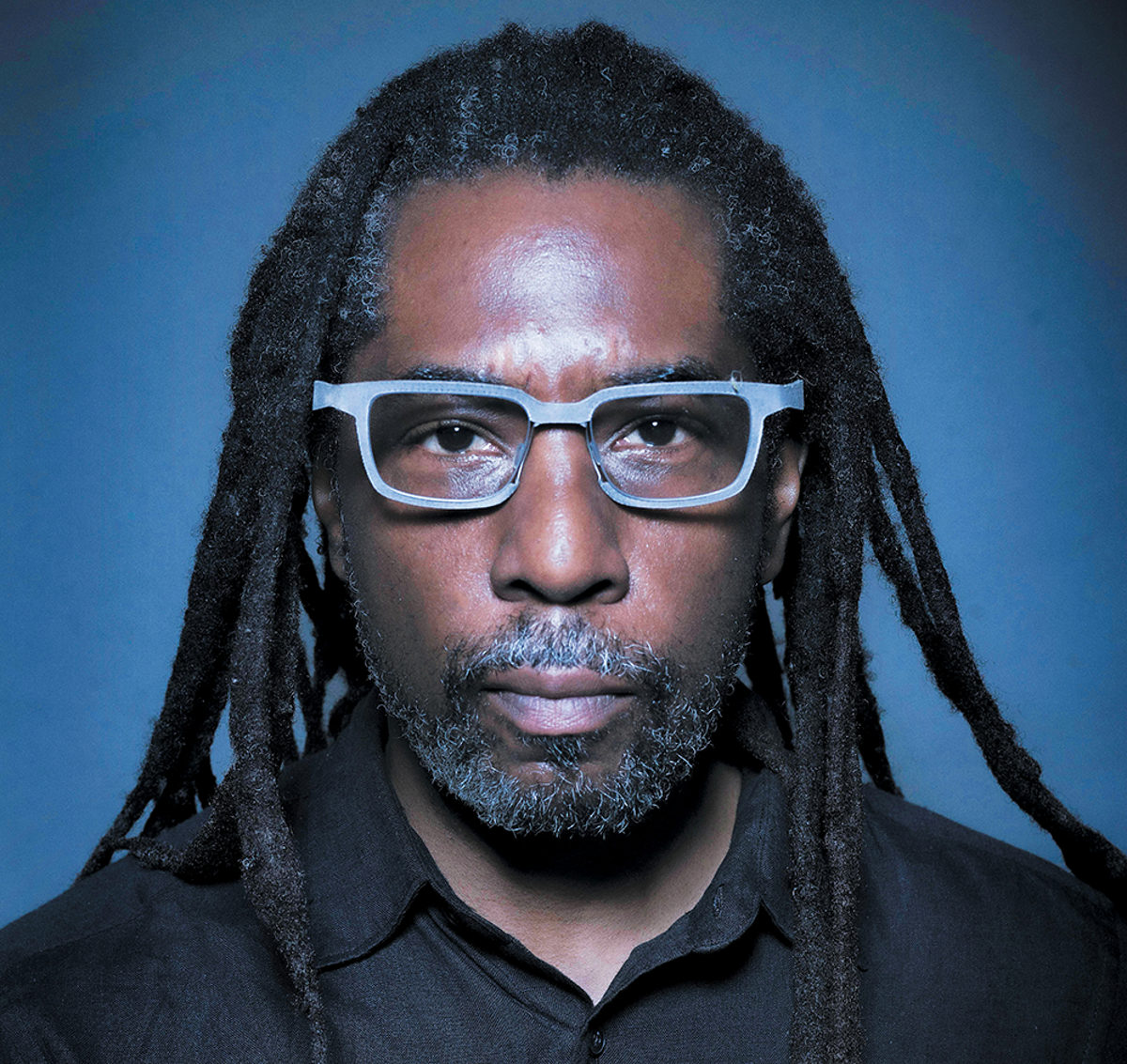
For almost 25 years Chris Gunn (above) worked as a contract photographer for NASA, where he shot precious objects such as moon rocks brought back from the first Apollo landing and, as lead photographer for the project, captured three years of the James Webb Space Telescope’s construction. That often meant working in clean rooms, with their rigid protocols and highly controlled conditions. So when Gunn entered the dense forests of Oregon to take pictures for journalist Stephen Ornes’s story about a long-term study of decaying logs, it was an entirely different experience. “Having shot in locations with such stark geometric patterns for so long, going into the forest, initially I was like, ‘Oh, my gosh, some of the trees are not straight,’” he says, laughing. “They are messing up my photograph!”
Gunn, who has lived in the Washington, D.C., area most of his life, had been seeking assignments that would both bring him closer to nature and communicate environmental change. “In so much of my previous work, I’ve been an outsider looking in on something, and this time I was really inside it,” he says. Gunn likes his images to be super sharp, so he observed how light was falling through the canopy; controlling the exposure gave depth to his photographs. Although the subject was dead trees, “there was still so much life,” he says. “It was magical from an imagery perspective.”
On supporting science journalism
If you’re enjoying this article, consider supporting our award-winning journalism by subscribing. By purchasing a subscription you are helping to ensure the future of impactful stories about the discoveries and ideas shaping our world today.
Cassandra Willyard
Decoding Blood
Alzheimer’s disease has touched almost everyone’s life in some way, says freelance journalist Cassandra Willyard, whose article in this issue’s special report on Alzheimer’s is about a recently approved diagnostic blood test for the disease. “It’s a complicated subject because there’s still controversy in the field about how it should be used correctly,” she says. But Willyard, who has worked as a science writer for two decades, deliberately pursues stories with a lot of complexity. Sorting through nuance and presenting clear takeaways to readers is a satisfying challenge. For her entire career, “I’ve been very focused on medical topics like drug development and infectious diseases because I find it so fascinating and so relevant to what everyone goes through.”
Watching federal funding for research get dismantled has been especially dismaying to Willyard because she’s reported on the long trajectories of certain tests and treatments, such as the development of gene therapies and a possible vaccine for Lyme disease. “But talking to scientists helps me stay engaged and hopeful for the future,” she says, “because they are excited about what they are learning.”
Lauren N. Wilson
The Dawn of Polar Bird Migration
“Most kids go through a dinosaur stage,” says paleobiologist Lauren N. Wilson. “I just never grew out of it.” Wilson co-authored a feature with Daniel T. Ksepka in this issue about their discovery of the oldest known evidence for polar migration in birds. She says she found it fun to write about their research for a popular audience because she finally got to talk about what delighted her most: “The baby-bird fossils were so cute. Most of the bones I worked on were two millimeters or smaller.”
When Wilson, who is now a Ph.D. student at Princeton University, went to Alaska for graduate school, she thought she’d spend her first summer identifying and describing bird fossils alongside Ksepka. “We started to get a good sense that some of this stuff was pretty significant,” she recalls. “I e-mailed [Ksepka] nonstop for the next three years, saying, ‘Wow, this is weird, look at this, what do you think?’” The result of their fieldwork was a “holistic study not just of the birds but of the whole ecosystem,” she says.
Stories like this one are important, Wilson says, because we wouldn’t be able to understand how abnormal the rate of global warming is today if we didn’t know how things happened in the past. “We learned that birds have been nesting in the same area in Alaska for 73 million years,” she says. “Then humans show up, and in the blink of an eye we’re endangering that.”
Rebecca Gelernter
The Dawn of Polar Bird Migration
Illustrator Rebecca Gelernter loves doing paleoart, “and I don’t get to do it very often,” she says. For this issue, she illustrated 10 ancient birds for a cladogram in the feature by Lauren N. Wilson and Daniel T. Ksepka about the dawn of bird migration. As Gelernter talks about skeletal reconstructions, it’s easy to feel her joy at bringing fossil birds back to life. “I really like A Field Guide to Mesozoic Birds and Other Winged Dinosaurs [by Matthew P. Martyniuk] because it’s structured like a bird guide, with notes on proportion and wingspan,” she says.
Gelernter has been a “bird person” since she was 10 years old, and she studied ornithology in college. Then she discovered science illustration and enrolled in a graduate program, “which was one of the best decisions I’ve ever made.”
The most fun part of the work is when Gelernter gets to problem-solve the gaps in knowledge, such as by designing plumage colors for dinosaurs. “I like adding a little crest here, some fun soft tissue there,” she says. “Birds are just weird. They have all kinds of bizarre display structures, so it’s hard to come up with something that’s really unreasonable.”
It’s Time to Stand Up for Science
If you enjoyed this article, I’d like to ask for your support. Scientific American has served as an advocate for science and industry for 180 years, and right now may be the most critical moment in that two-century history.
I’ve been a Scientific American subscriber since I was 12 years old, and it helped shape the way I look at the world. SciAm always educates and delights me, and inspires a sense of awe for our vast, beautiful universe. I hope it does that for you, too.
If you subscribe to Scientific American, you help ensure that our coverage is centered on meaningful research and discovery; that we have the resources to report on the decisions that threaten labs across the U.S.; and that we support both budding and working scientists at a time when the value of science itself too often goes unrecognized.
In return, you get essential news, captivating podcasts, brilliant infographics, can’t-miss newsletters, must-watch videos, challenging games, and the science world’s best writing and reporting. You can even gift someone a subscription.
There has never been a more important time for us to stand up and show why science matters. I hope you’ll support us in that mission.
