

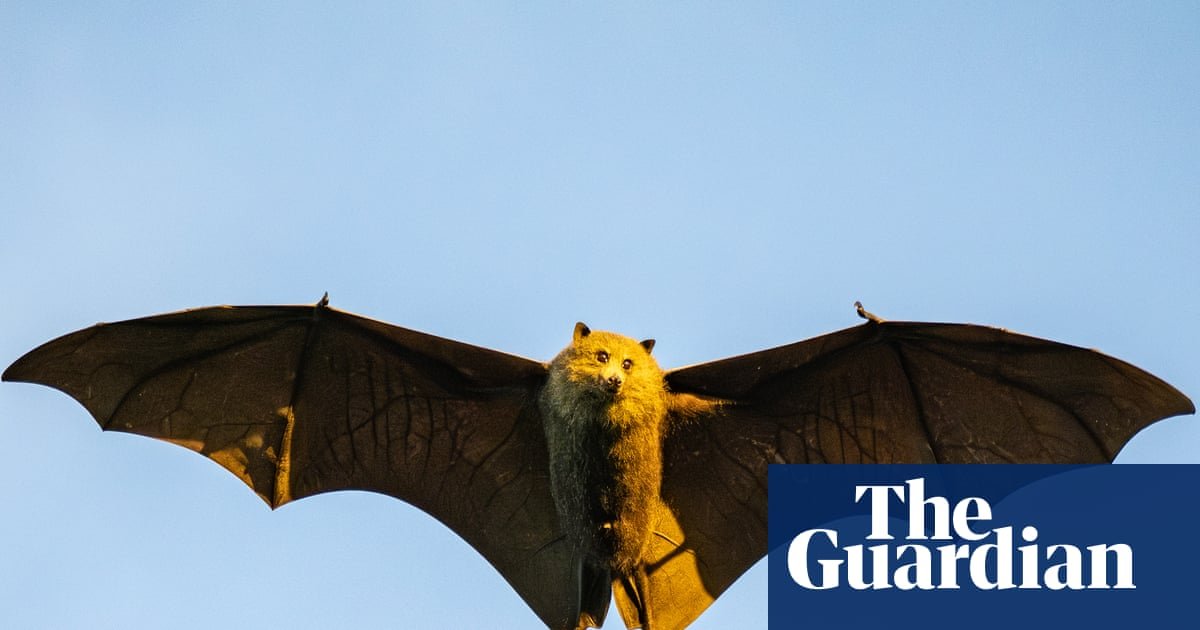
It’s the last native mammal on the island, but the “incredibly cute and fluffy” Christmas Island flying fox is critically endangered with no recovery plan and severely outdated conservation advice.
The flying fox is smaller and fluffier than many of Australia’s mainland flying fox species, according to animal ecologist Dr Annabel Dorrestein, from Western Sydney University, who has studied the species for nine years.
The bats are “incredibly cute” and “chonky”; a bit like teddy bears, Dorrestein said.
Christmas Island, located 1,550km off north-west Western Australia, originally had five native mammals – two rodents, two bats and a shrew. The rodents disappeared in the early 1900s. The shrew has not been seen since 1985 and is probably extinct.
Sign up: AU Breaking News email
In 2009, the Christmas Island pipistrelle – one of Australia’s smallest bats at 3.4cm – became the first recorded extinction after the introduction of the federal Environment Protection and Biodiversity Conservation Act, which biologist Prof John Woinarski called the “first irredeemable failure of that act”.
That leaves the Christmas Island flying fox.
Weighing about 400g, with dark brown or black fur, flying foxes are considered a “keystone species” due to their important role in pollination and seed dispersal, Dorrestein said.
While population estimates are challenging – with flying foxes scattered across difficult-to-access major roosts and many smaller groups – there has been a definite decline since the first official counts, she said.
In the 1980s, counts at Hosnies Spring, one of the island’s two main roost sites, estimated about 2,000 bats. Dorrestein, who has visited that same site in recent years, said she would be lucky to count 400. “That’s a huge, huge difference.”
The small size of the remaining population, and their reliance on a handful of maternity and breeding sites, make the bats susceptible to existing and emerging threats such as habitat destruction from mining and development, predation by feral cats and harassment by introduced pests such as yellow crazy ants.
But, due to decisions under successive environment ministers, the species is Australia’s only critically endangered mammal without a recovery plan. (The Nabarlek, which has no individual plan, is covered by one for five species of wallabies).
The small size of the remaining Christmas Island flying fox populations, and their reliance on a handful of maternity and breeding sites, make them susceptible to threats. Photograph: Chris Bray
In March, the then environment minister, Tanya Plibersek, confirmed a decision under the previous government determining 176 species and communities would no longer require a recovery plan. Instead, an environment department spokesperson said conservation advice for the flying fox was “in effect”.
Leading flying fox expert Prof Justin Welbergen said that advice, now more than a decade old, was “severely out of date” and no longer a useful tool for managing the species.
“We know that there are a lot fewer Christmas Island flying foxes than there were previously,” he said. “It’s really a time for action because we do not want to repeat the mistake that was made with the Christmas Island pipistrelle – that was effectively monitored to extinction.”
James Trezise, the chief executive of the Biodiversity Council, said recovery plans and conservation advice were critical for outlining the key threats, actions and responses needed to restore threatened species.
“It’s really important that we have some form of conservation plan for a threatened species and even more important if that species is a critically endangered one,” he said.
“It is equally as important to make sure that there are the resources available to implement those plans.”
Woinarski, based at Charles Darwin University, who lived on Christmas Island for two years, said it was a “magnificent place”.
“You walk in the forest and the trees above you are festooned with the nests of Abbott’s booby, Christmas Island frigatebirds and a whole range of seabirds, calling all throughout the day and night in strange cacophony. The forest floor is full of red crabs like no other ecosystem in the world.”
While investment in research into the Christmas Island flying fox, and an advisory panel overseeing its management, was part of the legacy of the lost pipistrelle, he said, governments and land managers could not afford to be complacent about its status.
“It still occurs only on one island. If a severe cyclone went through that one site and felled a whole lot of its important trees, and blew the bats off their roosts into the ocean, it could be gone in a second.”
