
Close Menu

    Subscribe to Updates

    Get the latest creative news from FooBar about art, design and business.

    What's Hot

    Oil and gas prices jump after Iran and Israel attack gasfields | Oil

    What animal are you? Humans and animals tend to like the same mating calls

    Independent autism committee that challenges RFK Jr’s overhaul draws criticism | Trump administration

    Facebook X (Twitter) Instagram
    Facebook X (Twitter) YouTube LinkedIn
    Naija Global News |
    Friday, March 20
    • Business
    • Health
    • Politics
    • Science
    • Sports
    • Education
    • Social Issues
    • Technology
    • More
      • Crime & Justice
      • Environment
      • Entertainment
    Naija Global News |
    You are at:Home»Science»Fiji ant study provides new evidence of insects’ decline on remote islands | Insects
    Science

    Fiji ant study provides new evidence of insects’ decline on remote islands | Insects

    onlyplanz_80y6mtBy onlyplanz_80y6mtSeptember 11, 2025003 Mins Read
    Share Facebook Twitter Pinterest LinkedIn Tumblr Email
    Fiji ant study provides new evidence of insects’ decline on remote islands | Insects
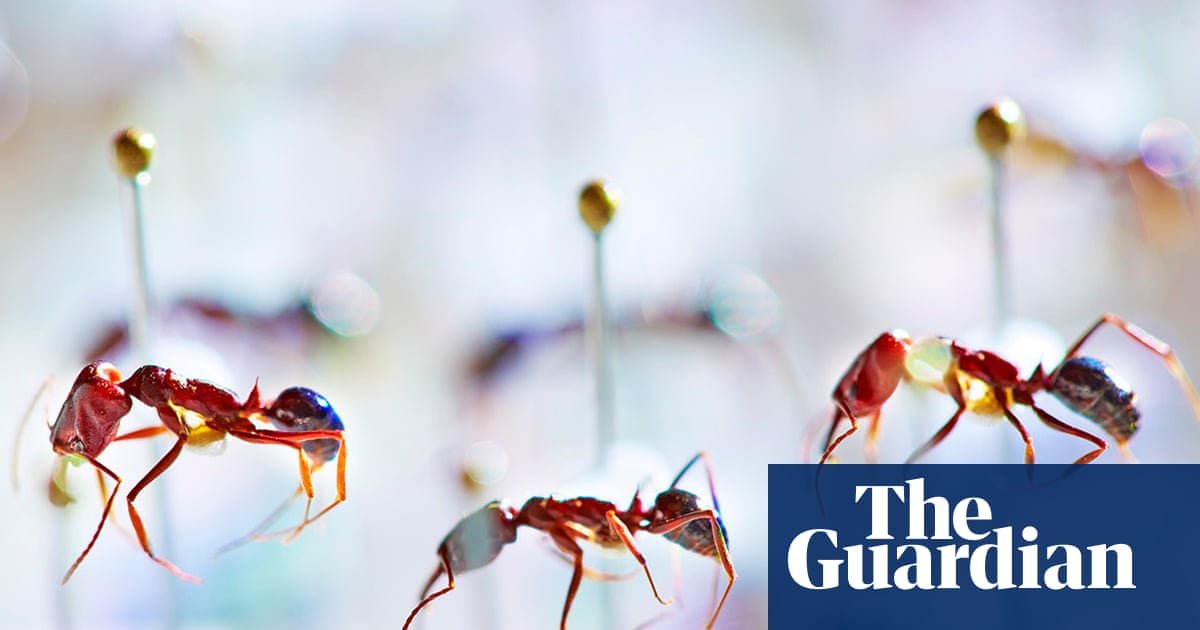
    Researchers analysed ant genomes to infer whether populations were growing or shrinking from variations in DNA sequences. Photograph: P Ginter/Okinawa Institute of Science and Technology
    Share
    Facebook Twitter LinkedIn Pinterest Email

    Island-dwelling insects have not been spared the ravages of humanity that have pushed so many of their invertebrate kin into freefall around the world, new research on Fijian ant populations has found.

    Hundreds of thousands of insect species have been lost over the past 150 years and it is believed the world is now losing between 1% and 2.5% a year of its remaining insect biomass – a decline so steep that many entomologists say we are living through an “insect apocalypse”. Yet long-term data for individual insect populations is sparse and patchy.

    A new study in the journal Science sheds light on what is happening to insects in some of the world’s most distant places. “There is global concern about the ‘insect apocalypse’, but a lot of uncertainty and debate about what is actually happening,” said Evan Economo, an entomologist at Japan’s Okinawa Institute of Science and Technology and co-author of the research.

    “We have a new kind of evidence of something we long suspected: that insect species endemic to remote islands are in decline.”

    A six-spotted tiger beetle (Cicindela sexguttata) in flight in east Texas. About 15% of tiger beetle species in the US are in a state of decline. Photograph: Michael Durham/NPL/Alamy

    Economo and his colleagues analysed genomes of ant populations from the Fijian archipelago gathered in recent decades and held in museum collections. From thousands of specimens, they used scientific methods to infer whether ant populations were growing or shrinking based on variations in DNA sequences among individuals.

    They found that 79% of Fiji’s endemic ant species were in decline, with impacts beginning at the time of humans’ arrival on the islands about 3,000 years ago and speeding up in the past 300 years – coinciding with European contact, global trade and the arrival of modern agriculture.

    For remote tropical islands where comprehensive historical observations are rare, understanding how insects have been harmed by human activities is hard to ascertain but critically important. Islands are hotspots of biodiversity because of their isolation. This also makes them especially vulnerable to extinctions.

    “Remote oceanic islands like the Galápagos, Hawaii and Fiji harbour species that evolved in isolation and often have spectacular differences from their mainland relatives,” Economo said.

    The research adds to a patchwork map of findings from the world’s ecosystems. In Germany, the abundance of flying insects across 63 nature reserves has dropped by 75% in less than 30 years. In the US, beetle numbers have plummeted by 83% in 45 years, and about 15% of tiger beetle species there are in decline. Europe’s grassland butterfly population has shrunk by 36% over the past decade.

    Insect populations are being hammered from all sides as habitat loss, pesticide use, climate breakdown and light pollution all add to the emptying out of the world’s wetlands, forests and grasslands.

    “We need to look at insects in more places, with more methods, to understand what is happening to insects and other invertebrates,” Economo said.

    Find more age of extinction coverage here, and follow the biodiversity reporters Phoebe Weston and Patrick Greenfield in the Guardian app for more nature coverage

    Ant decline evidence Fiji insects Islands remote study
    Share. Facebook Twitter Pinterest LinkedIn Tumblr Email
    Previous ArticleDoes my vagina really need a ‘facial’? | Well actually
    Next Article 3 Arguments Against AI in the Classroom
    onlyplanz_80y6mt
    • Website

    Related Posts

    Instagram worse for mental health than WhatsApp, global study finds | Social media

    March 19, 2026

    Playing with dolls can help children develop imagination and social skills – UK study | Children

    March 18, 2026

    Butterflies crossing oceans, moths navigating by the stars: unravelling the mysteries of insect migrations | Insects

    March 18, 2026
    Add A Comment
    Leave A Reply Cancel Reply

    Top Posts

    Watch Lady Gaga’s Perform ‘Vanish Into You’ on ‘Colbert’

    September 9, 20251 Views

    Advertisers flock to Fox seeking an ‘audience of one’ — Donald Trump

    July 13, 20251 Views

    A Setback for Maine’s Free Community College Program

    June 19, 20251 Views
    Stay In Touch
    • Facebook
    • YouTube
    • TikTok
    • WhatsApp
    • Twitter
    • Instagram
    Latest Reviews

    At Chile’s Vera Rubin Observatory, Earth’s Largest Camera Surveys the Sky

    By onlyplanz_80y6mtJune 19, 2025

    SpaceX Starship Explodes Before Test Fire

    By onlyplanz_80y6mtJune 19, 2025

    How the L.A. Port got hit by Trump’s Tariffs

    By onlyplanz_80y6mtJune 19, 2025

    Subscribe to Updates

    Get the latest tech news from FooBar about tech, design and biz.

    Most Popular

    Watch Lady Gaga’s Perform ‘Vanish Into You’ on ‘Colbert’

    September 9, 20251 Views

    Advertisers flock to Fox seeking an ‘audience of one’ — Donald Trump

    July 13, 20251 Views

    A Setback for Maine’s Free Community College Program

    June 19, 20251 Views
    Our Picks

    Oil and gas prices jump after Iran and Israel attack gasfields | Oil

    What animal are you? Humans and animals tend to like the same mating calls

    Independent autism committee that challenges RFK Jr’s overhaul draws criticism | Trump administration

    Recent Posts
    • Oil and gas prices jump after Iran and Israel attack gasfields | Oil
    • What animal are you? Humans and animals tend to like the same mating calls
    • Independent autism committee that challenges RFK Jr’s overhaul draws criticism | Trump administration
    • NSW will continue to green-light coalmine expansions – ignoring a warning from its own climate agency | New South Wales
    • Tens of thousands of prisoners in England and Wales at risk of cell fires | Prisons and probation
    © 2026 naijaglobalnews. Designed by Pro.
    • About Us
    • Disclaimer
    • Get In Touch
    • Privacy Policy
    • Terms and Conditions

    Type above and press Enter to search. Press Esc to cancel.