

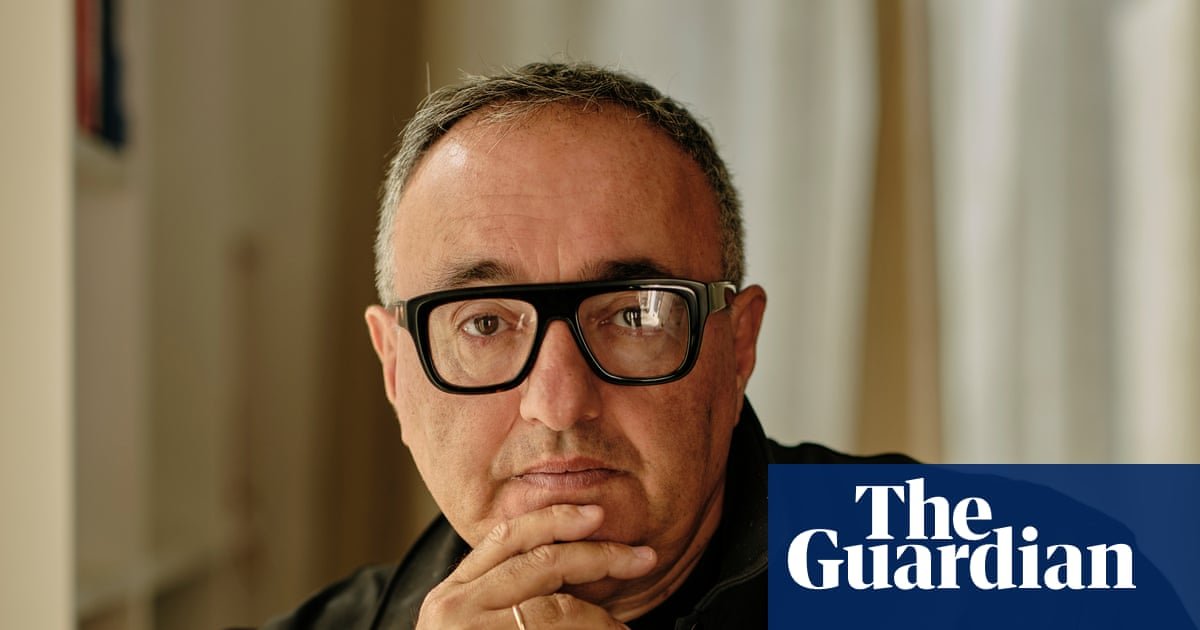
The Ukrainian film-maker Alexander Rodnyansky was once at the very centre of Russia’s cultural life. Over two decades he ran one of Russia’s biggest media conglomerates, produced some of the most celebrated films in recent Russian history – including the Oscar nominees Leviathan and Loveless – and helped bring Russian cinema to international prominence.
But since the invasion of Ukraine, Rodnyansky said, he has witnessed a huge shift in Russian cinema. “The most popular genre in Russian cinema today is fairytales,” the 64-year-old told the Guardian. “They adapt all the stories we grew up with. There’s no single social drama, no movie reflecting life during the war.
“The only source of financing is the state. If you want to make a movie about the war itself, the only option is propaganda. Movies about ‘Nazi Ukrainians’ killing decent Russians, about the Russian army entering Ukraine to save the people of Donbas from these fascists and nationalists. It’s the most stupid bullshit you can ever see.”
Rodnyansky’s comments emphasise a recent trend of lavish adaptations of folk tales and children’s stories becoming runaway hits in Russia. In 2023, Cheburashka, a children’s book adaptation, earned more than 6.5bn rubles (about £60m) at the domestic box office, becoming the highest-grossing Russian film ever.
The film-maker’s new documentary, Notes of a True Criminal, premiering in Venice on Wednesday, rejects that fantasy, opting instead for a deeply personal meditation on Ukraine’s history, the ongoing fallout from the collapse of the Soviet Union, and how these events have shaped his family across generations.
It is his first documentary in more than 30 years and what he calls “the most personal film of my life”.
“It’s so personal that I decided to fund it on my own, on a very small budget. In 40, 50 years it can be a video diary for my kids and grandkids. It’s not a political movie, or an urgent report on what’s going on in Ukraine. I wanted to study the human cost of the war,” he said.
The film is told through a series of vignettes, including footage from Ukrainian soldiers (some still alive, some dead), family videos, and clips from historical wars and tragedies including Chornobyl. Its title comes directly from Rodnyansky’s own recent ordeal.
Last year, the film-maker was sentenced in absentia by a Moscow court to eight and a half years in prison for spreading “fake news” about the Russian army. Russia’s justice ministry declared him a “foreign agent”.
For a man who spent much of his career inside the Russian establishment, the ruling was a personal rupture and a political inevitability.
“It’s been quite an experience for me,” he said. “I never had a Russian passport and citizenship. Somehow I felt it was not right, because I had my Ukrainian sentiment and identity. But at the same time I was in love with Russian film history and culture, I was shaped by Russian literature. I had amazing friends in Moscow.
“I’ve [since] lost the connection with some of them who pretend this life is normal, who don’t speak out.”
Two days after the invasion started, Rodnyansky said, a letter written by the Russian defence minister to the culture minister “demanded to eradicate the participation of President Zelenskyy and myself in the Russian cultural agenda”.
“I never knew I was a part of Russian cultural agenda,” he said. “The next day, my wife and I packed our cases and left our home.”
Though he makes light of his sentence – “it’s a very cinematic sentence,” he joked, citing Fellini’s masterpiece 8½ – he said the repercussions were serious.
“It’s part of their strategy of intimidation of people who live in Russia. It also makes me think twice before travelling. I don’t go to countries with close ties to Russia.”
The director said he was wary of recent diplomacy. Of Donald Trump’s summit with Vladimir Putin in Alaska this month, he said: “Ukrainians went absolutely crazy over this footage of Putin on the red carpet. A lot of Ukrainians want the war to end, but they don’t trust Trump to end it in a satisfying way. There’s a line between compromise and capitulation, and capitulation is unacceptable.”
The war has reshaped relationships between Ukrainians and Russians, he said. “Ukrainians are traumatised. Most don’t have the emotional resources to judge between good and bad Russians. They believe every single Russian is morally responsible. But there are a lot of Russians who are supportive of Ukraine. More than a million left Russia when the war started, and many criticise the Kremlin.”
Last month, dozens of Ukrainian writers and artists urged the UK’s Royal Ballet and Opera to drop the Russian opera singer Anna Netrebko from its new London season, calling her a “longtime symbol of cultural propaganda” for the Russian government. Should she and other Russian artists be boycotted?
“We need to separate people who support Putin from those who speak out against him,” Rodnyansky said. “There are plenty of amazing Russian cultural figures who have strongly opposed Putin for years. Netrebko supported Putin in 2014, but as far as I know she condemned the war afterwards. People can change their opinions.
“Even during the second world war, everyone knew the difference between [Erich Maria] Remarque or Thomas Mann and German cultural figures supporting the Nazis.”
