

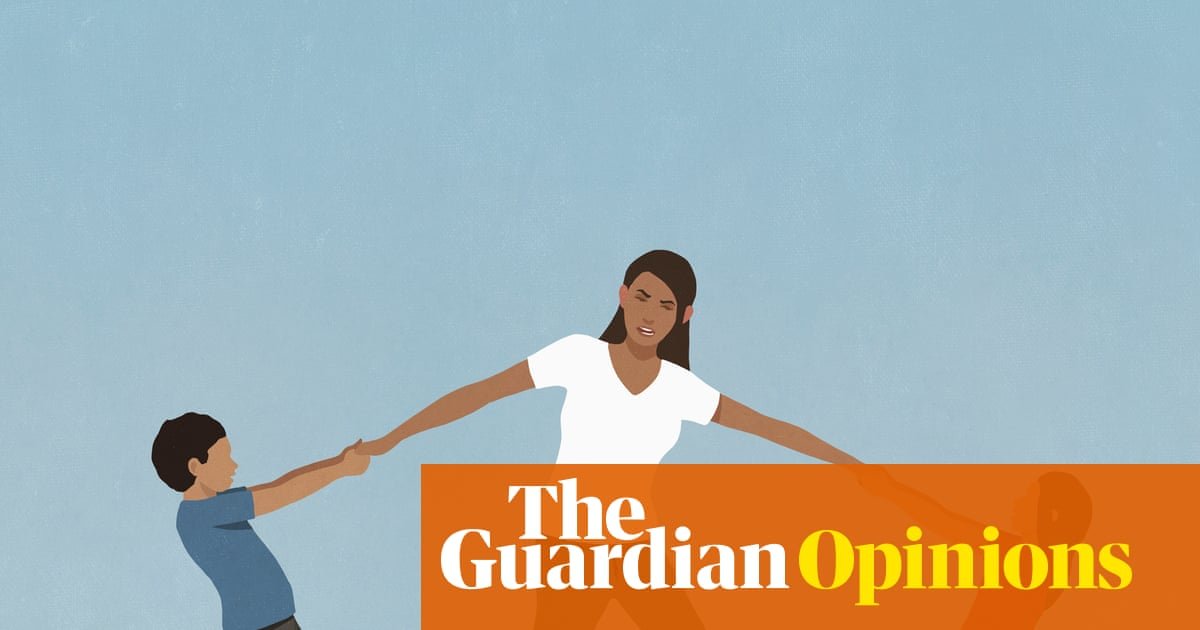
I haven’t slept for seven-and-a-half years – at least, it feels that way. The TV, rotating between Bluey, The Wiggles and K-pop Demon Hunters (when the toddler is napping), has been on for days as we battle yet another winter lurgy that drains me yet barely touches the surface of my two daughters, who vomit on the carpet one minute then ask for ice-cream the next. My seven-year-old makes cameo appearances at school, only to catch the next illness and bring it home to the family, our toddler demonstrating what a fine job she’s doing at developing her immune system with fevers, snot, vomit and a bout of conjunctivitis that never seems to end. The house is covered in crumbs and yoghurt splodges, there are no clean clothes and the gastro I got on my birthday set off my chronic illness into the worst flare since being diagnosed in 2021.
I am running on fumes, but there’s no stress leave when your boss is a toddler. Had I been born in 19th-century England, my “nervous exhaustion” would earn me an opium tincture and a month by the sea – which in my opinion was about the only bright idea they ever had for women’s health (the seaside, not the opium). But instead, I crawl through my days, exhausted and desperate for sleep, only to lie awake all night, shaking with unexplained panic as adrenaline courses through my body.
The psychologist Herbert Freudenberger first popularised the term burnout in the 1970s after he experienced his own collapse while working punishing hours at a free substance abuse clinic in New York. He noticed the same exhaustion and disillusionment in fellow caregivers, whose state reminded him of the very addicts they were treating. Once shorthand for drug overuse, burnout was reimagined by Freudenberger to capture the toll of relentless caregiving – but Google the term today and it’s almost always framed in a corporate context, with domestic work and caregiving barely getting a mention.
What exactly is burnout? Beyond Blue describes it as a state of emotional, physical, and mental exhaustion caused by excessive demands, whether at work or in your personal life. At its core, burnout is the gradual erosion of energy and spirit, making even the simplest tasks feel monumental and everyday functioning almost impossible.
In her 2023 memoir Holding the Baby, the journalist Nell Frizzell explores gendered attitudes toward tiredness. She notes how society valorises exhaustion in traditionally male-dominated roles like soldiers, financial traders or endurance athletes, while overlooking fatigue in roles largely carried out by women such as nurses, cleaners or breastfeeding mothers.
Frizzell highlights the dangers of sleep deprivation and how parents, especially mothers, are expected to just “keep going”, tackling the mammoth task of keeping a tiny baby alive while recovering from pregnancy, birth and huge hormonal shifts. She shares “funny” anecdotes of “mistakes” mothers have made in the depths of exhaustion (making tea with a dishwashing tablet, trying to settle a baby upside down).
But when we step back, it reveals a harsher reality: society isn’t structured to support mothers. If a parent were acting bizarrely due to drugs or alcohol, there would be concern and intervention; but when the cause is sleep deprivation, it’s shrugged off as par for the course. These anecdotes underscore just how physically and mentally taxing motherhood can be – demands that science confirms are truly extraordinary.
A 2019 study in Science Advances found that metabolic demands during pregnancy rival those of extreme endurance feats like the Tour de France, ultramarathons and Arctic expeditions, making it one of the most physically taxing human experiences. We would never hand an Arctic explorer a baby to care for full-time the minute they complete their expedition – so why do we expect women to manage full-time childcare the moment they give birth?
It’s frustrating that maternal burnout is rarely discussed: rightwing voices frame it as a personal failing or the consequence of choosing to have children, while left-leaning commentators avoid weighing in, worried that acknowledging the strain of domestic labour might be seen to endorse “traditional feminine roles”. But failing to recognise domestic work as valuable keeps caregiving invisible and only reinforces the very inequalities society claims to have outgrown.
Notably, we make women feel guilty for needing support as mothers, yet still expect society to run as it always has. But who births and raises the next generation of farmers, teachers, health and aged care workers? Birthrates in Australia are at an all-time low as women recognise that having children is hard and support is scarce. To those telling women not to have kids if they can’t cope: enjoy having a robot wipe your bum at 90, because right now, there won’t be nearly enough hands to help our ageing population.
Tracing the long history of maternal burnout reveals a sobering pattern. For centuries, exhausted mothers have been prescribed substances to blunt their rage, their feelings of being overwhelmed and their bone-deep fatigue; offered pacification rather than tangible support. In the 19th century, laudanum tonics (opium dissolved in alcohol that were sweetened and sold as “soothing syrups”) were routine. By the 1950s and 60s, Valium – nicknamed “Mother’s Little Helper” – was the most prescribed drug in America, marketed directly to overwhelmed housewives. Today, it’s SSRIs (Selective Serotonin uptake Re-Inhibitors) that keep some of us (barely) afloat.
The pattern is clear: instead of addressing why motherhood is so depleting, society tends to medicate women through it. Nearly every mother I know – including myself – has needed medication at some point in their journey, which makes one thing painfully clear: we don’t value mothers or recognise the gargantuan job they do.
While Australia fares better than many countries, full-time carers, predominantly mothers, deserve proper recognition: fair pay, superannuation and holiday leave. We would never expect any other job to run 24/7, 365 days a year without support. So why do we brush off full-time parenting?
As I navigate motherhood through burnout, I’m heartened by how much exhausted mothers support one another. But while we do what we can for each other, society still needs to step up.
Freya Bennett is a writer based on Dja Dja Wurrung country and is the cofounder and editor of Ramona magazine
