

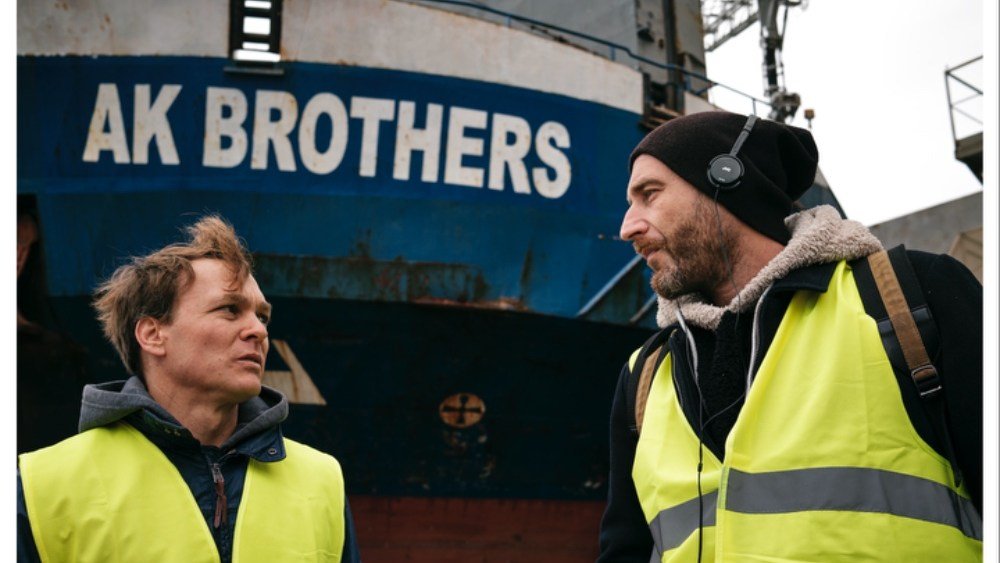
Italy’s Rai Cinema will co-produce “Primo Viaggio,” directed by Alessandro Cassigoli and Casey Kauffman. Teodora Film will distribute locally.
The film, spotlighted at Locarno’s Alliance 4 Development, is produced by Palme d’Or winner Nanni Moretti (“The Son’s Room,” “We Have a Pope”) and Benedetta Barroero for Sacher Film, founded back in 1987.
It focuses on Carlo, a 22-year-old from Naples, who accepts a free vacation in Malaga – in exchange for driving a car full of narcotics back to Italy.
“We have been working in the Naples region for the past nine years. It’s a colorful, crazy place with a lot of interesting stories. Recently, we’ve heard one that really grabbed us. Young people were accepting all-paid-for vacation and a little bit of cash in exchange for transporting hard narcotics from Spain,” said Kauffman.
“We were pretty surprised – it’s a big risk to take for a holiday in a low-budget resort.”
Their protagonist comes from Torre Annunziata, “which is a close-minded environment. And he’s never travelled before,” said Cassigoli, explaining the film’s title.
“When he accepts the deal and goes to Spain, what he thinks is just a drug run turns into something totally, totally different. He meets new types of people and has experiences with them that make him question his decisions. It fundamentally changes him.”
The duo started out as friends and flatmates, but then life took over: Kauffman moved to the Middle East to work as a journalist, and Cassigoli focused on making creative docs in Berlin.
“We literally had this ongoing conversation for nine years about how to film people, or how to make the audience care. We were each other’s consultants. When we both moved back to Italy, we decided to make a film,” recalled Kauffman.
In early development, “Primo Viaggio” will be made following Cassigoli and Kauffman’s style of favoring non-professionals.
According to Barroero, one of their “particular talents” is “their ability to seamlessly combine lived experience with narrative film.” Their story is written down, but as they meet people through street casting, their lives can be “brought into the script, reshaping the story together with the main character.”
“Up until now, we’ve always worked with non-professional actors. It’s because of our background. We are used to throwing ourselves into real stories with real people, in real environments. And we enjoy that,” noted Kauffman.
For their previous film, “Vittoria,” after hearing one family’s story they asked them to reinterpret their experience in front of the camera. But “Primo Viaggio” is a “further step into fiction.”
“Our main focus is to bring real-life dilemmas and circumstances through street casting into the film. We believe it’s our way of trying to transit the most emotion. The screenplay is more for us and the crew – the main character will never read it or memorize any lines. He’ll know the story but he’ll interpret the scene based on his own life experience,” added Cassigoli.
Moretti was also involved in the making of “Vittoria.”
“Our collaboration began in a very organic way. Our first film, ‘Californie,’ premiered in Venice in 2021. Later, it was selected for Nanni Moretti’s competition for film debuts. He wasn’t on the jury, but our film won! That started a very interesting conversation,” recalled Kauffman.
“On ‘Vittoria,’ we had total freedom. He’s so experienced – we could have learnt a lot from him on set, but he wanted to leave us alone and let us make our own choices. He got more involved later, once we had a rough cut of the film, and his attention to detail was amazing to see. When he mentioned being a majority producer on this film, we accepted.”
Despite switching locations from Naples to Malaga and even Marseilles, they don’t see “Primo Viaggio” as a road movie.
“Even though he actually drives in the film! It’s definitely more about his initial circumstances and internal journey,” said Kauffman, with Cassigoli noting: “Carlo is a regular kid from Naples, he lives alone with his grandpa and doesn’t have many opportunities. Once you know he’s about to transport cocaine without much experience in life, it adds a huge tension. It’s really about modern-day issues, and this type of generation.”
