

Unlock the Editor’s Digest for free
Roula Khalaf, Editor of the FT, selects her favourite stories in this weekly newsletter.
Barrick Mining is seeking to raise up to $3.5bn in financing from the US and other international lenders to build a giant copper mine in Pakistan after long-discussed funding from Saudi Arabia failed to materialise.
Chief executive Mark Bristow said the company was working on a “G7-country financing package” for the project in Balochistan province.
This would involve the World Bank’s International Finance Corp, the US government’s Export-Import Bank and Development Finance Corporation, the Asian Development Bank and lenders in Germany, Canada and Japan.
“There is a lot of interest to support Pakistan,” Bristow told the Financial Times, adding that the $9bn project had “focused a spotlight” on the region.
Bristow was speaking on Monday as Barrick, previously called Barrick Gold, reported net earnings of $811mn in the second quarter of 2025 — up 33 per cent from a year ago — helped by record-high gold prices.
Barrick chief Mark Bristow said he expected his company and Pakistan to each invest $1.5bn to $1.8bn in the project © Dwayne Senior/Bloomberg
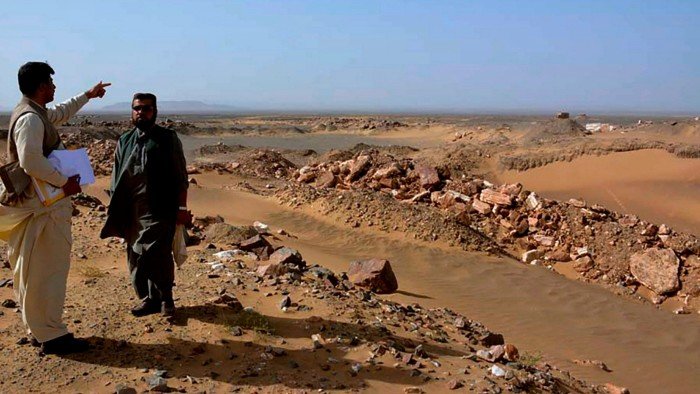
The first phase of the Reko Diq copper and gold mine — which is 50 per cent owned by Barrick, with Pakistan’s federal and provincial governments holding the rest — will cost an estimated $6.6bn.
Bristow said he expected Barrick and Pakistan to each invest $1.5bn to $1.8bn, with the remaining $3bn to $3.5bn to be raised from the international lenders.
“It’s a perfect situation where Pakistan is investing alongside us, 50-50,” he said. “We bring the skills and we’re the operators, and then we’re gearing it with international limited recourse financing.”
Barrick and Pakistan previously held discussions with Saudi Arabia’s Manara Minerals about the state mining fund acquiring up to 20 per cent of the project, but ultimately could not reach an agreement.
The development of Reko Diq, with production due to start in 2028, comes at a time of increased geopolitical competition for the metals needed for energy infrastructure and military hardware. President Donald Trump has made access to minerals a foreign policy priority for the US, as have other western countries.
Bristow said any US government funding for Reko Diq would give it access to copper concentrate produced by the mine, but that this would then need to be processed into metal.
“The challenge for the US is smelting to capacity, it’s all spoken for,” he said, adding that the US needed more domestic smelters if it really wanted to reduce its dependence on imports of metal from China.
In Mali, a court in June appointed administrators to run Barrick’s Loulo-Gounkoto gold mine, which has been closed since January due to a dispute between the company and the military junta over a new mining law introduced in 2023.
The Canadian company has launched an arbitration case at the World Bank’s International Centre for Settlement of Investment Disputes in an attempt to resolve the stand-off.
Bristow said he had used arbitration to resolve similar disputes in other countries, including Pakistan and Tanzania, and was confident the process would succeed.
“The world has become a place where the concept of agreements and right and wrongs and commitments are all fungible,” he said. “It would be against the whole principles of why people have invested in us if we suddenly show that any deal is acceptable, no matter what the implications.”
