
Close Menu

    Subscribe to Updates

    Get the latest creative news from FooBar about art, design and business.

    What's Hot

    Whereabouts of nearly 300 people with Ebola unknown in DR Congo | Global development

    Nigel Farage’s anti-WHO campaign moves to US with allies added to board | Nigel Farage

    Here’s what to do if your StubHub World Cup resale ticket is canceled | World Cup 2026

    Facebook X (Twitter) Instagram
    Facebook X (Twitter) YouTube LinkedIn
    Naija Global News |
    Sunday, June 28
    • Business
    • Health
    • Politics
    • Science
    • Sports
    • Education
    • Social Issues
    • Technology
    • More
      • Crime & Justice
      • Environment
      • Entertainment
    Naija Global News |
    You are at:Home»Technology»You Can Still See Bright Fireballs During the Perseids Meteor Shower
    Technology

    You Can Still See Bright Fireballs During the Perseids Meteor Shower

    onlyplanz_80y6mtBy onlyplanz_80y6mtAugust 8, 2025003 Mins Read
    Share Facebook Twitter Pinterest LinkedIn Tumblr Email
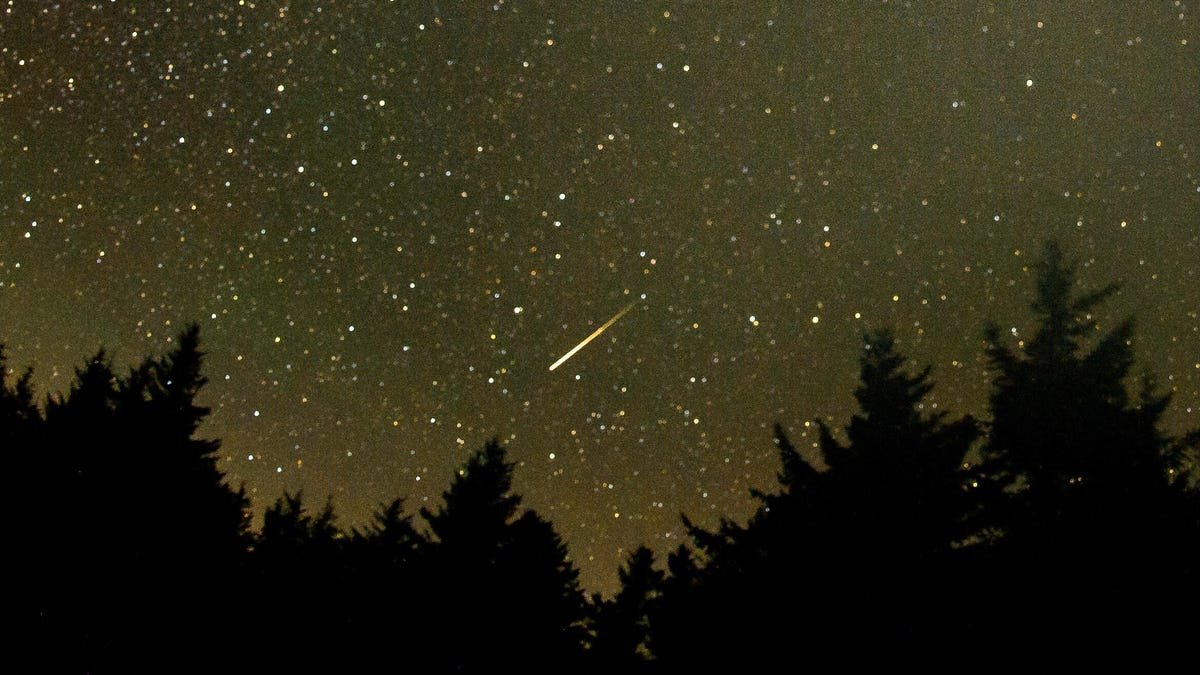
    nasaingallsperseid2016

    The Perseids meteor shower will appear in the eastern skies. 

    NASA/Bill Ingalls
    Share
    Facebook Twitter LinkedIn Pinterest Email

    Skygazers rejoice, the summer isn’t finished with delivering dazzling meteor showers. The last week of July saw dueling meteor showers taking over the sky, but the most popular meteor shower of the year won’t hit its peak until next week. The Perseids meteor shower is about to give you a real light show, provided you’re far enough away from light pollution to see it. 

    Perseids are known for their bright fireballs and plentiful meteors. The show started on July 17, and will run through Aug. 23. 

    The reason the Perseids meteor shower is so popular is twofold. First, it takes place in the summer, so going outside and watching it is less uncomfortable than other large meteor showers like Quadrantids, which takes place in wintery January. 

    The other reason is that it’s one of the most active meteor showers of the year. During its peak, the meteor shower is known to rain down as many as 100 meteors per hour, according to the American Meteor Society. These not only include your typical shooting stars, but also a higher chance for fireballs, which are meteors that explode as they enter orbit. Per NASA, fireballs tend to last longer than standard shooting stars and can come in a variety of different colors. 

    Perseids come to Earth courtesy of the 109P/Swift-Tuttle comet. Earth’s orbit around the sun brings it through Swift-Tuttle’s tail every year. The comet itself takes 133 years to orbit the sun. Its last perihelion — the point at which it’s the closest to the sun — was in 1992. It won’t be back until the year 2125. Until then, it leaves behind an excellent tail of dust and debris to feed us yearly meteor showers. 

    How to catch the Perseids meteor shower

    The best time to view the Perseids is during its peak, which occurs on the evenings of Aug. 12 and 13. During this time, the shower will produce anywhere from 25 to 100 meteors per hour on average. However, since the shower officially lasts for over a month, you have a chance to see a shooting star on any given evening, provided that you’re far enough away from light pollution.

    Thus, if you’re planning on watching this year’s Perseids during their peak, you’ll want to get out of the city and suburbs as far as possible. According to Bill Cooke, lead of NASA’s Meteoroid Environments Office, folks in the city might see one or two meteors from the meteor shower per hour, which is pocket change compared to what those outside city limits might see. 

    Regardless, once you’ve arrived at wherever you want to watch the meteors, you’ll want to direct your attention to the radiant, or the point at which the meteors will appear to originate. Like all meteors, Perseids are named after the constellation from which they appear. In this case, it’s Perseus.

    Per Stellarium’s free sky map, Perseus will rise from the northeastern horizon across the continental US on the evenings of Aug. 12 and 13. It’ll then rise into the eastern sky, where it’ll remain until after sunrise. So, in short, point yourself due east and you should be OK. Binoculars may help, but we recommend against telescopes since they’ll restrict your view of the sky to a very small portion, which may hinder your meteor-sighting efforts. 

    The American Meteor Society also notes that the moon may give viewers some difficulty. Perseids’ peak occurs just three days after August’s full moon, so the moon will still be mostly full. Thus, it is highly probable that light pollution from the moon may reduce the number of visible meteors by a hefty margin, depending on how things go.

    bright Fireballs Meteor Perseids shower
    Share. Facebook Twitter Pinterest LinkedIn Tumblr Email
    Previous ArticleColts quarterback Anthony Richardson leaves preseason game with finger injury
    Next Article Scientists decry Trump energy chief’s plan to ‘update’ climate reports: ‘Exactly what Stalin did’ | Trump administration
    onlyplanz_80y6mt
    • Website

    Related Posts

    The Guardian view on Welsh language learning: cultural shifts can deliver a bright future for Cymraeg | Editorial

    April 1, 2026

    Meteor Streaks Across the Sky Over Pennsylvania and Ohio

    March 17, 2026

    Through the heatwave haze, the hypocrisy of Australia’s fossil fuel policy shines bright | Adam Morton

    January 27, 2026
    Add A Comment
    Leave A Reply Cancel Reply

    Top Posts

    The science influencers going viral on TikTok to fight misinformation

    February 17, 20262 Views

    Watch Lady Gaga’s Perform ‘Vanish Into You’ on ‘Colbert’

    September 9, 20251 Views

    Advertisers flock to Fox seeking an ‘audience of one’ — Donald Trump

    July 13, 20251 Views
    Stay In Touch
    • Facebook
    • YouTube
    • TikTok
    • WhatsApp
    • Twitter
    • Instagram
    Latest Reviews

    At Chile’s Vera Rubin Observatory, Earth’s Largest Camera Surveys the Sky

    By onlyplanz_80y6mtJune 19, 2025

    SpaceX Starship Explodes Before Test Fire

    By onlyplanz_80y6mtJune 19, 2025

    How the L.A. Port got hit by Trump’s Tariffs

    By onlyplanz_80y6mtJune 19, 2025

    Subscribe to Updates

    Get the latest tech news from FooBar about tech, design and biz.

    Most Popular

    The science influencers going viral on TikTok to fight misinformation

    February 17, 20262 Views

    Watch Lady Gaga’s Perform ‘Vanish Into You’ on ‘Colbert’

    September 9, 20251 Views

    Advertisers flock to Fox seeking an ‘audience of one’ — Donald Trump

    July 13, 20251 Views
    Our Picks

    Whereabouts of nearly 300 people with Ebola unknown in DR Congo | Global development

    Nigel Farage’s anti-WHO campaign moves to US with allies added to board | Nigel Farage

    Here’s what to do if your StubHub World Cup resale ticket is canceled | World Cup 2026

    Recent Posts
    • Whereabouts of nearly 300 people with Ebola unknown in DR Congo | Global development
    • Nigel Farage’s anti-WHO campaign moves to US with allies added to board | Nigel Farage
    • Here’s what to do if your StubHub World Cup resale ticket is canceled | World Cup 2026
    • ‘A sad inevitability’: after decades of climate warnings, why is Europe so unprepared for rising heat? | Extreme heat
    • Trump threatens 100% tariff on European countries that impose digital tax | Donald Trump
    © 2026 naijaglobalnews. Designed by Pro.
    • About Us
    • Disclaimer
    • Get In Touch
    • Privacy Policy
    • Terms and Conditions

    Type above and press Enter to search. Press Esc to cancel.