
Close Menu

    Subscribe to Updates

    Get the latest creative news from FooBar about art, design and business.

    What's Hot

    ‘Empty and vapid’ CDC finally responds to hantavirus outbreak. But experts say it’s too little, too late | Hantavirus

    ‘It’s David and Goliath’: how UK campaigners feel silenced by Slapps | Freedom of speech

    General Motors to pay $12.75m settlement for selling drivers’ location and data | US news

    Facebook X (Twitter) Instagram
    Facebook X (Twitter) YouTube LinkedIn
    Naija Global News |
    Saturday, May 9
    • Business
    • Health
    • Politics
    • Science
    • Sports
    • Education
    • Social Issues
    • Technology
    • More
      • Crime & Justice
      • Environment
      • Entertainment
    Naija Global News |
    You are at:Home»Business»Inside the relentless race for AI capacity
    Business

    Inside the relentless race for AI capacity

    onlyplanz_80y6mtBy onlyplanz_80y6mtJuly 31, 2025003 Mins Read
    Share Facebook Twitter Pinterest LinkedIn Tumblr Email
    Inside the relentless race for AI capacity
    From top: Amazon’s $11bn data center campus in Indiana; Microsoft’s AI data centre in Wisconsin; The xAI data center in Memphis, Tennessee; The Stargate AI site in Abilene, Texas, a collaboration between OpenAI, SoftBank, and Oracle
    © Mark Hertzberg/ZUMA Press Wire; Stephen Voss/Redux/eyevine; USA Today Network/Reuters; REUTERS/Daniel Cole
    Share
    Facebook Twitter LinkedIn Pinterest Email

    These spikes threaten cascading power outages, affecting homes and businesses that feed off the same grid network. Last summer, utility providers in Virginia had to grapple with a sudden surge in power after a cluster of facilities switched to back-up generators as a safety precaution, leading to an excess supply that risked grid infrastructure.

    With abundant power the priority, operators have also ended up in areas with significant water constraints. Hyperscale and colocation sites in the US consumed 55bn litres of water in 2023, according to researchers at the LBNL. Indirect consumption tied to energy use is markedly higher at 800bn litres a year, the equivalent annual water usage of almost 2mn US homes.

    In 2023, Microsoft said that 42 per cent of its water came from “areas with water stress”, while Meta said roughly 16 per cent of its water usage was derived from similar areas during the same time period. Google said last year almost 30 per cent of its water came from watersheds with a medium or high risk of “water depletion or scarcity”. Amazon does not disclose its figure.

    Data centres in drought-prone states such as Arizona and Texas have led to concern among locals, while residents in Georgia have complained that Meta’s development in the state has damaged water wells, pushed up the cost of municipal water and led to shortages that could see water rationed.

    Some believe that this endless race for ever-greater computing power is misplaced.

    Sasha Luccioni, AI and climate lead at open-source start-up Hugging Face, said alternative techniques to train AI models, such as distillation or the use of smaller models, were gaining popularity and could allow developers to build powerful models at a fraction of the cost.

    “It’s almost like a mass hallucination where everyone is on the same wavelength that we need more data centers without actually questioning why,” she said.

    Cooling

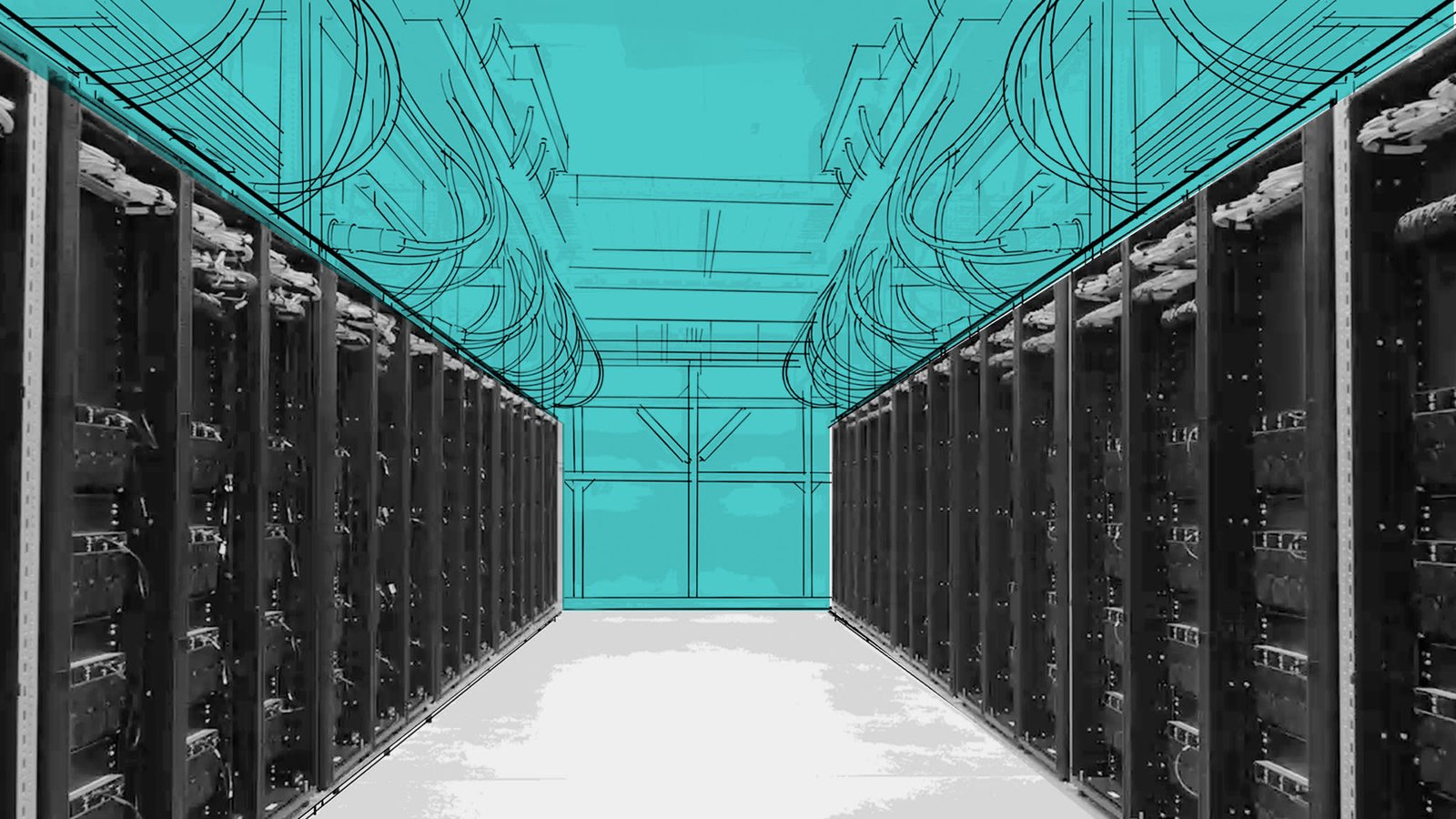
    Increased chip density has another unwanted effect: heat. About two-fifths of the energy used by an AI data centre stems from cooling chips and equipment, according to consultants McKinsey.

    Early data centres running cloud workloads deployed industrial-grade air conditioning units similar to those used in offices to cool servers. But as chips started to draw more power, it has become harder to keep them within their safe operating range between 30 and 40C, with data centres requiring more advanced cooling methods to avoid malfunctions. The challenge has led to significant investment in cutting-edge innovations.

    Operators have turned to installing pipes filled with cold water in the server room to transfer heat away from equipment. This water is then directed to large cooling towers that use evaporation to reduce the facility’s temperature to a safe range. But the approach leads to water loss, with a single tower churning through about 19,000 litres per minute.

    Microsoft and others have adopted a closed-loop system that depends on chillers — in effect, a refrigerator —to cool the water. This process is less wasteful and more efficient than evaporative options.

    capacity Race relentless
    Share. Facebook Twitter Pinterest LinkedIn Tumblr Email
    Previous ArticleRussia’s Magnitude 8.8 Earthquake Ranks among 10 Strongest
    Next Article Summer riots: what have we learned a year on? – podcast | Politics
    onlyplanz_80y6mt
    • Website

    Related Posts

    General Motors to pay $12.75m settlement for selling drivers’ location and data | US news

    May 9, 2026

    Spiritless summer: Americans feel squeeze of costly fuel amid busy travel season | US news

    May 9, 2026

    Powerful US utilities secretly fund ‘grassroots’ groups to sway cities away from switch to public power | Utilities

    May 9, 2026
    Add A Comment
    Leave A Reply Cancel Reply

    Top Posts

    Watch Lady Gaga’s Perform ‘Vanish Into You’ on ‘Colbert’

    September 9, 20251 Views

    Advertisers flock to Fox seeking an ‘audience of one’ — Donald Trump

    July 13, 20251 Views

    A Setback for Maine’s Free Community College Program

    June 19, 20251 Views
    Stay In Touch
    • Facebook
    • YouTube
    • TikTok
    • WhatsApp
    • Twitter
    • Instagram
    Latest Reviews

    At Chile’s Vera Rubin Observatory, Earth’s Largest Camera Surveys the Sky

    By onlyplanz_80y6mtJune 19, 2025

    SpaceX Starship Explodes Before Test Fire

    By onlyplanz_80y6mtJune 19, 2025

    How the L.A. Port got hit by Trump’s Tariffs

    By onlyplanz_80y6mtJune 19, 2025

    Subscribe to Updates

    Get the latest tech news from FooBar about tech, design and biz.

    Most Popular

    Watch Lady Gaga’s Perform ‘Vanish Into You’ on ‘Colbert’

    September 9, 20251 Views

    Advertisers flock to Fox seeking an ‘audience of one’ — Donald Trump

    July 13, 20251 Views

    A Setback for Maine’s Free Community College Program

    June 19, 20251 Views
    Our Picks

    ‘Empty and vapid’ CDC finally responds to hantavirus outbreak. But experts say it’s too little, too late | Hantavirus

    ‘It’s David and Goliath’: how UK campaigners feel silenced by Slapps | Freedom of speech

    General Motors to pay $12.75m settlement for selling drivers’ location and data | US news

    Recent Posts
    • ‘Empty and vapid’ CDC finally responds to hantavirus outbreak. But experts say it’s too little, too late | Hantavirus
    • ‘It’s David and Goliath’: how UK campaigners feel silenced by Slapps | Freedom of speech
    • General Motors to pay $12.75m settlement for selling drivers’ location and data | US news
    • Mo Farah urges against possible £120m cut to school sports in England | Schools
    • The US could soon make it easier to execute people with intellectual disabilities | Sophia Laurenzi
    © 2026 naijaglobalnews. Designed by Pro.
    • About Us
    • Disclaimer
    • Get In Touch
    • Privacy Policy
    • Terms and Conditions

    Type above and press Enter to search. Press Esc to cancel.