

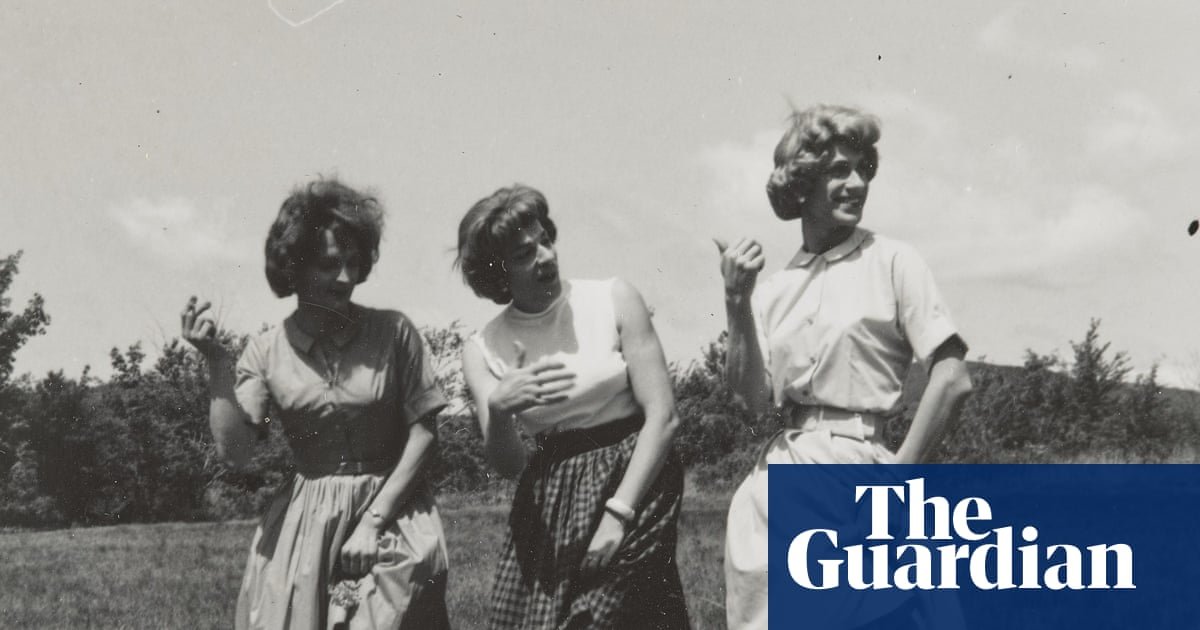
A new show at the Met demonstrates the enduring power of photography to affirm trans identities and build trans communities. Titled simply Casa Susanna, it reveals a treasure trove of photographs made by a community of self-identified “cross-dressers” in the 1960s, as they found ways to make precious time to dress as their feminine selves in two resorts offering safe spaces in the Catskill mountains.
According to show curator Mia Fineman, these photos had sat dormant for decades until two antique dealers happened to discover them at a flea market in 2004. “What struck them was that they were men dressed in women’s clothing but not in drag,” said Fineman. “They were not wearing flamboyant clothing, it was a very conservative, midcentury style.”
The photos were acquired by the Art Gallery of Ontario, a book of the photographs was released, and subsequently trans scholars began to situate Casa Susanna into queer history. The original flea market collection of photos was also augmented by collections from artist Cindy Sherman and Betsy Wollheim, a daughter of one of the members of the original Casa Susanna community, and AGO launched a formal exhibition of the photos in the winter of 2024.
Now the Met shares its own version of this show, featuring some 160 photos as well as material from Transvestia, a zine made by the Casa Susanna community that published six issues per year. It is a tender and necessary look at trans identity from over half a century ago.
‘Heartbreakingly, these photos show a stage of arrested development, a time when so many closeted trans women were unable to stop living a dual life as straight men.’ Photograph: AGO
Casa Susanna was the brainchild of two women: trans woman Susanna Valenti and her wife Marie Tornell. According to Fineman, the two came together over a meet-cute for the ages: one day a nervous Valenti – dressed as a man – came into Tornell’s Manhattan wig shop, supposedly to purchase a wig for her sister, but the astute shopowner was having none of it. “Marie clocked Susanna, said I know it’s for you, it’s ok, let me find something that will make you look beautiful. After that the two of them quickly fell in love.”
The couple subsequently decided to create a dedicated place where others like Valenti could have the space to be their true selves. “The two of them as a couple were so extraordinary and unique for their time,” said Fineman. “I really wish I could have met them, they seem like such incredible people.”
In the 60s, very few people who wished to author the story of their own gender were able to have Valenti’s freedom. McCarthyism was rampant, and most of the Casa Susanna community supported families as married men – if others found out that they liked to dress as women, they stood to lose everything.
“Most of these people were married, were professionals, doctors, lawyers, mechanics,” said Fineman. “They were mostly white middle class men with wives and families. They had a lot to lose if their cross-dressing were to be exposed. They lived in isolation and shame.” Casa Susanna participants went so far as to learn to process and print color film on their own, in order to avoid having their photos seen by consumer labs.
In spite of that intense pressure – or maybe because of it – those depicted in the Casa Susanna photos radiate intense levity and happiness. “There’s a real sense of joy, a feeling of being so comfortable in their skin,” said Fineman. “When they were in women’s clothing and in the safe space that these resorts provided them they had a sense of freedom there that they couldn’t have in their everyday lives.”
These photos are striking for how closely they resemble photographs shared decades later by early stage trans women in Internet-based communities. There is a similar aspirational desire to embody an ideal of middle-class, white femininity, and a sense of playful, stolen moments, an all-too brief respite of freedom, self-expression, and community, against a smothering life of forced conformity to a gender that they know is wrong.
Heartbreakingly, these photos show a stage of arrested development, a time when so many closeted trans women were unable to stop living a dual life as straight men. Behind all the smiles and casual poses one can sense individuals who yearn to be free but do not feel capable of pushing past the barriers imposed by society.
‘Behind all the smiles and casual poses one can sense individuals who yearn to be free but do not feel capable of pushing past the barriers imposed by society.’ Photograph: AGO
“Seeing photos of themselves dressed en femme was profoundly important for these people,” said Fineman. “They talked about this in the magazine and in other places. It was seeing an image of themselves as a woman that reflected back their desired identity to them.”
Importantly, Casa Susanna puts the lie to the frequent myth that there is something new about trans women, as well as the falsehood recently perpetrated by supreme court justice Amy Coney Barrett that the US has no significant history of discrimination against trans people. “At the time there were masquerade laws, so these people could be arrested for cross-dressing in public,” said Fineman. “They had to be very careful, even going outside of their homes. There are accounts in the magazine of them being arrested, which involved horrible humiliation and mistreatment at the hands of the police. They could even be sent to mental institutions for what was essentially conversion therapy.”
Many in the Casa Susanna community had supportive wives who would often join them in the Catskills, sometimes even penning columns in Transvestia from their perspective. In 1965, one wife named Avis wrote a heartfelt column on her struggles to understand her spouse’s identity, giving some sense of the depth of commitment of those who participated there.
“Wives would come with them to these retreats and help them create their look,” said Fineman. “One picture that I really love that shows a couple wearing matching dresses that they obviously had had made. That was something really surprising.”
Some members of the Casa Susanna community, such as Virginia Prince, founder and editor of Transvestia, eventually transitioned to a woman – she lived openly as herself from 1968 until her death in 2009. Some of these women still survive to this day, and several will be present at the Met for a panel in September. The museum will also host a screening of the 2022 PBS documentary Casa Susanna, directed by Sébastien Lifshitz.
Fineman sees this exhibition as a gesture of inclusion to the trans community, as well as a way of making good the history that has been lost. Museums have a particular role to play, particularly now when so many other sectors of society are actively erasing trans lives. “I hope this offers trans people a larger sense of affirmation and understanding,” she said. “We have a role to make these pictures and history visible.”
