

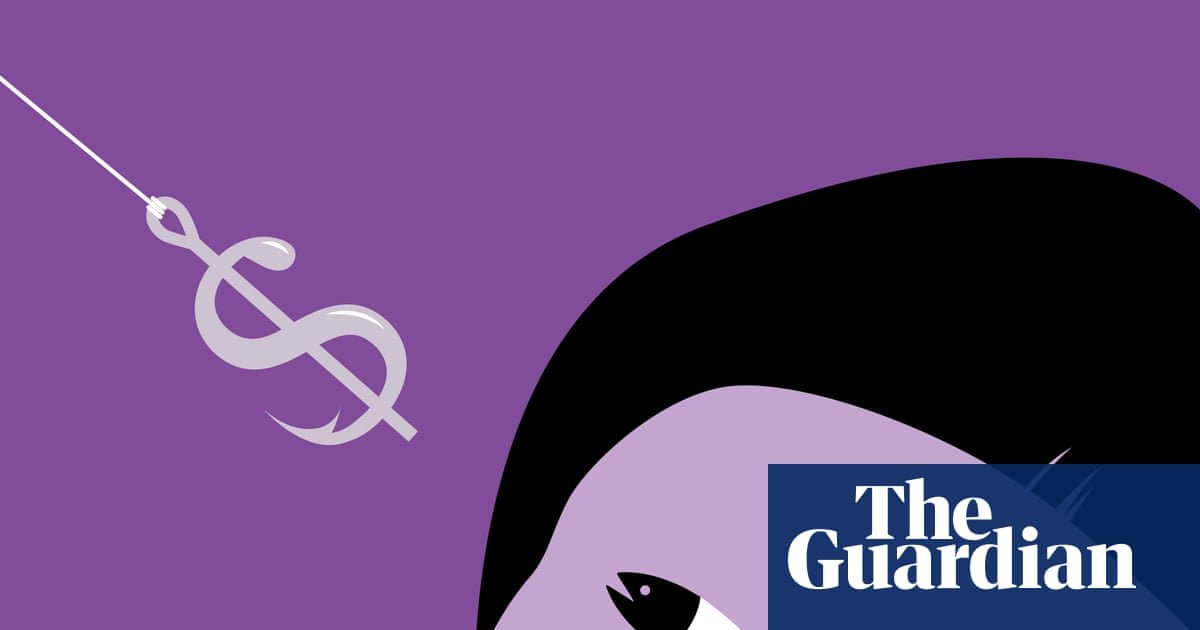
Many nations already enshrine a right not to be defrauded, and even a right not to be deceived. If a company sells you a new medicine, falsely claiming that it prevents cancer, it can be punished. If a firm convinces you to buy a new smartphone, saying that it has state-of-the-art features when it doesn’t, it will have violated the law. But in the current era, many companies are taking our time and money not by defrauding or deceiving us, but by practising the dark art of manipulation.
They hide crucial terms in fine print. They automatically enrol you in a programme that costs money but does not benefit you at all. They make it easy for you to subscribe to a service, but extremely hard for you to cancel. They use “drip pricing”, by which they quote you an initial number, getting you to commit to the purchase, only to add a series of additional costs, knowing that once you’ve embarked on the process, you are likely just to say “yeah, whatever”. In its worst forms, manipulation is theft. It takes people’s resources and attention, and it does so without their consent.
Manipulators are tricksters, and sometimes even magicians. They divert the eye and take advantage of people’s weaknesses. Often they exploit simple ignorance. They fail to respect, and try to undermine, people’s capacity to make reflective and deliberative choices. A manipulator might convince you to buy a useless health product, not by lying, but by appealing to your emotions, and by painting seductive pictures of how great you will feel once you use the product. Or they might tell you an anecdote about someone just like you, who used a supposed pain-relief product and felt better within 12 hours. Anecdotes have real power – but they can be profoundly misleading.
More insidiously still, manipulators might know about, and enlist, some of the central findings in contemporary behavioural economics, the field that explores how people depart from perfect rationality. All of us are vulnerable in this regard, subject to the “cognitive biases” elaborated by Daniel Kahneman, Amos Tversky, Richard Thaler and others, that affect our behaviour. These can be hard to recognize, and harder still to overcome.
For example, human beings tend to suffer from “present bias”. We care a lot about today and tomorrow, but the future is a foreign country, Laterland, and we are not sure we are ever going to visit. Tactics like “buy now, pay later” take advantage of this. Another bias is “loss aversion”; we tend to dislike losses a lot more than we like equivalent gains. That’s why advertisers might claim “you can’t afford not to” buy their product. Inertia is a powerful force, and companies exploit “status quo bias” by automatically subscribing you to something in the knowledge that even if it’s possible to opt out, many won’t bother. Our attention is limited, which means we are able to focus on only a subset of the things that come across our radars. Knowing this, manipulators present only the most attractive aspect of a transaction and downplay other, less inviting parts.
So, manipulation is all around us, and rarely punished. But if we aim to create a right not to be manipulated, we will have to specify what we are talking about. A moral right can define manipulation broadly. A legal right should focus on the worst cases – the most egregious forms of trickery, those that are hardest to justify and that are most likely to impose real harm.
Those worst cases occur when people are not given clarity that they are committing themselves to certain terms – and when the terms are ones they wouldn’t consent to if they had full knowledge. For example, there should be a prohibition on billing people in accordance with terms to which they did not actively agree, unless it is clear that they would have agreed if they’d been asked.
The underlying principle should be one of personal autonomy, which means that hidden fees and costs should be banned too. We know that rules designed to bring those fees and costs into the open can do a great deal of good. A couple of recent examples from the US: in 2024, the Department of Transportation created a rule that requires airlines and ticket agents to disclose charges for checked baggage, carry-on baggage, changing or cancelling a reservation and so on up front. Also in 2024, the Federal Communications Commission required internet service providers to display standardized “broadband nutrition labels”. These include details of pricing, data allowances and broadband speeds, and enable customers to compare providers’ offerings like-for-like, without tricks and obfuscation.
But consumer protection is only the start. In 1890, two lawyers, Samuel Warren and Louis Brandeis, proposed a new right: the right to privacy. They were not entirely clear about its contents, but the bedrock was the “right to be let alone”. Warren and Brandeis’s thinking helped to launch a thousand ships, including rules against the disclosure of private facts, against surveillance, and around personal choices (including the right to same-sex marriage).
The right not to be manipulated now is a lot like the right to privacy back in 1890. At this stage, we cannot identify the full scope, and the appropriate limits, of that new right. The protection of consumers and investors is urgent. How it might apply to politics is a more delicate matter, and lawmakers will need to tread cautiously there.
One thing is clear, though: manipulation is a threat to our autonomy, our freedom and our wellbeing. We ought to be taking steps to fight back.
Professor Cass R Sunstein is the co-author of Nudge and founder and director of the Program on Behavioral Economics and Public Policy at Harvard. His new book, Manipulation: What It Is, Why It’s Bad, What to Do About It, will be published by Cambridge in August (£22). To support the Guardian order your copy at guardianbookshop.com. Delivery charges may apply.
Further reading
Thinking, Fast and Slow by Daniel Kahneman (Penguin, £14.99)
Misbehaving by Richard H Thaler (Penguin, £10.99)
The Psychology of Money Morgan Housel (Harriman House, £16.99)
