
Close Menu

    Subscribe to Updates

    Get the latest creative news from FooBar about art, design and business.

    What's Hot

    White House Border Czar Asks Minnesota for More Access to Jails

    The life lessons of classical music: we need each other to play a symphony | Classical music

    Rate-rigging convictions of five bankers referred to UK appeals court | Banking

    Facebook X (Twitter) Instagram
    Facebook X (Twitter) YouTube LinkedIn
    Naija Global News |
    Thursday, January 29
    • Business
    • Health
    • Politics
    • Science
    • Sports
    • Education
    • Social Issues
    • Technology
    • More
      • Crime & Justice
      • Environment
      • Entertainment
    Naija Global News |
    You are at:Home»Environment»Thousands of tons of invasive seaweed ‘overwhelming’ Spanish beaches | Invasive species
    Environment

    Thousands of tons of invasive seaweed ‘overwhelming’ Spanish beaches | Invasive species

    onlyplanz_80y6mtBy onlyplanz_80y6mtJuly 27, 2025003 Mins Read
    Share Facebook Twitter Pinterest LinkedIn Tumblr Email
    Thousands of tons of invasive seaweed ‘overwhelming’ Spanish beaches | Invasive species
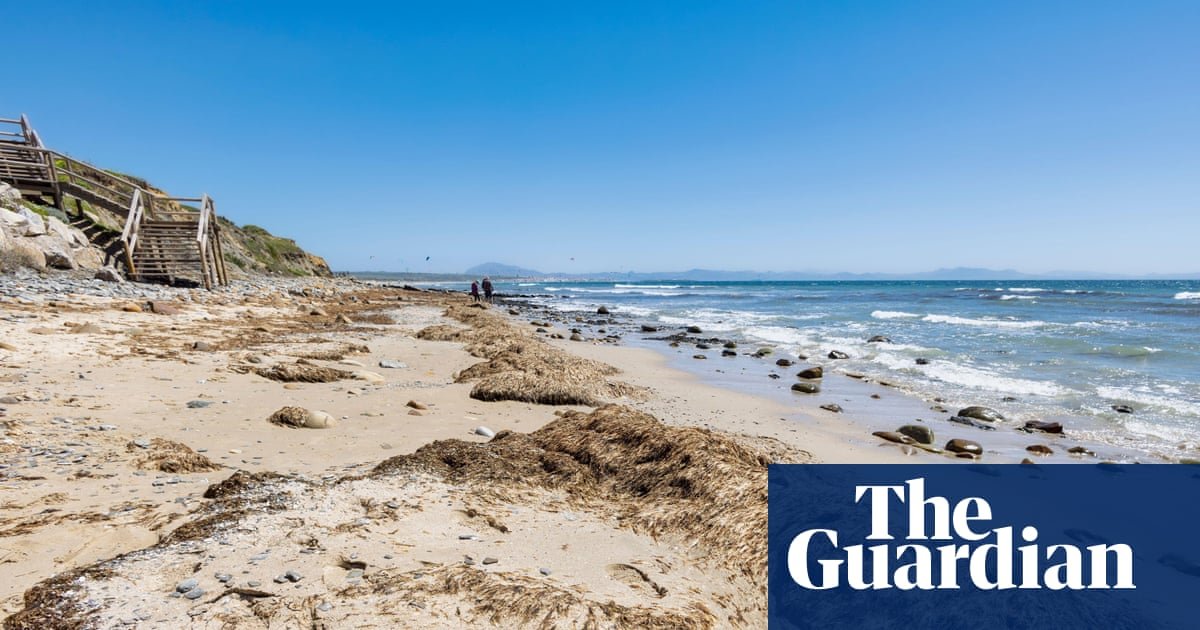
    Rugulopteryx okamurae on the shore of a beach in Tarifa, a town popular with windsurfers. Photograph: Ken Welsh/Alamy
    Share
    Facebook Twitter LinkedIn Pinterest Email

    Thousands of tonnes of an aggressive invasive seaweed from south-east Asia are piling up on the beaches of the strait of Gibraltar and Spain’s southern coast in what local environmentalists say is a major threat to the region’s biodiversity.

    Since May, the local authority in Cádiz has removed 1,200 tonnes of the alga Rugulopteryx okamurae from La Caleta, the city’s most popular beach, including 78 tonnes in a single day.

    “We’re completely overwhelmed. This is an environmental catastrophe,” said José Carlos Teruel, responsible for Cádiz city council’s beaches. “Whenever the wind is westerly, we know we’re in for another wave of seaweed.”

    As with many other invasive marine species, the alga is thought to arrive in the ballast tanks of ships which pass through the Suez canal and then discharge their tanks in the Mediterranean.

    In little more than a decade the species has colonised the strait of Gibraltar, much of Spain’s southern coast, the Canary Islands, the Azores, and, farther north, the Cantabrian sea and the Basque Country.

    “It was first spotted 10 years ago in Ceuta, Spain’s north African enclave, by a researcher from Málaga university, but the authorities are always too slow to react,” said Juan José Vergara, a professor of biology at the University of Cádiz.

    “In the first phase of an invasion such as this it can be controlled. It’s like catching cancer early on before it spreads,” Vergara said, adding that what washes ashore is a fraction of what is underwater.

    “But now the scale of it makes it impossible to control. In other seaweed invasions we’ve seen things revert to normal after a period of 10-15 years but many scientists say they’ve never seen an invasion on this scale.”

    The seaweed is having a major impact on the local economy, firstly on tourism in Cádiz and nearby Tarifa, a town popular with windsurfers, and on fishing because it traps fishers’ nets and lines and also sucks oxygen out of the water. Then there’s the cost to the taxpayer of disposing of it.

    Perhaps most worrying is its impact on biodiversity. On the beach at La Caleta, the seaweed has driven out many indigenous plants. It is unclear whether the damage is temporary or irreversible.

    The alga attaches itself to rocks and other surfaces and is also free-floating, wiping out native species of seaweed. It has no predators in the region and its capacity to reproduce both sexually and asexually and to absorb toxins makes it virtually impossible to eradicate, experts say.

    At present the seaweed is dumped in landfill sites. Vergara said a local business that recycles seaweed into drinks containers or to use as fuel and fertiliser has sought permission to use Rulopteryx okamuraeas as a biomass to produce energy.

    However, Spain’s law on invasive species prohibits their commercial exploitation unless they pose a threat to health and safety or to further their eradication, a caveat that would seem to apply to Rulopteryx okamuraeas.

    This week the government in Andalucía launched a four-part plan to confront the crisis based on research, monitoring and education, and which includes options for recycling the seaweed.

    To use it as biomass the regional government will have to negotiate with Spain’s environment ministry but Vergara said that even if an agreement is reached, it can only be part of the solution.

    “It’s an interesting idea but I doubt it will be able to eradicate or even significantly diminish the intensity of the invasion when hundreds of thousands of tonnes can wash up on a single beach,” he said.

    beaches invasive overwhelming seaweed Spanish species Thousands Tons
    Share. Facebook Twitter Pinterest LinkedIn Tumblr Email
    Previous ArticleSmoke signals: from Charli xcx’s nuptials to The Bear, cigarettes are everywhere | Smoking
    Next Article Johns Hopkins Press Plans to License Books to Train AI
    onlyplanz_80y6mt
    • Website

    Related Posts

    Polar Bears Are Thriving on This Arctic Island, Even as Sea Ice Dwindles

    January 29, 2026

    Svalbard’s polar bears are showing remarkable resilience to climate change

    January 29, 2026

    Nursing a skink: endangered alpine lizard numbers set to rise after Omeo falls pregnant in Victoria | Reptiles

    January 29, 2026
    Add A Comment
    Leave A Reply Cancel Reply

    Top Posts

    Watch Lady Gaga’s Perform ‘Vanish Into You’ on ‘Colbert’

    September 9, 20251 Views

    Advertisers flock to Fox seeking an ‘audience of one’ — Donald Trump

    July 13, 20251 Views

    A Setback for Maine’s Free Community College Program

    June 19, 20251 Views
    Stay In Touch
    • Facebook
    • YouTube
    • TikTok
    • WhatsApp
    • Twitter
    • Instagram
    Latest Reviews

    At Chile’s Vera Rubin Observatory, Earth’s Largest Camera Surveys the Sky

    By onlyplanz_80y6mtJune 19, 2025

    SpaceX Starship Explodes Before Test Fire

    By onlyplanz_80y6mtJune 19, 2025

    How the L.A. Port got hit by Trump’s Tariffs

    By onlyplanz_80y6mtJune 19, 2025

    Subscribe to Updates

    Get the latest tech news from FooBar about tech, design and biz.

    Most Popular

    Watch Lady Gaga’s Perform ‘Vanish Into You’ on ‘Colbert’

    September 9, 20251 Views

    Advertisers flock to Fox seeking an ‘audience of one’ — Donald Trump

    July 13, 20251 Views

    A Setback for Maine’s Free Community College Program

    June 19, 20251 Views
    Our Picks

    White House Border Czar Asks Minnesota for More Access to Jails

    The life lessons of classical music: we need each other to play a symphony | Classical music

    Rate-rigging convictions of five bankers referred to UK appeals court | Banking

    Recent Posts
    • White House Border Czar Asks Minnesota for More Access to Jails
    • The life lessons of classical music: we need each other to play a symphony | Classical music
    • Rate-rigging convictions of five bankers referred to UK appeals court | Banking
    • Time to Eliminate Prereq Developmental Ed for All Students
    • This AI has chemical expertise — and helps synthesize 35 new compounds
    © 2026 naijaglobalnews. Designed by Pro.
    • About Us
    • Disclaimer
    • Get In Touch
    • Privacy Policy
    • Terms and Conditions

    Type above and press Enter to search. Press Esc to cancel.