
Close Menu

    Subscribe to Updates

    Get the latest creative news from FooBar about art, design and business.

    What's Hot

    Appropriating the death count: Manufacturing consent for an attack on Iran | Protests

    Madeline Horwath on the mistakes of evolution – cartoon

    As US influence wanes, the Chinese trade surplus strangles manufacturing across the globe | US economy

    Facebook X (Twitter) Instagram
    Facebook X (Twitter) YouTube LinkedIn
    Naija Global News |
    Saturday, January 31
    • Business
    • Health
    • Politics
    • Science
    • Sports
    • Education
    • Social Issues
    • Technology
    • More
      • Crime & Justice
      • Environment
      • Entertainment
    Naija Global News |
    You are at:Home»Science»The Guardian view on mitochondrial donation: IVF innovation leads to a cautious genetic triumph | Editorial
    Science

    The Guardian view on mitochondrial donation: IVF innovation leads to a cautious genetic triumph | Editorial

    onlyplanz_80y6mtBy onlyplanz_80y6mtJuly 23, 2025003 Mins Read
    Share Facebook Twitter Pinterest LinkedIn Tumblr Email
    The Guardian view on mitochondrial donation: IVF innovation leads to a cautious genetic triumph | Editorial
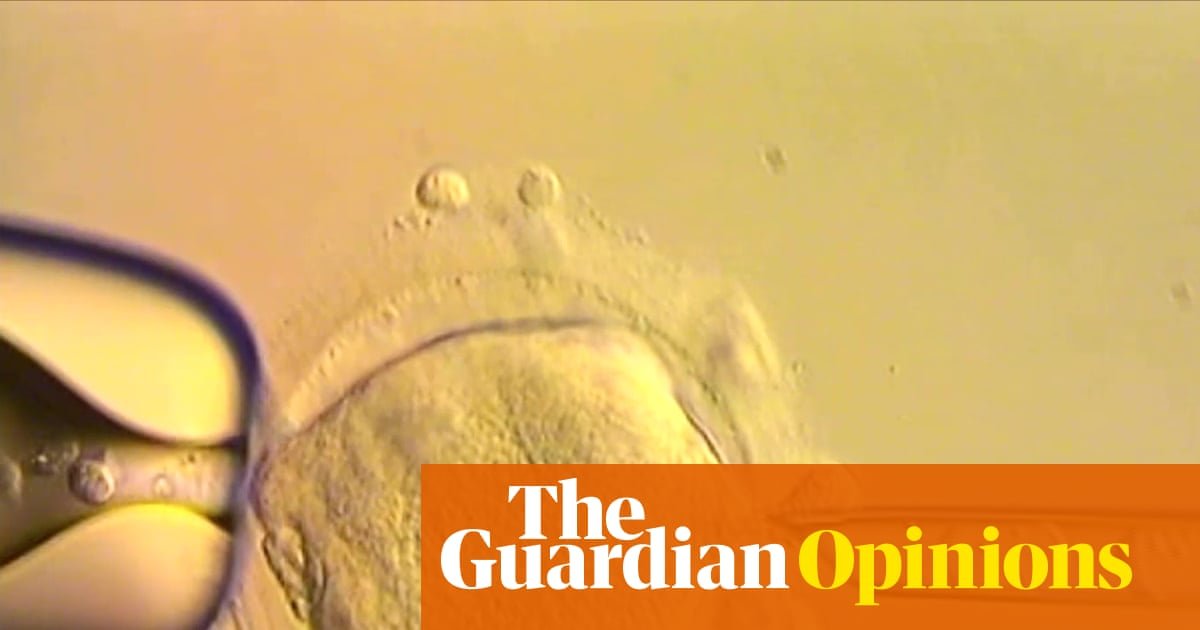
    Mitochondrial donation therapy creates IVF embryos with DNA from three people to prevent the children from inheriting incurable genetic disorders. Photograph: Newcastle University/Newcastle Hospitals NHS Foundation Trust/PA
    Share
    Facebook Twitter LinkedIn Pinterest Email

    Eight babies have been born free of a disease that can lead to terrible suffering and early death, thanks to pioneering scientists in the UK employing a form of genetic engineering that is banned in some countries, including the US and France. Ten years ago, when the government and regulators were considering whether to allow mitochondrial transfer technology, critics warned of “Frankenstein meddling” that would lead to three-parent children. It’s hard now to justify such hostility in the face of the painstaking work carried out by the scientific and medical teams at Newcastle, resulting in these healthy babies and ecstatic families.

    Mitochondria, like tiny battery packs, supply energy to every cell of the body. Their DNA is handed down in the egg from mother to child. In rare instances, there are genetic mutations, which means the baby may develop mitochondrial disease. About one in 5,000 people is affected by it, making it one of the most common inherited disorders. As the cell batteries fail in various organs, the child can experience a range of symptoms, from muscle weakness to epilepsy, encephalopathy, blindness, hearing loss and diabetes. In severe cases, they die young.

    There is no cure yet, so the aim is prevention. Women who have some damaged and some healthy mitochondria can have IVF and pre-implantation genetic testing (PGT) to select embryos that are clear of mutations or only slightly affected. The options for women with 100% mutated mitochondria used to be limited to donated eggs or adoption – until parliament changed the rules to allow the technology in 2015 and the Newcastle Fertility Centre was granted a licence by the Human Fertilisation and Embryology Authority to use it in 2017.

    The process does indeed involve three people. The would-be mother’s egg and a donor egg are both fertilised by the man’s sperm. The nucleus of the donated egg is removed and replaced by the nucleus of the woman’s egg, but its healthy mitochondria remain. This composite egg is inserted into the woman’s uterus. The resulting baby’s DNA will be 99.9% from the parents and only 0.1% from the donor. Hardly a three-parent child.

    Yet there are controversies. Some countries will not permit use of the technology because of concerns over human germline genetic modification. The lab-mixed DNA will be passed to future generations, with who knows what consequences. And a question hangs over something called reversal, or reversion. The results of the Newcastle research published in the New England Journal of Medicine show that some of the embryos with healthy donated mitochondria developed mutations somewhere along the line. Mutations formed in 12% of one baby’s mitochondria and 16% in another’s. That was not enough to affect the babies, who were healthy, but previous work by other scientists has suggested that mutations can increase with time, and nobody yet understands why.

    The Newcastle scientists and medics have been highly praised for their slow and methodical work. They have brought joy to some families and hope to others. But this is still experimental technology and caution is absolutely valid. And inevitably there are cost issues. People who can afford it will no doubt pay, but the NHS is unlikely to be able to help the rest. Nonetheless, this groundbreaking research must surely be allowed to continue, albeit only in the same careful fashion.

    • Do you have an opinion on the issues raised in this article? If you would like to submit a response of up to 300 words by email to be considered for publication in our letters section, please click here.

    cautious Donation Editorial genetic Guardian innovation IVF Leads mitochondrial triumph view
    Share. Facebook Twitter Pinterest LinkedIn Tumblr Email
    Previous ArticleJames Cleverly to return as shadow housing secretary in Tory reshuffle | James Cleverly
    Next Article The Forest Service Says It’s Fully Staffed. Data Shows Otherwise. — ProPublica
    onlyplanz_80y6mt
    • Website

    Related Posts

    Madeline Horwath on the mistakes of evolution – cartoon

    January 31, 2026

    China is betting on ‘optical’ computer chips – will they power AI?

    January 31, 2026

    Mass grave in Jordan sheds new light on world’s earliest recorded pandemic | Infectious diseases

    January 31, 2026
    Add A Comment
    Leave A Reply Cancel Reply

    Top Posts

    Watch Lady Gaga’s Perform ‘Vanish Into You’ on ‘Colbert’

    September 9, 20251 Views

    Advertisers flock to Fox seeking an ‘audience of one’ — Donald Trump

    July 13, 20251 Views

    A Setback for Maine’s Free Community College Program

    June 19, 20251 Views
    Stay In Touch
    • Facebook
    • YouTube
    • TikTok
    • WhatsApp
    • Twitter
    • Instagram
    Latest Reviews

    At Chile’s Vera Rubin Observatory, Earth’s Largest Camera Surveys the Sky

    By onlyplanz_80y6mtJune 19, 2025

    SpaceX Starship Explodes Before Test Fire

    By onlyplanz_80y6mtJune 19, 2025

    How the L.A. Port got hit by Trump’s Tariffs

    By onlyplanz_80y6mtJune 19, 2025

    Subscribe to Updates

    Get the latest tech news from FooBar about tech, design and biz.

    Most Popular

    Watch Lady Gaga’s Perform ‘Vanish Into You’ on ‘Colbert’

    September 9, 20251 Views

    Advertisers flock to Fox seeking an ‘audience of one’ — Donald Trump

    July 13, 20251 Views

    A Setback for Maine’s Free Community College Program

    June 19, 20251 Views
    Our Picks

    Appropriating the death count: Manufacturing consent for an attack on Iran | Protests

    Madeline Horwath on the mistakes of evolution – cartoon

    As US influence wanes, the Chinese trade surplus strangles manufacturing across the globe | US economy

    Recent Posts
    • Appropriating the death count: Manufacturing consent for an attack on Iran | Protests
    • Madeline Horwath on the mistakes of evolution – cartoon
    • As US influence wanes, the Chinese trade surplus strangles manufacturing across the globe | US economy
    • Valium, health checks and fabric slings: the complex logistics of moving 30 beluga whales | Canada
    • DeVry Embeds AI Literacy in All Courses
    © 2026 naijaglobalnews. Designed by Pro.
    • About Us
    • Disclaimer
    • Get In Touch
    • Privacy Policy
    • Terms and Conditions

    Type above and press Enter to search. Press Esc to cancel.