

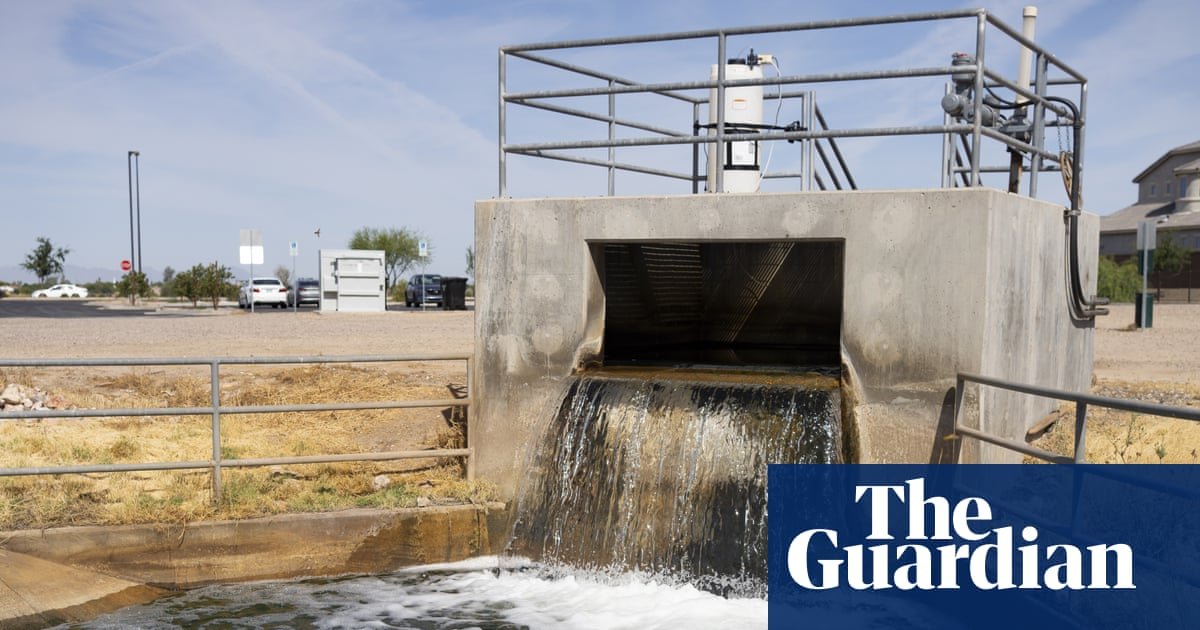
Many of the nation’s wetlands are being filled with toxic Pfas “forever chemicals” as wastewater treatment plant effluent tainted with the compounds is increasingly used to restore swampland and other waters. The practice threatens wildlife, food and drinking water sources, environmental advocates warn.
Effluent is the liquid discharged by wastewater treatment plants after it “disinfects” sewage in the nation’s sewer system. The treatment process largely kills pathogens and the water is high in nutrients that help plants grow, so on one level it is beneficial to struggling ecosystems.
But the treatment process does not address any of the hundreds of thousands of chemicals potentially discharged into sewers, including Pfas. Testing has found effluent virtually always contains Pfas at concerning levels, but the practice of using it for wetland restoration is still presented as an environmentally friendly measure.
“There’s a huge dark side to this whole business of municipalities using effluent that’s carrying loads of Pfas and other toxic materials and calling it ‘wetland restoration’,” said James Aronson, a restoration ecologist and president of Ecological Health Network non-profit. “It’s truly the worst kind of lying to the public.”
Pfas are a class of about 15,000 compounds that are dubbed “forever chemicals” because they do not naturally break down, and accumulate in the human body and environment. The chemicals are linked to a range of serious health problems such as cancer, liver disease, kidney issues, high cholesterol, birth defects and decreased immunity.
The volume of wastewater that plants treat each day makes it virtually impossible to efficiently remove chemicals. Still, effluent has been used to recharge hundreds of wetlands across the country, as well as some rivers and aquifers, when they dry up or are otherwise degraded by human activity.
Some rivers in the south-west, like the Trinity River near Dallas, are ‘almost entirely’ effluent
Among the largest projects are in Louisiana, which has increased its use of effluent to restore the bayou and protect against coastal erosion that is in part driven by the installation of levee systems. Florida has in place similar programs aimed at regenerating the Everglades and shorelines.
Meanwhile, some rivers in the south-west, like the Trinity River near Dallas, are “almost entirely” effluent, while in California the Los Angeles, Santa Ana, and other rivers are “effluent dominated”.
Orange county, California, now uses effluent to recharge its aquifer that provides drinking water for 2.5 million people. At the same time, the country’s water districts are spending an estimated $1.8bn to install technology that will remove Pfas and other pollutants from the water they pull from the aquifer. The levels of Pfas in effluent at 200 California wastewater treatment plants were almost all thousands of times above the level that the Environmental Protection Agency considers safe for some compounds, recent research found.
The practice is often billed as “recycling water” and “green”, but advocates say the terms are misleading because toxic waste is literally being pumped unchecked into the environment. It’s not just Pfas – microplastics, heavy metals and other toxins have been found at high levels in effluent.
Few regulations around chemicals exist, and though the wastewater industry knows the scale of the problem. It’s a “don’t ask, don’t tell” issue, said Laura Orlando, a civil engineer with Just Zero non-profit who has worked on waste management design.
“There’s lots of hype about recycling and such, but nothing about public health, because they’re following the rules – which are not protective of public or ecosystem health,” Orlando said.
Though little research into how the levels of Pfas in effluent used to restore wetlands affects wildlife exists, the chemicals can have consequences for animals. For example, in North Carolina, where Pfas discharged from industrial sources polluted wetlands, the chemicals were thought to be behind health problems similar to lupus in alligators and immune impacts on pelicans.
“We’re talking about ecosystem health,” Aronson said. “It’s the food web, and soil, animal, and water interactions – everything gets degraded and poisoned, and it’s the opposite of restoration.”
There is some potential to use some types of wetlands to treat effluent that can then be released as truly clean water. “Constructed wetlands” are filled with effluent and the inflow and outflow of water is controlled. Those can be filled with plants that take up Pfas and other contaminants. The plants would have to be disposed of in hazardous waste facilities.
While there are some efforts to explore how this could work on a broad scale, the chemicals and toxins are a problem that few in the wastewater industry are thinking about, Orlando said.
“Unless you acknowledge the problem you can’t fix the problem and we have to examine these words like ‘clean’ and ‘safe’,” she said.
