
Close Menu

    Subscribe to Updates

    Get the latest creative news from FooBar about art, design and business.

    What's Hot

    ‘Sadness, cynicism and deep disappointment’: the Cornell gang-rape case and the failure of #MeToo | Rape and sexual assault

    ‘Elon is my prophet’: how Musk’s Doge team took a wrecking ball to Washington | Trump administration

    Releasing prisoners won’t solve the crisis in English and Welsh jails. Here’s what will | Enver Solomon

    Facebook X (Twitter) Instagram
    Facebook X (Twitter) YouTube LinkedIn
    Naija Global News |
    Saturday, October 3
    • Business
    • Health
    • Politics
    • Science
    • Sports
    • Education
    • Social Issues
    • Technology
    • More
      • Crime & Justice
      • Environment
      • Entertainment
    Naija Global News |
    You are at:Home»Science»Even Neanderthals had distinct preferences when it came to making dinner, study suggests | Neanderthals
    Science

    Even Neanderthals had distinct preferences when it came to making dinner, study suggests | Neanderthals

    onlyplanz_80y6mtBy onlyplanz_80y6mtJuly 17, 2025003 Mins Read
    Share Facebook Twitter Pinterest LinkedIn Tumblr Email
    Even Neanderthals had distinct preferences when it came to making dinner, study suggests | Neanderthals
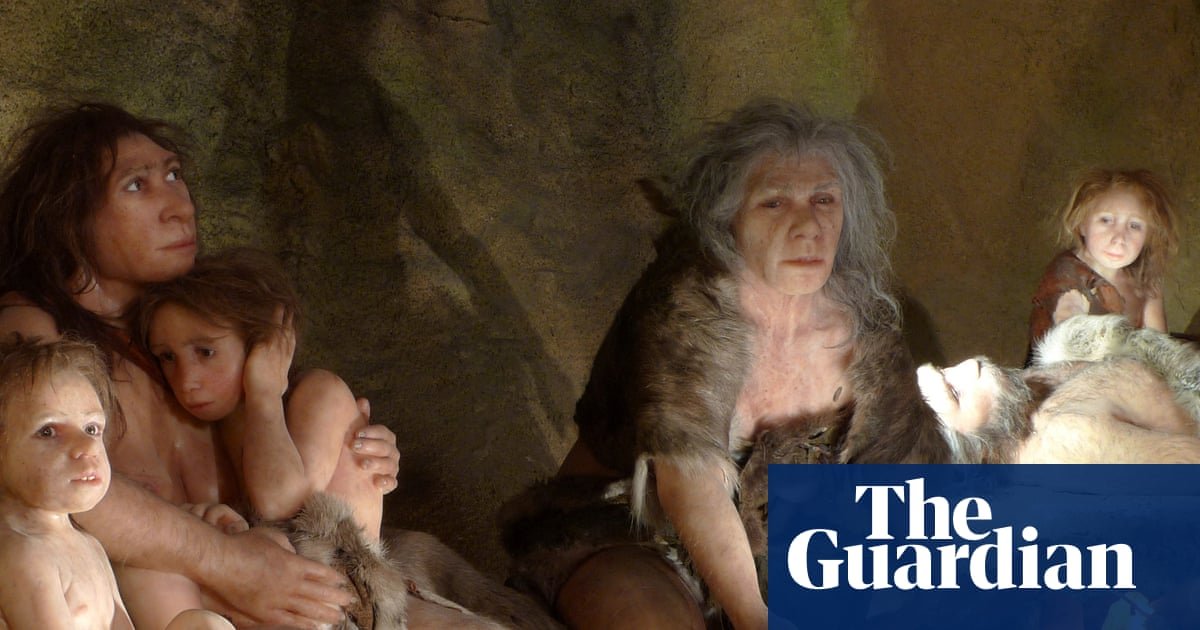
    Study is ‘a powerful reminder that there is no monolithic neanderthal culture’. Photograph: Nikola Solic/Reuters
    Share
    Facebook Twitter LinkedIn Pinterest Email

    Nothing turns up the heat in a kitchen quite like debating the best way to chop an onion. Now researchers have found even our prehistoric cousins had distinct preferences when it came to preparing food.

    Archaeologists studying animal bones recovered from two caves in northern Israel have found different groups of Neanderthals, living at around the same time, butchered the same animals in different ways.

    “It means that within all the Neanderthal population, you have several distinct groups that have distinct ways of doing things, even for activities that are so related to survival,” said Anaëlle Jallon, of the Hebrew University of Jerusalem and the first author of the research.

    Writing in the Frontiers in Environmental Archaeology journal, Jallon and colleagues report how they studied cut marks on 249 bone fragments from between 70,000 and 50,000 years ago from Amud cave, and 95 bone fragments dating to between 60,000 and 50,000 years ago from Kebara cave.

    The caves are about 70km apart and were occupied by Neanderthals during winter. Both groups are known to have used similar flint-based tools.

    The team’s analysis of the fragments, which were recovered from the caves in the 1990s, confirmed previous findings that burned and fragmented samples were more common in Amud cave, and that both groups had a similar diet featuring animals such as mountain gazelles and fallow deer.

    It also provided fresh insights, including that bones from larger animals, such as aurochs, were more commonly found at Kebara cave. However, Jallon noted it could be that the samples at Kebara were easier to identify, or that Neanderthals at Amud might have butchered such animals elsewhere.

    The researchers carried out a detailed analysis of the cut marks on 43 and 34 bone samples from Amud and Kebara caves respectively, finding a number of differences between the two.

    Some of the variation related to the type of animal, or body part, being butchered, but these factors did not explain all of the differences, they found.

    “Even when we compare only the gazelles, and only the long bones of gazelles, we find a higher density of cut marks in [bones from] Amud, with more cut marks that are crossing each other, [and] less cut marks that are straight lines, but more [curved],” said Jallon.

    The team suggests a number of possible explanations, including that different groups of Neanderthals had different butchery techniques, involved a different number of individuals when butchering a carcass, or butchered meat in different states of decay.

    “It’s either, like, food preferences that lead to different ways of preparing meat and then cutting it, or just differences in the way they learn how to cut meat,” said Jallon.

    Dr Matt Pope, of University College London, who was not involved in the work, said the study added to research showing different Neanderthal groups had different ways of making tools, and sometimes used different toolkits.

    “These aren’t just cut marks being studied, these are the gestures and movements of the Neanderthal people themselves, as evocative to us as footprints or hand marks on a cave wall,” he said.

    “Future research will help to discern between the alternative [explanations for the variations], but the study as it stands is a powerful reminder that there is no monolithic neanderthal culture and that the population contained multiple groups at different times and places, living in the same landscape, with perhaps quite different ways of life.”

    dinner distinct Making Neanderthals preferences study suggests
    Share. Facebook Twitter Pinterest LinkedIn Tumblr Email
    Previous ArticleStarmer defends lowering voting age to 16, saying people can work and pay tax then so have right to say where money goes – live | Politics
    Next Article Black home schoolers push back against racist, unregulated curricula: ‘They called slavery immigration’ | Race in education
    onlyplanz_80y6mt
    • Website

    Related Posts

    Air pollution linked to higher suicide risk, international research suggests | Air pollution

    September 15, 2026

    Drinking very hot drinks could triple risk of oesophageal cancer, study finds | Cancer

    September 9, 2026

    Statins can reduce dementia risk by up to 15%, long-term study suggests | Dementia

    August 30, 2026
    Add A Comment
    Leave A Reply Cancel Reply

    Top Posts

    The science influencers going viral on TikTok to fight misinformation

    February 17, 20263 Views

    MPs vote against legalising assisted dying in England and Wales | Assisted dying

    September 11, 20262 Views

    The backlash to revelations of sexual torture of Palestinian prisoners aims to raise the cost of speaking out | Yuli Novak

    May 14, 20262 Views
    Stay In Touch
    • Facebook
    • YouTube
    • TikTok
    • WhatsApp
    • Twitter
    • Instagram
    Latest Reviews

    At Chile’s Vera Rubin Observatory, Earth’s Largest Camera Surveys the Sky

    By onlyplanz_80y6mtJune 19, 2025

    SpaceX Starship Explodes Before Test Fire

    By onlyplanz_80y6mtJune 19, 2025

    How the L.A. Port got hit by Trump’s Tariffs

    By onlyplanz_80y6mtJune 19, 2025

    Subscribe to Updates

    Get the latest tech news from FooBar about tech, design and biz.

    Most Popular

    The science influencers going viral on TikTok to fight misinformation

    February 17, 20263 Views

    MPs vote against legalising assisted dying in England and Wales | Assisted dying

    September 11, 20262 Views

    The backlash to revelations of sexual torture of Palestinian prisoners aims to raise the cost of speaking out | Yuli Novak

    May 14, 20262 Views
    Our Picks

    ‘Sadness, cynicism and deep disappointment’: the Cornell gang-rape case and the failure of #MeToo | Rape and sexual assault

    ‘Elon is my prophet’: how Musk’s Doge team took a wrecking ball to Washington | Trump administration

    Releasing prisoners won’t solve the crisis in English and Welsh jails. Here’s what will | Enver Solomon

    Recent Posts
    • ‘Sadness, cynicism and deep disappointment’: the Cornell gang-rape case and the failure of #MeToo | Rape and sexual assault
    • ‘Elon is my prophet’: how Musk’s Doge team took a wrecking ball to Washington | Trump administration
    • Releasing prisoners won’t solve the crisis in English and Welsh jails. Here’s what will | Enver Solomon
    • Naomi Campbell wins legal challenge over charity trustee ban | Charities
    • Cornell case raises questions about rise of ketamine in sexual assaults: ‘You might not realize you’re being touched’ | Drugs
    © 2026 naijaglobalnews. Designed by Pro.
    • About Us
    • Disclaimer
    • Get In Touch
    • Privacy Policy
    • Terms and Conditions

    Type above and press Enter to search. Press Esc to cancel.