

Ministers are changing the voting system for mayoral elections in a move likely to make it harder for Reform politicians to take big regions like Lincolnshire and Hull as they did this year.
The changes are part of a new devolution bill, intended to bring a “radical reset to local government”, which will take further steps towards merging many district and county councils into unitary “strategic” authorities.
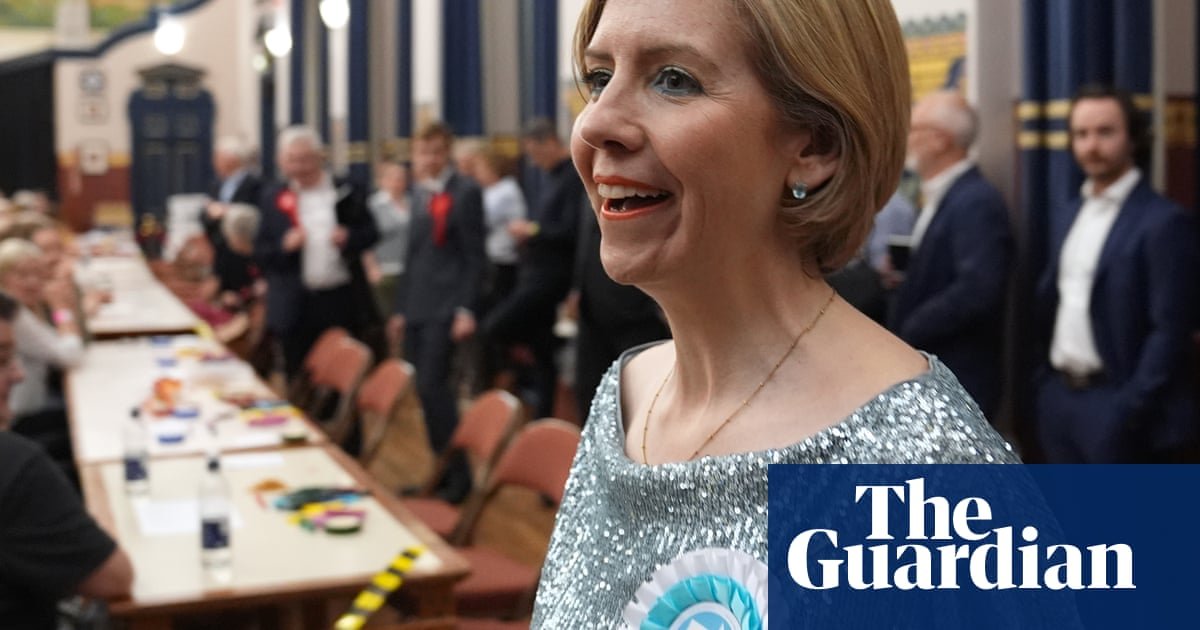
The move is likely to please Labour MPs and local authorities after frustration over losses in two recent contests where Andrea Jenkyns, a Reform mayor, was elected on 42% of the vote in Lincolnshire, while Luke Campbell, the Reform mayor in Hull and East Yorkshire, got 35%.
In another part of the legislation, mayors will now be elected under a preferential system, rather than first-past-the-post, a change designed to make sure candidates have broader support.
The changes reverse a decision made by the Conservatives in 2022 to switch the system to first-past-the-post away from supplementary voting – where voters have a preferred first and second choice and the candidate does not win outright with more than half the vote.
After that decision, the Constitution Unit at University College London concluded it had favoured the Tories and the right compared with the more fragmented left-of-centre parties in politics including Labour, the Lib Dems, Greens and independents.
Unlock Democracy, a campaign group pushing for changes to the electoral system, said it was the “first acknowledgment we’ve seen from the government that first past the post is not fit for purpose in an age of multiparty politics”, adding that mayoral elections “should be just the first step”.
Darren Hughes of the Electoral Reform Society said: “Supplementary voting raises the bar for politicians, as they will again have to secure broad backing from voters to win power. Restoring these elections to a more representative electoral system is a big step in the right direction for improving confidence in our politics.”
Other changes in the bill include:
Giving the secretary of state powers to direct local authorities to reorganise into bigger unitary authorities where they are not making sufficient progress locally towards that goal.
Measures to make it easier for communities to take ownership of pubs, shops and social hubs through a new right to buy. It means communities will have the first opportunity to purchase local assets when they are put up for sale, and be given an extended 12-month period to raise funding.
Protections for more local sports grounds by introducing a new category to protect local sporting assets preserving local character, boosting tourism and keeping community spirit alive.
A ban on upward only rent reviews (UORR) clauses in commercial leases, which stop downward negotiations for rents for shops and other high street premises.
More power for mayors across England to speed up the development of new homes and infrastructure in their areas.
New licensing powers to govern rental e-bikes, neighboured plans and new planning powers for local authorities to set the direction of growth across their areas.
A new body called the Local Audit Office to keep on top of council spending and accounts.
Angela Rayner, the deputy prime minister, said: “We were elected on a promise of change, not just for a few areas cherrypicked by a Whitehall spreadsheet, but for the entire country. It was never going to be easy to deliver the growth our country desperately needed with the inheritance we were dumped with.
“But that’s why we are opting to devolve not dictate and delivering a bill that will rebalance decade-old divides and empower communities. We’re ushering in a new dawn of regional power and bringing decision-making to a local level so that no single street or household is left behind and every community thrives from our plan for change.”
However, the Conservatives accused Rayner of a “brazen power grab” giving herself powers to impose reorganisation on local authorities where it cannot be agreed locally. “This is not devolution; it’s Labour gerrymandering under the guise of reform,” said the shadow local government secretary, Kevin Hollinrake.
The devolution bill was met with a cautious welcome by local government groups. Louise Gittins, the chair of the Local Government Association, which represents councils, said: “It is critical that the full breadth, diversity and capability of local government is recognised and all councils are enabled to play a meaningful role as partners and, where appropriate, as part of strategic authorities in driving growth, improving services, and improving the lives of our residents.
“Councils across the country are deeply invested in and vital to the success of English devolution. We will respond in more detail on behalf of local government when we have analysed the bill further.”
