
Close Menu

    Subscribe to Updates

    Get the latest creative news from FooBar about art, design and business.

    What's Hot

    President Trump Seeks Retribution in Republican Primaries

    Tuesday briefing: How AI facial recognition in policing works – and how it can go wrong | Facial recognition

    A game-changer for good health? Scientists believe ‘we are when we eat’ | Devi Sridhar

    Facebook X (Twitter) Instagram
    Facebook X (Twitter) YouTube LinkedIn
    Naija Global News |
    Tuesday, May 5
    • Business
    • Health
    • Politics
    • Science
    • Sports
    • Education
    • Social Issues
    • Technology
    • More
      • Crime & Justice
      • Environment
      • Entertainment
    Naija Global News |
    You are at:Home»Science»Discovery of ancient riverbeds suggests Mars once wetter than thought | Mars
    Science

    Discovery of ancient riverbeds suggests Mars once wetter than thought | Mars

    onlyplanz_80y6mtBy onlyplanz_80y6mtJuly 10, 2025003 Mins Read
    Share Facebook Twitter Pinterest LinkedIn Tumblr Email
    Discovery of ancient riverbeds suggests Mars once wetter than thought | Mars
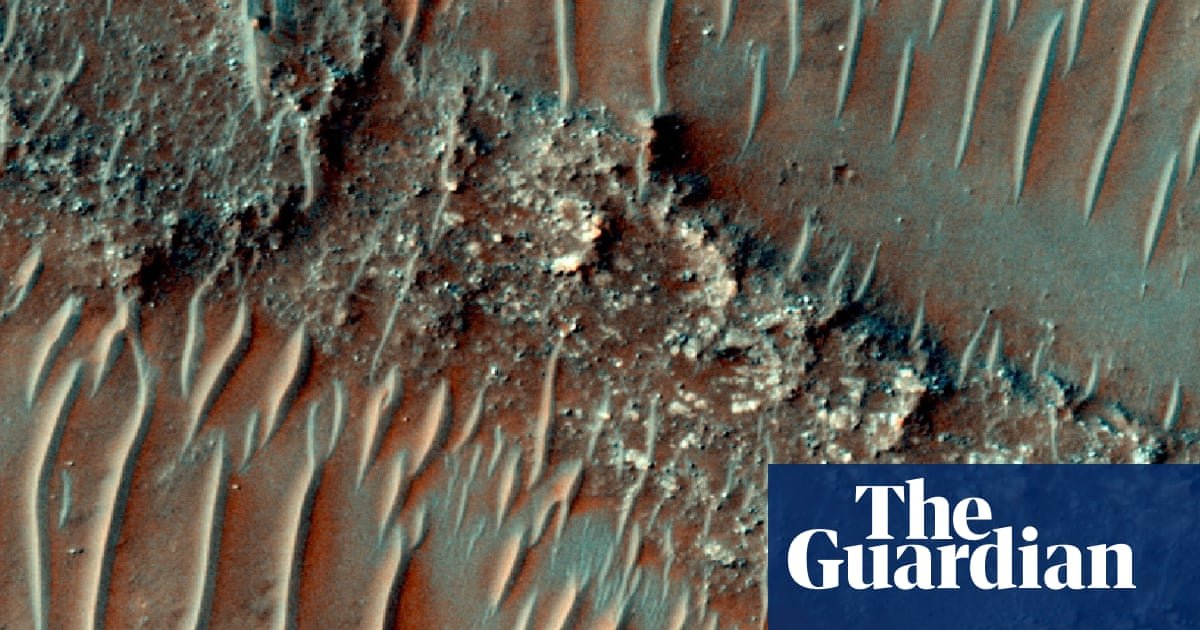
    Scientists spotted scores of fluvial sinuous ridges, which form when tracks of sediment carried by ancient rivers harden over time and are exposed by erosion. Photograph: Nasa/JPL/University of Arizona
    Share
    Facebook Twitter LinkedIn Pinterest Email

    Thousands of miles of ancient riverbeds have been discovered in the heavily cratered southern highlands of Mars, suggesting the red planet was once a far wetter world than scientists thought.

    Researchers spotted geological traces of nearly 10,000 miles (16,000km) of ancient watercourses, believed to be more than 3bn years old, in high resolution images of the rugged landscape captured by Mars orbiters.

    While some of the riverbeds are relatively short, others form networks that stretch for more than 100 miles. The widespread rivers were probably replenished by regular rain or snowfall in the region, researchers said.

    “Water has been found on Mars countless times before, but what’s really interesting here is that this is an area where for a long time we’ve thought there wasn’t any evidence for water,” said Adam Losekoot, a PhD student at the Open University. “What we found is that the area did have water and it was very distributed,” he added. “The only water source that could have sustained these rivers over such a vast area would have to be some kind of regional precipitation.”

    The most dramatic signs of ancient water on Mars are the huge valley networks and canyons, thought to have been carved by water flowing across the terrain. But some areas of the planet have few valleys, leading scientists to question how wet the regions once were.

    One region that particularly puzzled researchers was Noachis Terra, or Land of Noah, one of the oldest landscapes on Mars. According to computer models of the ancient Martian climate, the region should have had substantial rain or snowfall, sculpting the terrain as the water flowed.

    Faced with a lack of evidence for ancient riverbeds, Losekoot and his colleagues turned to high-resolution images of Noachis Terra captured by instruments onboard Nasa’s Mars Reconnaissance Orbiter (MRO) and Mars Global Surveyor. The images covered nearly 4m square miles of the planet’s southern highlands, a land area much larger than Australia.

    The images revealed scores of geological features called fluvial sinuous ridges, also known as inverted channels. These form when tracks of sediment carried by ancient rivers harden over time, and are later exposed when the softer ground around them erodes. While some tracks are relatively narrow, others are more than a mile wide.

    “We have lots of little ridge segments, and they are usually a couple of hundred metres wide and about 3.5km long, but there are some that are much, much larger than that,” Losekoot said.

    In one image from the MRO the pattern of fluvial sinuous ridges reveals a network of meandering tributaries and spots where the ancient riverbanks burst. Two rivers can be seen crossing into a crater, where water probably flowed in and filled it up before breaching the other side.

    The findings, to be presented on Thursday at the Royal Astronomical Society’s national meeting in Durham, suggest an enduring presence of surface water in the Noachis Terra region of Mars about 3.7bn years ago.

    In its warmer, wetter past, the planet held vast bodies of water. Mars became the arid world we know today when its magnetic field waned, allowing the solar wind to erode its atmosphere and the water to escape into space. But some water may remain, unseen. Beyond Mars’s polar ice caps, an international team reported in April, a vast reservoir of water could lie hidden deep beneath the Martian surface.

    Ancient Discovery Mars riverbeds suggests thought wetter
    Share. Facebook Twitter Pinterest LinkedIn Tumblr Email
    Previous ArticleBy learning to wield political power, Greens could fill the void at the heart of British politics | Adam Ramsay
    Next Article The Guardian view on special needs reform: children’s needs must be the priority as the system is redesigned | Editorial
    onlyplanz_80y6mt
    • Website

    Related Posts

    Food for thought: Is your diet ageing you? | Health & wellbeing

    April 24, 2026

    Warner Bros Discovery vote to approve $110bn merger with Paramount Skydance | Warner Bros

    April 23, 2026

    Almost 2bn to be affected by metabolic liver disease by 2050, study suggests | Health

    April 14, 2026
    Add A Comment
    Leave A Reply Cancel Reply

    Top Posts

    Watch Lady Gaga’s Perform ‘Vanish Into You’ on ‘Colbert’

    September 9, 20251 Views

    Advertisers flock to Fox seeking an ‘audience of one’ — Donald Trump

    July 13, 20251 Views

    A Setback for Maine’s Free Community College Program

    June 19, 20251 Views
    Stay In Touch
    • Facebook
    • YouTube
    • TikTok
    • WhatsApp
    • Twitter
    • Instagram
    Latest Reviews

    At Chile’s Vera Rubin Observatory, Earth’s Largest Camera Surveys the Sky

    By onlyplanz_80y6mtJune 19, 2025

    SpaceX Starship Explodes Before Test Fire

    By onlyplanz_80y6mtJune 19, 2025

    How the L.A. Port got hit by Trump’s Tariffs

    By onlyplanz_80y6mtJune 19, 2025

    Subscribe to Updates

    Get the latest tech news from FooBar about tech, design and biz.

    Most Popular

    Watch Lady Gaga’s Perform ‘Vanish Into You’ on ‘Colbert’

    September 9, 20251 Views

    Advertisers flock to Fox seeking an ‘audience of one’ — Donald Trump

    July 13, 20251 Views

    A Setback for Maine’s Free Community College Program

    June 19, 20251 Views
    Our Picks

    President Trump Seeks Retribution in Republican Primaries

    Tuesday briefing: How AI facial recognition in policing works – and how it can go wrong | Facial recognition

    A game-changer for good health? Scientists believe ‘we are when we eat’ | Devi Sridhar

    Recent Posts
    • President Trump Seeks Retribution in Republican Primaries
    • Tuesday briefing: How AI facial recognition in policing works – and how it can go wrong | Facial recognition
    • A game-changer for good health? Scientists believe ‘we are when we eat’ | Devi Sridhar
    • Shipping firms question safety in strait of Hormuz despite Trump plan | Shipping industry
    • Jeremy Bamber banned from communicating with media from prison | Jeremy Bamber
    © 2026 naijaglobalnews. Designed by Pro.
    • About Us
    • Disclaimer
    • Get In Touch
    • Privacy Policy
    • Terms and Conditions

    Type above and press Enter to search. Press Esc to cancel.