

4,800-Year-Old Teeth Yield First Human Genome from Ancient Egypt
Forty years after the first effort to extract mummy DNA, researchers have finally generated a full genome sequence from an ancient Egyptian, who lived when the earliest pyramids were built
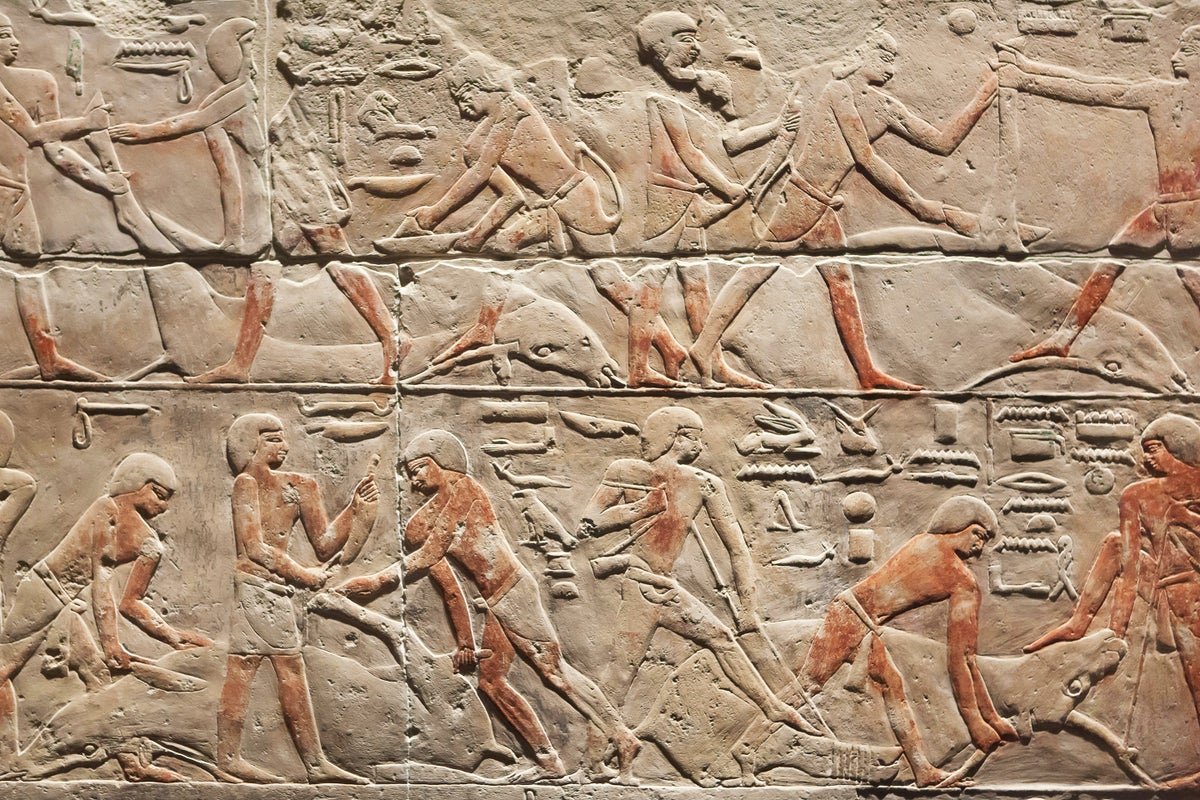
The Ancient Egyptian Old Kingdom (2686–2125 B.C.) produced many lasting artefacts—but little DNA has survived.
Azoor Photo/Alamy Stock Photo
Teeth from an elderly man who lived around the time that the earliest pyramids were built have yielded the first full human genome sequence from ancient Egypt.
The remains are 4,800 to 4,500 years old, overlapping with a period in Egyptian history known as the Old Kingdom or the Age of Pyramids. They harbour signs of ancestry similar to that of other ancient North Africans, as well as of people from the Middle East, researchers report today in Nature.
“It’s incredibly exciting and important,” says David Reich, a population geneticist at Harvard Medical School in Boston, Massachusetts, who was not involved in the study. “We always hoped we would get our first ancient DNA from mummies.”
On supporting science journalism
If you’re enjoying this article, consider supporting our award-winning journalism by subscribing. By purchasing a subscription you are helping to ensure the future of impactful stories about the discoveries and ideas shaping our world today.
Numerous labs have tried to extract DNA from ancient Egyptian remains. In 1985, evolutionary geneticist Svante Pääbo reported the first ancient DNA sequences from any human: several thousand DNA letters from a 2,400-year-old Egyptian mummy of a child. But Pääbo, who won a Nobel prize in 2022 for other work, later realized that the sequences were contaminated with modern DNA — possibly his own. A 2017 study generated limited genome data from three Egyptian mummies that lived between 3,600 and 2,000 years ago.
The hot North African climate speeds up the breakdown of DNA, and the mummification process might also accelerate it, said Pontus Skoglund, a palaeogeneticist at the Francis Crick Institute in London who co-led the Nature study, at a press briefing. “Mummified individuals are probably not a great way to preserve DNA.”
The ceramic vessel in which the remains of the Nuwayrat individual were discovered.
The remains that Skoglund’s team sequenced pre-date widespread mummification: the person was interred instead in a ceramic pot, a sign of high, but not elite, status. The remains were found at an archaeological site called Nuwayrat, 265 kilometres south of Cairo along the Nile river. The teeth and bones were discovered in 1902, when Egypt was under British colonial rule. They were donated to institutions in Liverpool, UK, where they have been ever since, even surviving German bombing during the Second World War.
Low expectations
Skoglund says his expectations were low when his team extracted DNA from several teeth from the Nuwayrat individual. But two samples contained enough authentic ancient DNA to generate a full genome sequence. Y-chromosome sequences indicated that the remains belonged to a male.
The majority of his DNA resembled that of early farmers from the Neolithic period of North Africa around 6,000 years ago. The rest most closely matched people in Mesopotamia, a historical Middle Eastern region that was home to the ancient Sumerian civilization, and was where some of the first writing systems emerged. It’s not clear whether this implies a genetic direct link between members of Mesopotamian cultures and people in ancient Egypt — also hinted at by similarities in some cultural artefacts — or whether the man’s Mesopotamian ancestry arrived through other unsampled populations, the researchers say.
The rest of the ancient Egyptian man’s bones revealed more details about his life. Evidence of arthritis and osteoporosis suggest he died at an advanced age for the time, possibly in his sixties. Other signs of wear indicate a life of physical toil, sitting hunched over on hard surfaces. On the basis of this and imagery from other tombs from this period, he might have been a potter, said co-author Joel Irish, a bioarchaeologist at Liverpool John Moores University, at the press briefing.
“The publication of a whole-genome data set of an ancient Egyptian constitutes a significant achievement in the field of molecular Egyptology,” says Yehia Gad, a geneticist at Egypt’s National Research Centre in Cairo, who praises the researchers for presenting the provenance of the remains clearly. But he points out that the genome is from one individual and might not fully represent ancient Egypt’s gene pool, which was probably a melting pot of different ancestries.
For this reason, researchers are eager for more ancient Egyptian genome data — perhaps even from a mummy. Advances in ancient-genomics technology and local capacity — Gad supervises an ancient DNA lab at the National Museum of Egyptian Civilization in Cairo — means it hopefully won’t take another 40 years.
This article is reproduced with permission and was first published on July 2, 2025.
