

Human Gut Bacteria Can Gather Up PFAS ‘Forever Chemicals’
When tested on their own and in mice, these bacterial strains from the human microbiome show promise in accumulating PFAS
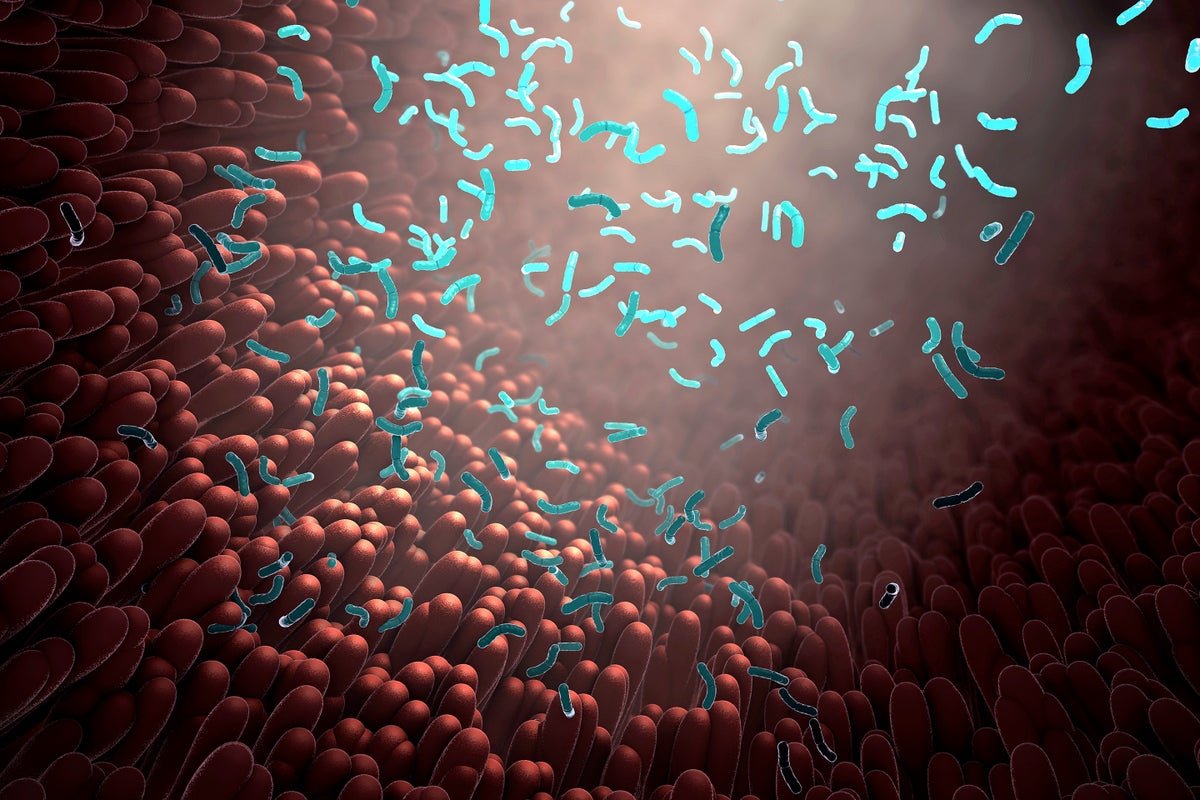
Gut microbiome bacteria from humans can absorb PFA.
Christoph Burgstedt/Science Source
Lurking in our nonstick pans, our rain jackets and even our drinking water are toxic compounds known as perfluoroalkyl and polyfluoroalkyl substances (PFAS), also called “forever chemicals.” They can take hundreds of years to break down in the environment and are increasingly being detected in human blood and bodily tissues—where, research suggests, they can lead to several cancers and reproductive disorders, as well as thyroid disease and a weakened immune system. Scientists have been scrambling for ways to remove PFAS from our surroundings before they reach human bodies. But one team may now have found a way to tackle them afterward.
Bacteria commonly found in the human gut could potentially be used to gather up PFAS and carry them out as waste, researchers suggest in a study published this week in Nature Microbiology.
“I think this research provides us a little glimmer of hope that it’s not all doom and gloom” when it comes to the PFAS problem, says study co-author Kiran Patil, a molecular biologist at the University of Cambridge. “Maybe our bacteria—that have been our companions for thousands of years—may already be helping us do something about it.”
On supporting science journalism
If you’re enjoying this article, consider supporting our award-winning journalism by subscribing. By purchasing a subscription you are helping to ensure the future of impactful stories about the discoveries and ideas shaping our world today.
The gut bacteria accumulates perfluorononanoic acid—a ‘forever chemical’—as dense clumps.
Peter Northrop/MRC Toxicology Unit
The team first tested how PFAS and other pollutants interacted with dozens of bacterial strains from the human gut and noticed that nine of them accumulated certain PFAS chemicals very effectively. When grown in laboratory conditions, these bacteria sopped up anywhere from 25 to 74 percent of the PFAS chemicals they were exposed to within 24 hours. The researchers suggest those particular strains could potentially bind to PFAS in the body and carry them out of the system.
Previous work had shown that bacteria from contaminated soils can bind to PFAS. But those bacteria were exposed to much higher levels of the chemicals and had a relatively low capacity to sequester them—“so we had no reason to believe that gut bacteria would be anything special,” Patil says.
Many researchers had assumed that PFAS molecules would cling to a bacterium’s outer membrane rather than getting inside it, Patil says. Because the bacteria in the study were gathering more PFAS than could feasibly fit on their membrane, however, the team thought the chemicals must have actually entered the organisms. To confirm this, Patil and his colleagues used an imaging technique in which they rapidly froze the bacteria, then fired tiny beams of charged particles at them and analyzed what flew out. The researchers detected fluorine molecules—a telltale sign of PFAS—emerging from the bacteria.
To find out whether bacteria would still collect PFAS chemicals inside a larger organism, the team used mice raised to lack a microbiome of their own and colonized the animals’ gut with several human microbiome bacteria that were shown to absorb PFAS. After exposing the mice to various levels of a PFAS chemical, the researchers measured the amount of PFAS in the animals’ feces and found that mice with PFAS-collecting bacteria excreted more of the toxic chemicals than those without the microorganisms did.
This study shows just how deeply PFAS penetrate a body and its systems, says environmental epidemiologist Jesse Goodrich, who was not involved in the work. “It is another piece in the puzzle that shows how PFAS can impact human health.”
Applying the latest findings to humans would require more research. The team is now planning a clinical trial to test whether probiotics containing such bacteria could potentially supplement the human microbiome and decrease PFAS in our own species’ gut. But the researchers note that such a trial would have far more variable factors than a highly controlled study in mice with lab-designed microbiomes. “There’s a huge variation in how the composition of the microbiome is set up within humans,” says the new study’s lead author Anna Lindell, a toxicologist at the University of Cambridge.
Further research could also observe the naturally occurring levels of these bacterial strains in people within the same community and measure the amount of PFAS in their bodies, Patil says. Such a study would help to clarify whether these bacteria lead to less PFAS in the human gut—or even in other parts of the body.
Supplementing the body’s natural bacteria to manage PFAS absorption is “interesting and has potential,” Goodrich says. “But ultimately, the best way to protect health is to prevent exposure in the first place.”
